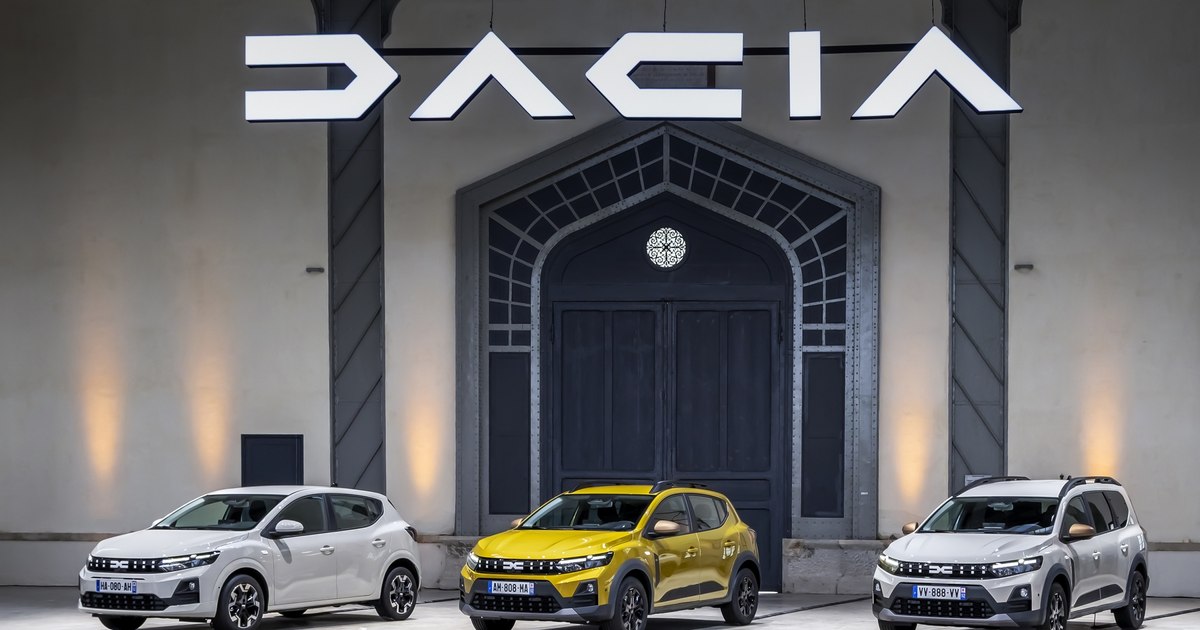
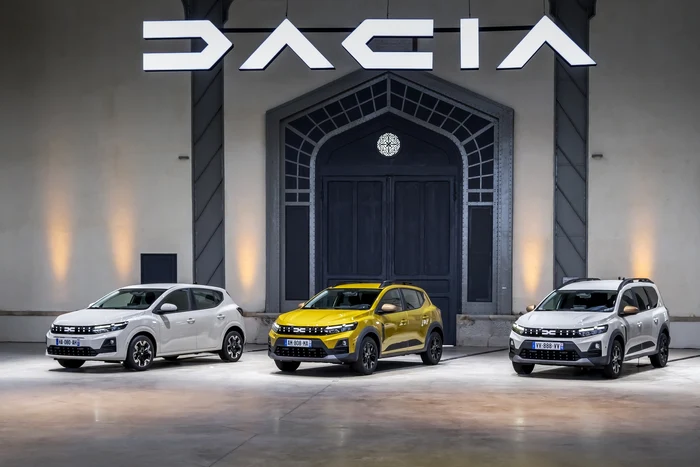
Dacia 2026 photo range: Dacia
Dacia brings a lot of news in the range of models for 2026. I could say that it is the most refresh of the range in the history of the builder in Mioveni.
Facelift for Logan, Sandero, Sandero Stepway and Jogger range
The Sandero triplet, Sandero Stepway and Jogger enjoy a complete restilization. We are talking about a redesign of the front. We have headlights with a new light signature, a narrower front grille and a slightly more “geometric” bar in terms of design. The same light signature is also found in the rear optical groups.
In Jogeer's case, the rear optical groups display the same theme only that arranged vertically. Depending on the level of equipment, customers will have the option to choose either for new design rims (if the purchased version comes with sheet wheels). Or rims with new design. Also in terms of news are side mirrors that are now electrically foldable.
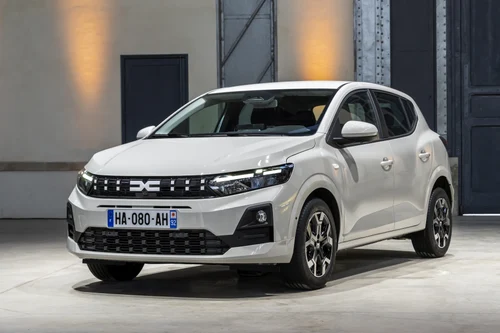
Image 1/21:
Dacia Sandero 2026 Photo: Dacia
A new shade – Amber Yellow is introduced for Sandero Stepway. And on the tailgate there is a matte black band that visually unites the rear optical groups. And the shade of Sandstone who debuted Dacia Duster will be available for the entire range.
Sandero Stepway and Jogger will have the additional plastic protections in the lower areas of the front/rear bars and at the level of the wheels made in Starkle – the new material developed by Dacia which contains 20% recycled plastic.
It should be mentioned that Dacia Logan enjoys facelift only at the front, the rear optical groups remain unchanged.
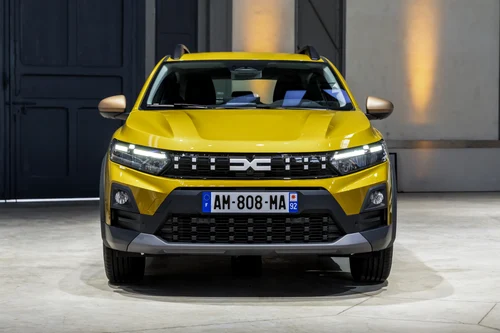
Image 1/23:
Dacia Sandero Stepway 2026 Photo: Dacia
Inside we find many news. We welcome the introduction of the new steering wheel with three arms that debuted on the Duster. Depending on the level of equipment, the Infotainment system is now boasting with the new 10 -inch central display. The aesthetic theme displayed by headlights and rear optical groups can be found inside at the level of ventilation. New, more resistant textile materials were introduced, which are found on the dashboard, at the interior panels of the doors and upholstery.
The list of assistance systems was enriched with the automatic emergency braking system in danger situations with pedestrian, cyclist and motorcycle detection. The headlights have the automatic switching function between the short and long phase. And on the left front pillar, inside, a room was part of the system that monitors the attention degree of the steering wheel.
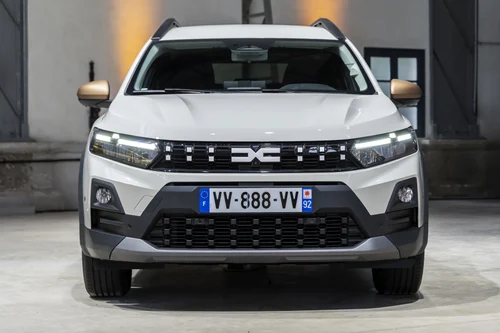
Image 1/22:
Dacia Jogger 2026 Photo: Dacia
All models receive a new engine. This is about Eco-G 120 which offers a range of up to 1,590 km with both full made. The capacity of LPG tanks from 40 liters to 49.6 liters for Logan, Sandero and Sandero Stepway was increased, and 48.8 liters for Jogger. This engine will be available with both a 6 -speed manner and an automatic with double EDC clutch with 6 reports and the possibility of manual gear changes in the steering wheel. TCE 90 evolves and becomes TCE 100.
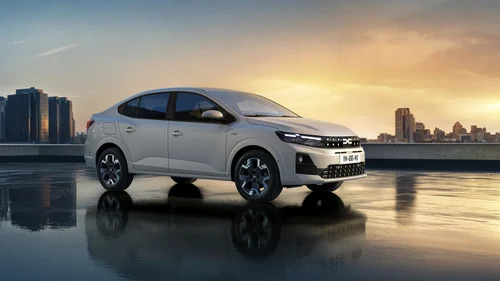
Image 1/3:
Dacia Logan 2026 Photo: Dacia
Dacia Jogger receives the Hybrid 155 engine that replaces Hybrid 140. Engine that will also be available on Dacia Sandero Stepway towards the end of 2026.
Orders for new models open until the end of the year, deliveries to start from next spring.
Dacia Duster and Bigster
With all the news Dacia we met a week ago in Paris. Place where I also discovered the new Hybrid-G 150 4×4 engine, that dream refused so far-a version with full traction and automatic gearbox.
The hybrid is composed of a 1.2-liter thermal engine that develops 140 hp and 230 Nm which sends power to the front axle via an automatic 6-speed clutch automatic gearbox. On the rear axle we have an electric motor that develops 31 hp and 87 Nm, but associated a two -step gearbox. On board there is a battery with a capacity of 0.84 kWh that can be charged both the thermal engine with the help of the start/generator associated with it and by recovering the braking energy.
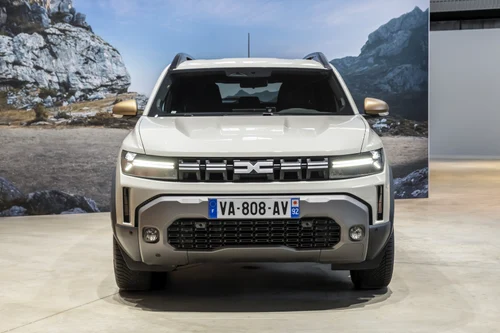
Image 1/17:
Dacia Duster Hybrid-G 150 4×4 Photo: Dacia
The first step of the rear box allows running up to 70 km/h. It is the step used for off-road running. Compared to the mechanical 4×4 system, the new electric motor solution on the rear axle offers a 10% higher engine torque, plus the advantage of the instant response. With the second step you can run 4×4 to 140 km/h. In auto mode and under ideal adhesion conditions, the car will be a front traction, but if the on -board systems detects grinding losses, it will automatically order the rear engine coupling.
The system allows running up to 60% of the time, in urban use, electrically, which makes it extremely efficient.
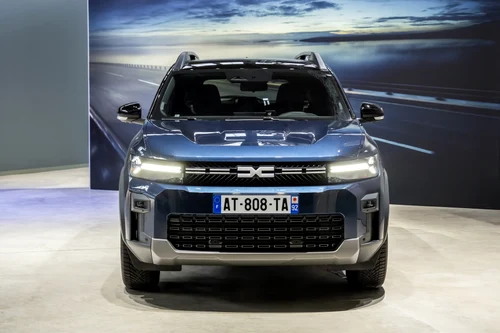
Image 1/13:
Dacia Bigster Hybrid-G 150 4×4 Photo: Dacia
The 48V Mild hybrid system promises an average consumption of 7.1 liters of LPG for Duster and 7.2 liters for Bigster for 100 km running, and if the thermal engine is fed with gasoline, we talk about 5.5 liters respectively 5.6 liters for Duster and Bigster/ 100 km.
Orders for Hybrid-G 150 4×4 open this month, deliveries to start after half 2026. Also from the middle of 2026, a “simple” version will be available, without LPG-Hybrid 150 4×4.
Dacia Spring
About mezine I could say that it is more a new model than a facelift. But because aesthetically the changes are relatively discreet, we remain in the facelift title.
Visually, the customers could opt for a new shade, the ground guard is slightly smaller – 146 mm at the 2026 version compared to the 150 mm of the current model. There are aerodynamic optimizations in the floor. And the only new visible element is the rear spoiler located on the tailgate that pushes the aerodynamic turbulence and reduces the resistance to advancement. We are talking about a CD aerodynamic coefficient that decreased from 0.743 to 0.665 for the version equipped with 15 -inch rims.
Finally, these aerodynamic optimizations are translated into efficiency, in low consumption, which for the new model is 12.4 kWh/100 km.
Just that changed?
NOT! We are talking about an evolved chassis, one that integrates the new iron-phosphate-phosphate battery (LFP). The old battery was a concentrated package in the rear banquet area. The new battery with a capacity of 24.3 kWh is carried out on the entire surface of the floor, ensures a better mass distribution. It also integrates a thermal management system that will allow it better performance in the cold season, whether we are talking about loading or autonomy. Because I talked about loading, at DC stations it can be done with up to 40 kW, an additional 10 kW. Loading times are much better compared to the currently marketed version.
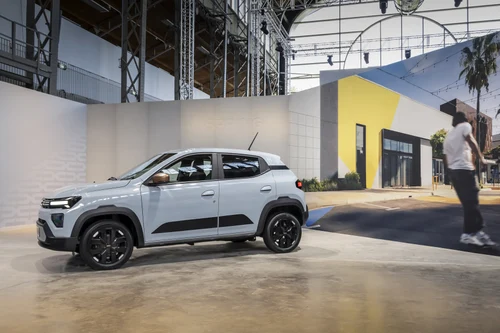
Image 1/7:
Dacia Spring 2026 Photo: Dacia
The new battery is more heavy by 16 kg than the old one. The new batteries allowed a slight redesignation at the level of the rear banquet, the result being an additional 1 cm at the level of the feet. The declared autonomy is 225 km.
Dacia Spring will have 2026 new engines. The basic version has a 52 kW/ 75 hp engine – stronger than the current range. And the strongest version will have a 75 kW/ 100 hp engine. From the point of view of the halves the differences are huge.
With the old engines, the half of 80 to 120 km/h lasting 26.2 seconds for 45 hp engine and 14 seconds for 65 hp. The new 70 hp engine model needs 10.3 seconds for this half, and the extreme version with 100 hp engine needs 6.9 seconds.
And dynamically, the car promises a more rigorous road outfit thanks to the introduction of an anti -drone bar.
Orders for the new Spring open all this year, the deliveries to be honored in 2026.