The authorities in Lithuania discovered what was in the balloons that entered the country's airspace and blocked for hours Vilnius airport


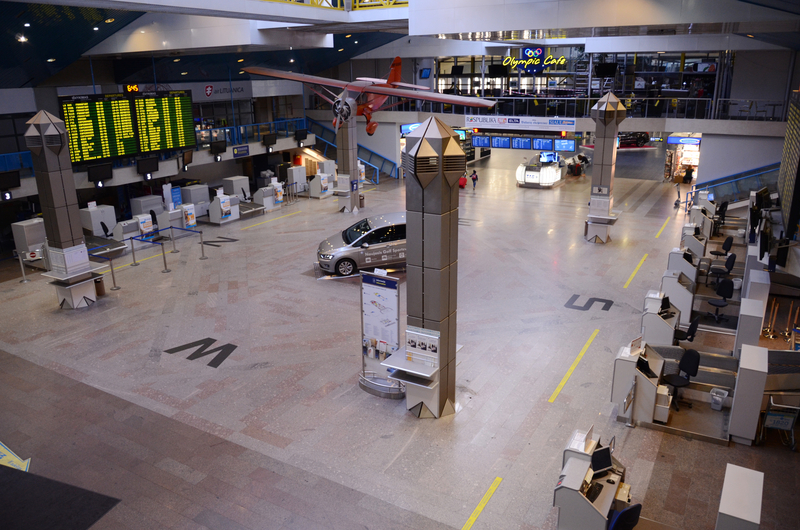
Vilnius airport. Photo: © Mrfly | Dreamstime.com
Up to 25 small hot air balloons entered Lithuania's airspace on Saturday night and caused the Vilnius airport to close, causing delays for several hours, the authorities announced.
According to the National Crisis Management Center, the balloons disrupted 30 flights, affecting about 6,000 passengers. Air traffic was resumed on Sunday at 4:50 (01:50 GMT).
These balloons were transporting 12,000 cigarette packages, Baltic News Service (NBS) told the State Border Service (VSAT) Giedrius Mišutis, according to the National Radio-Teal Service LRT.
“It is very important to be found and determine who intends to recover them,” he said, adding that the police are active for searches to locate them.
The police in the Vilnius region have confirmed that they inspect possible landing places and that traces of cigarettes have been found in several areas. “Once the agents locate a balloon, they carry out the preliminary procedures and transmit the information to the Border Police, which coordinates the investigation,” the department said.
A similar incident took place in August, when 26 balloons used for smuggling entered Lithuania's airspace, according to Vitkauskas.
Smuggling cigarette packs were launched from Belarus
Mišutis said that the balloons probably penetrated so deep on the territory of Lithuania because the smugglers launched them not directly from the border, but from a few kilometers inside Belarus.
“It rises vertically and crosses the border at high altitude, then descends much further, inside the country – so they reached Vilnius,” he explained.
Vitkauskas said that the purpose of smugglers was unlikely to have been disturbing the airport activity, but added that “the most serious scenario cannot be excluded.”
“Usually, smugglers launch the balloons in areas where they can easily recover the goods – not near the airport, where the search operations are intense,” he said.
The National Border Control Center (NKVC) is still trying to establish how many balloons have landed on the territory of Lithuania and how many of them transported smuggling goods.
“Such balloons are usually used by smugglers. If the wind direction is favorable, their number can reach dozens or even more,” said Buta.
According to the data provided by the Border Guard Service (VSAT), including the Saturday incident, 501 smuggling balloons have been detected so far – 2.2 times more than 2024, when 226 were registered. Mišutis said that the balloons are used exclusively for the transport of cigarettes.
Photo: © Mrfly | Dreamstime.com