Georgia Prime Minister announces drastic measures against dissidents and accuses the EU Ambassador of Involvement

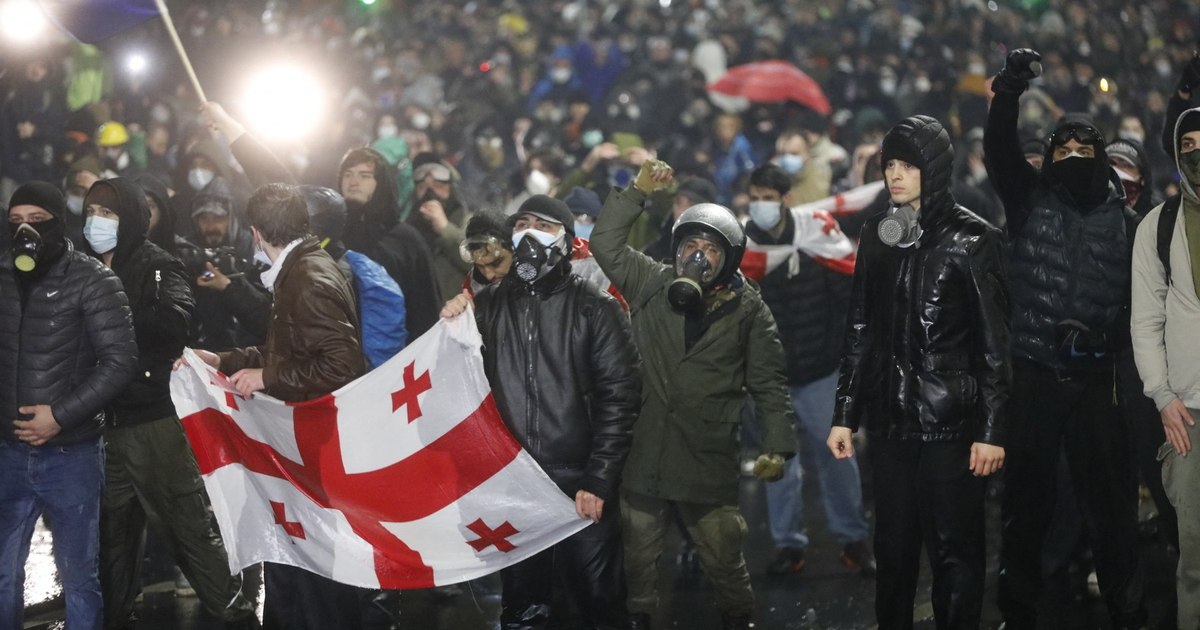
Following the violent protests in Tbilisi, Prime Minister Irakli Kobakhidze announces a harsh campaign against dissidents and accuses the EU Ambassador of internal problems of his country.
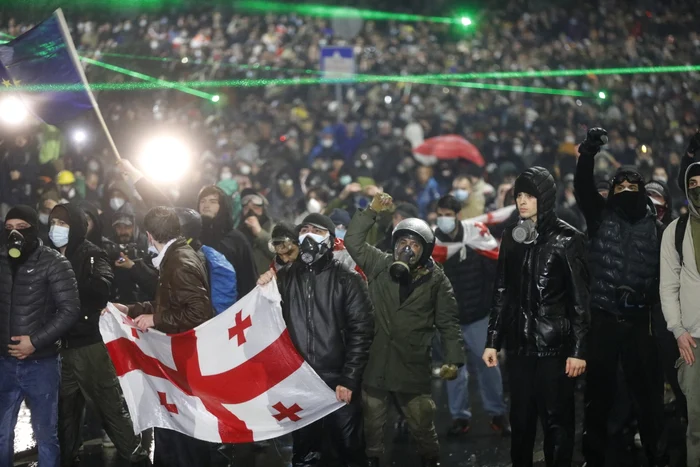
The Georgians went out again. Photo: Profimedia
Georgia political tensions reach a new critical point. Georgia Prime Minister Iraqli Kobakhidze said he would impose drastic measures against dissidents, following the protests in Tbilisi. The official argues that the protesters who tried to penetrate the presidential palace would be pursued “The overthrow of the constitutional order”, accusing At the same time, the European Union of direct involvement in internal stresses.
The statements came one day after the clashes during the local elections, when hundreds of protesters were stopped by the anti-revolt police, who used tear spray and water cannons to disperse the crowd. According to the Georgian interpress agency, the prime minister warned that “No one will escape responsibility – including political responsibility”.
The authorities detained at least five people, including two members of the united national movement, the main opposition party, and on Pata Burchuladze, the famous opera singer became a civic activist.
According to The Guardian, the Georgia Ministry of Health announced that 21 security officers and six protesters were injured in confrontations.
A political conflict with the European stake
Georgia crosses a period of prolonged tensions from the 2024 parliamentary elections, won by the government party, Georgian Dream (GD), led by Irakli Kobakhidze. The pro-EU opposition claims that the election was marked by fraud and, as a result, the accession negotiations to the European Union were suspended.
During the Saturday rally, in which about 7,000 people participated, the prime minister said that the attempt to “overturn the constitutional order” was dismantled, although, according to him, it would have benefited from “external support”.
Kobakhidze announced the arrest of the “main organizers” and said that the opposition party will no longer be able to activate politically.
Mutual accusations between government and opposition
The leaders of the pro-Western opposition have launched calls to a “peaceful revolution” against the Georgian Party Dream, accused of authoritarian and close skid.
The protests were triggered against the backdrop of a series of controversial actions: raids against independent press, restrictions on civil society and arrest several activists.
In a message from prison, former president Mikheil Saakasvili, an emblematic figure of the pro-Western camp, urged his supporters to go out on the street day, describing the “last chance to save Georgian democracy.”
Diplomatic tensions with the European Union
On Sunday, October 5, Irakli Kobakhidze resumed the anti-Western rhetoric, accusing directly the European Union ambassador to Tbilisi, Pawel Herczyitski, of having supported the “attempt to overthrow the government” and asked the European diplomat to “publicly” the actions of the protesters.
“Some people from abroad have expressed their support for these events. Ambassador Herczyitski bears a special responsibility and must be firmly distanced from what is happening on the streets of Tbilisi,” said Prime Minister Irakli Kobakhidze.
In reply, the EU's diplomatic service has rejected, since July, the Georgian accusations, cataloging them as “misinformation and unfounded statements.”
A country caught between East and West
Current protests are the latest in a chain of demonstrations organized by the pro-Western opposition since October last year, when Georgian Dream has proclaimed his victory in elections. The opposition boycotted the poll in protest, accusing fraud and lack of transparency.
Although accession to the European Union is inscribed in the Constitution of Georgia, the country's relations with the community block have visibly deteriorated after Russia's invasion in Ukraine in 2022. The Tbilisi government is trying to maintain a delicate balance between European aspirations and pragmatic relations with Moscow.
The Georgian Party Dream is considered to be under the influence of the oligarch Bidzina Ivanishvili, former prime minister and the richest man in the country. Although its formation denies any pro-Russian links, critics claim that its increasingly restrictive policies are more and more like the Kremlin model.