This has not been in Poland for seven years. Polish Economic Institute on Energy Transformation


As Pie notes in the latest issue of “Tygodnik Gospodarczy”, in 2018 renewable energy sources were only responsible for 12.7 percent. domestic electricity production, while in 2025. This indicator increased to 29.4 percent.
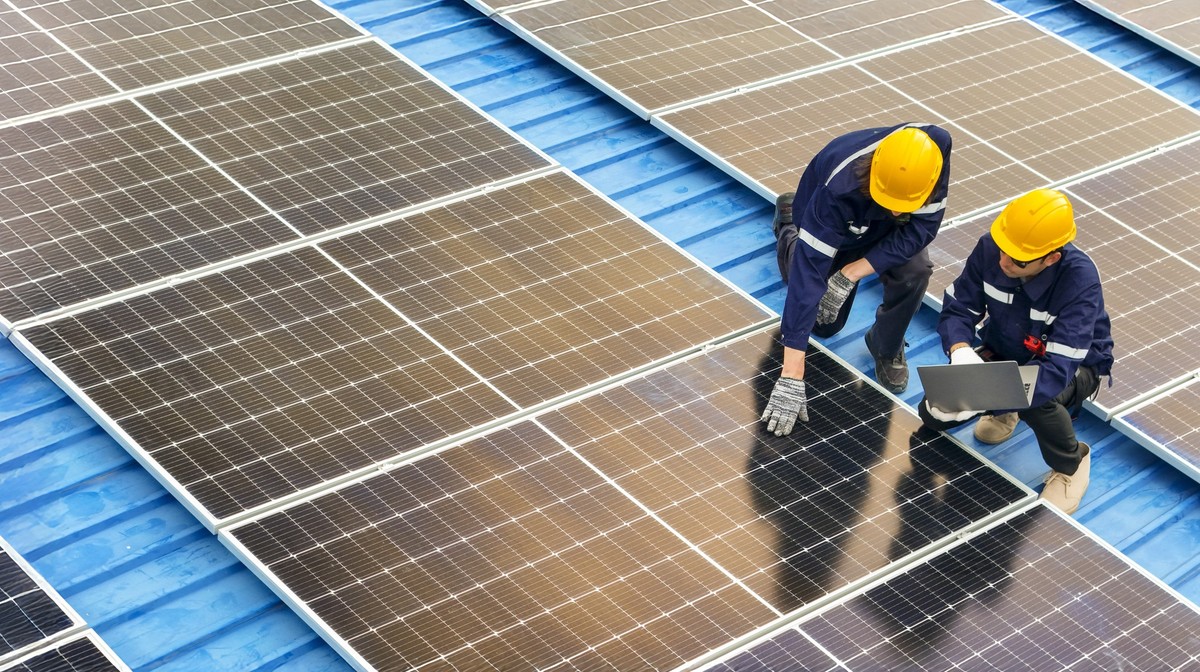
“In recent years, the share of hard coal in the energy mix has clearly decreased – from nearly 50 percent to 32 percent and brown coal – from almost 30 percent to 21 percent. At the same time, we observe an unprecedented photovoltaic boom: from 600 MW of installed power in 2018 to as much as 23 GW in July 2025, “we read in the analysis.
Such an impressive development of solar energy exceeded all expectations, including the authors of the government strategy “Energy Policy Polish 2040”. The document adopted in 2021 assumed that in 2025 the national potential of photovoltaics would reach only 5 GW.
Read also: “We want to create an alternative.” The energy cluster will stimulate the development of the poviat in Łódź?
A process that nobody would expect seven years ago
Experts PIE emphasize that in recent years the Polish nuclear program has also significantly moved on. “The investment has already selected general contractor-the consortium of Bechtel-Westinghouse. Construction works are to start in 2028, and the first nuclear reactor is to be launched in 2036” – emphasized in the report.
Parallel, projects in the field of small modular reactors (SMR) are developed. Orlen Synthos Green Energy has already obtained a basic decision for six locations, in which BWRX-300 reactors are to be launched at the beginning of the next decade.
Significant progress can also be seen in the field of low -emission transport. Despite this, Poland is still lagging behind the rest of the European Union – The share of electric vehicles in the sale of new cars is 5.7 percent, while the EU average is 21 percent, and in Norway as much as 92 percent.
The Polish Economic Institute emphasizes that The pace of further decarbonization of the economy remains an important question. “Until now, climatic activities have led to a decrease in emissions from 424 million tons of CO2E (carbon dioxide equivalent) in 2018 to 374 million tons in 2024, which means a reduction by 13 %” – emphasize analysts.