The founder of a startup to explain why we should not expect revolutionary scientific discoveries from current artificial intelligence models


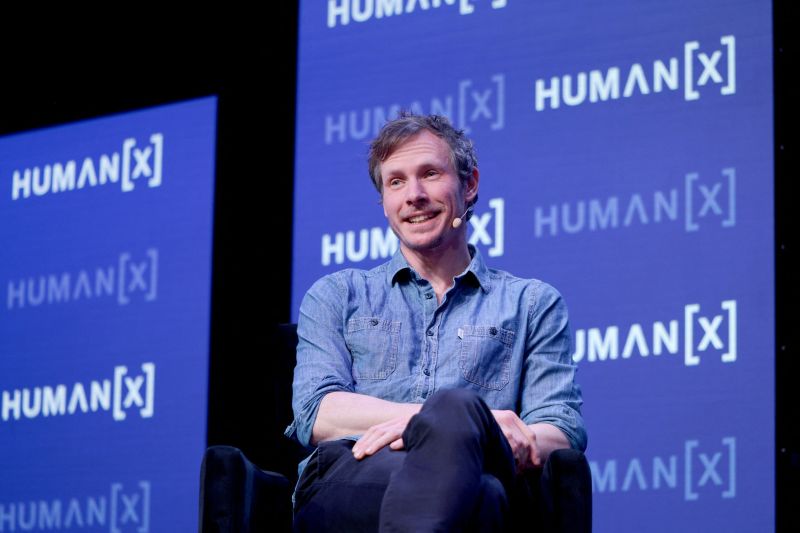
Thomas Wolf, Chief Science Officer at Huging Face (PHOTO Big Event Media / Getty Images / Profimedia)
The current AI models that are said to be a reduced chance of leading us to major scientific discoveries, says Thomas Wolf, co-founder of Hugging Face, a company to evaluate $ 4.5 billion.
Wolf has reviewed, quoted by CNBC, some problems with the present chatbots, the first being that they tend to always give the man who asks questions, and this can be seen from the answers in which the chatbot praises the user because he would have asked him a “very good” or “interesting” question, even when the question is trivial.
The second problem is that the models underlying these chats are designed to “most likely predict token” or “word” in a sentence, and scientists do not make the discoveries in this way, nor do they think in this style, but they question what others say.
“The scientist does not try to predict the next word, but tries to predict a completely new, apparently unlikely, but which, in fact, might prove true,” Wolf said. When he talks about scientific discoveries, he refers to truly innovative new ideas, something at the Nobel Prize.
Wolf said that these chats (and adjacent “tools” will probably be used more as a “co-pilot for a scientist”, helping to research and generate new ideas.
Hugging Face is an artificial intelligence company founded in 2016 in New York and becoming an important name in the open-source AI. The company has a platform where researchers and companies can load, distribute and use artificial intelligence models.
The company also develops “libraries” for working with big language models and for easier access to large data sets.