Russia transmits that it does not recognize the reintroduction of sanctions against its Middle East ally. “We will live in two parallel realities”


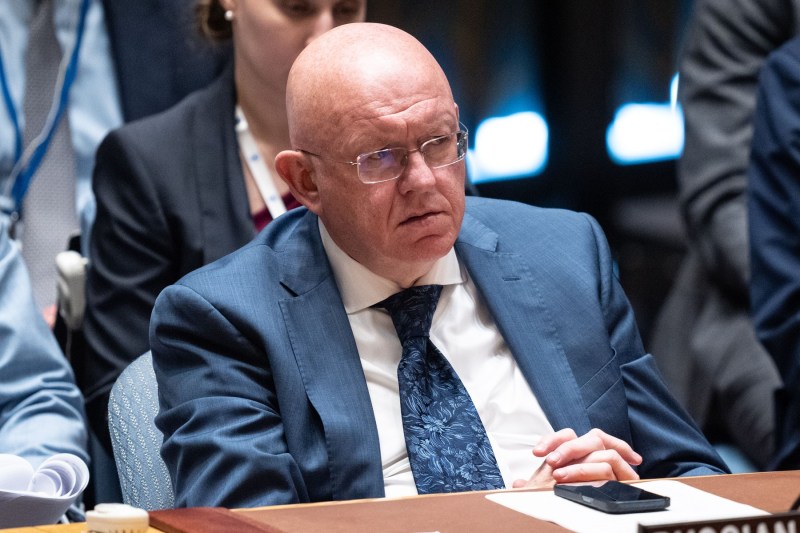
Russian ambassador Vassili Nenbenzia participates in the Ministerial Meeting “The situation in the Middle East, including the Palestinian issue”, at the UN headquarters in New York, on September 23, 2025. Photo: Lev Radin / Shutterstock Editorial / Profimedia
Moscow does not recognize the reintroduction of United Nations sanctions against Iran, the Russian ambassador to the UN on Wednesday, Vassili Nebenzia, when asked if Russia will apply the measures, Reuters reports.
On Saturday night, the United Nations reinstated the embargo on weapons and other sanctions against Iran in relation to its nuclear program, following a mechanism – known as “snapback” – triggered by the European powers. The Tehran warned that this measure will receive a hard answer.
The United Kingdom, France and Germany, a group of countries called E3, triggered at the end of August the “Snapback” mechanism, which allowed, within 30 days, the re -implementation of the sanctions high in 2015 after the Iranian nuclear agreement.
The mechanism was reactivated against the background of the accusations that Iran violated the 2015 agreement that aimed to prevent the development of a nuclear bomb. The Tehran denies that he would seek to obtain nuclear weapons.
“We do not recognize the entry into force of the Snapback mechanism,” Nebenzia said in a press conference organized on the start of Russia's presidency at the UN Security Council for October.
“We will live in two parallel realities, because for some Snapback has occurred, and for us not. This creates a problem. How we will get out of this situation-we will see,” Nebenzia added.
The end of the ten -year nuclear agreement initially agreed by Iran, the United Kingdom, Germany, France, the United States, Russia and China could exacerbate tensions in the Middle East, just a few months after Israel and US have bombed Iranian nuclear facilities.
“This evolution is really loaded with a major escalation around Iran, because it opens the door for those countries that want to end the nuclear program of Iran,” Nebenzia said, referring to the military action of Israel and the US in June.
With the reintroduction of UN sanctions, Iran – considered an ally of Russia – will again be subjected to an embargo on weapons and prohibition on all uranium enrichment and reprocessing activities, as well as any activity related to ballistic missiles capable of transporting nuclear weapons.
Other sanctions that will be re -imprinted include the travel prohibition for dozens of Iranian citizens, freezing the assets of dozens and entities and the prohibition to provide any element / equipment that could be used in the country's nuclear program.