
Vladimir Putin officially signed Russia's withdrawal from the European Convention against Torture. The arguments invoked by Moscow


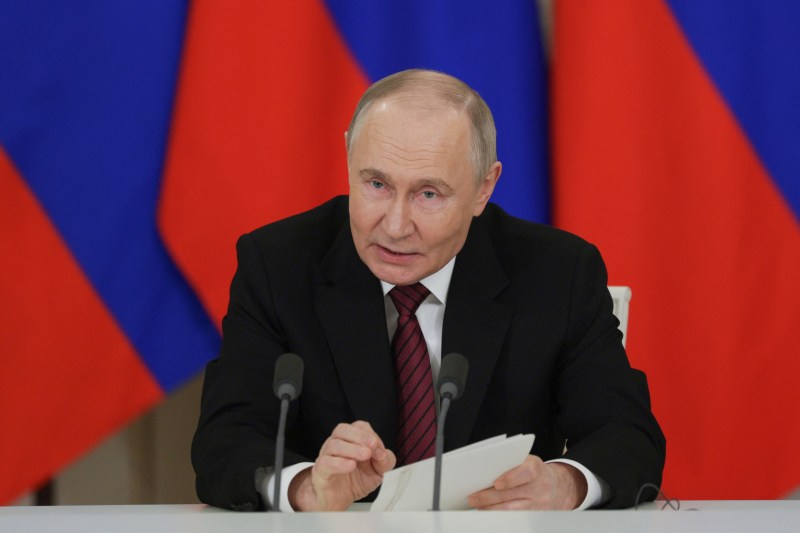
Vladimir Putin at the Kremlin, on May 11. Photo: Gavriil Grigorov / AFP / Profimedia
The President of Russia, Vladimir Putin, signed a law that denounces the European Convention for the Prevention of Torture, according to a government site, reports Reuters.
The Russian Parliament had previously voted the project on leaving the treaty, which Moscow ratified in 1998.
According to the legislation adopted by the Russian parliamentarians, the denunciation of the treaty is a response to the refusal of the Council of Europe to include a representative of Moscow in the committee that supervises the Convention against Torture.
The activity of Russia in the European Committee for the Prevention of Torture “was blocked by the Council of Europe, who did not allow the election of a new Russian member of December 2023,” says the President of the State Duma, the lower chamber of the Russian Parliament, Viaceslav Volodin, quoted by TASS.
In the note of substantiation of the project he wrote that these “discriminatory circumstances” violate the representative rights of Russia in the European Committee and undermine the mechanism of mutual monitoring of respecting international obligations in the field of torture prevention, “which is why the aforementioned convention and its protocols are proposed.”
Russia, who is a member of the 1996 Council of Europe, was suspended from the statutory bodies of the forum in February 2022, after the invasion of Ukraine, and later announced its intention to withdraw from the body. Since then, Moscow has denounced several documents of the Council, whose application, says TASS, has become impossible in the current context.
Russia, accused in a UN report of tortured Ukrainian civilians
This month, the UN Human Rights Office accused Russia of systematically tortured Ukrainian civilians in over 100 detention centers in Russia and Ukrainian territories under Russian occupation.
The report gives details about simulated executions, using electric shocks and prolonged use of uncomfortable positions on Ukrainian citizens for facts that are not criminal, such as criticizing the Russian invasion. In some cases, torture led to the death of victims, notes Reuters.
“It is large, systematic torture. It was documented in each region of occupied territories, as well as in several regions inside the Russian Federation,” said Danielle Bell, head of the UN human rights monitoring mission in Ukraine, during a press conference in Geneva, in which he presented 22 pages.


