“The atmosphere was terrifying.” They escaped from Putin's army. They reveal her the darkest secrets. “One of the conscripts shot himself in the trench. He couldn't stand it”
Witalij Wasiliew, a 23-year-old from the village in Czechaszji, a republic in the European part of the Russian Federation, was appointed to the Russian army in 2021. He was not going to become a contract soldier, and even more to go to war. Like thousands of other Russian conscripts, however, he found himself on the front in Ukraine.
“I have never signed a contract, despite the fact that the command from the very beginning encouraged us to do so,” he says in an interview with which he gives the editorial team for The Moscow Times of Yerevan in Armenia. He is hiding there now. I cried. I wrote reports in which I argued that I did not want to serve in the army. But that's all for nothing – he says.
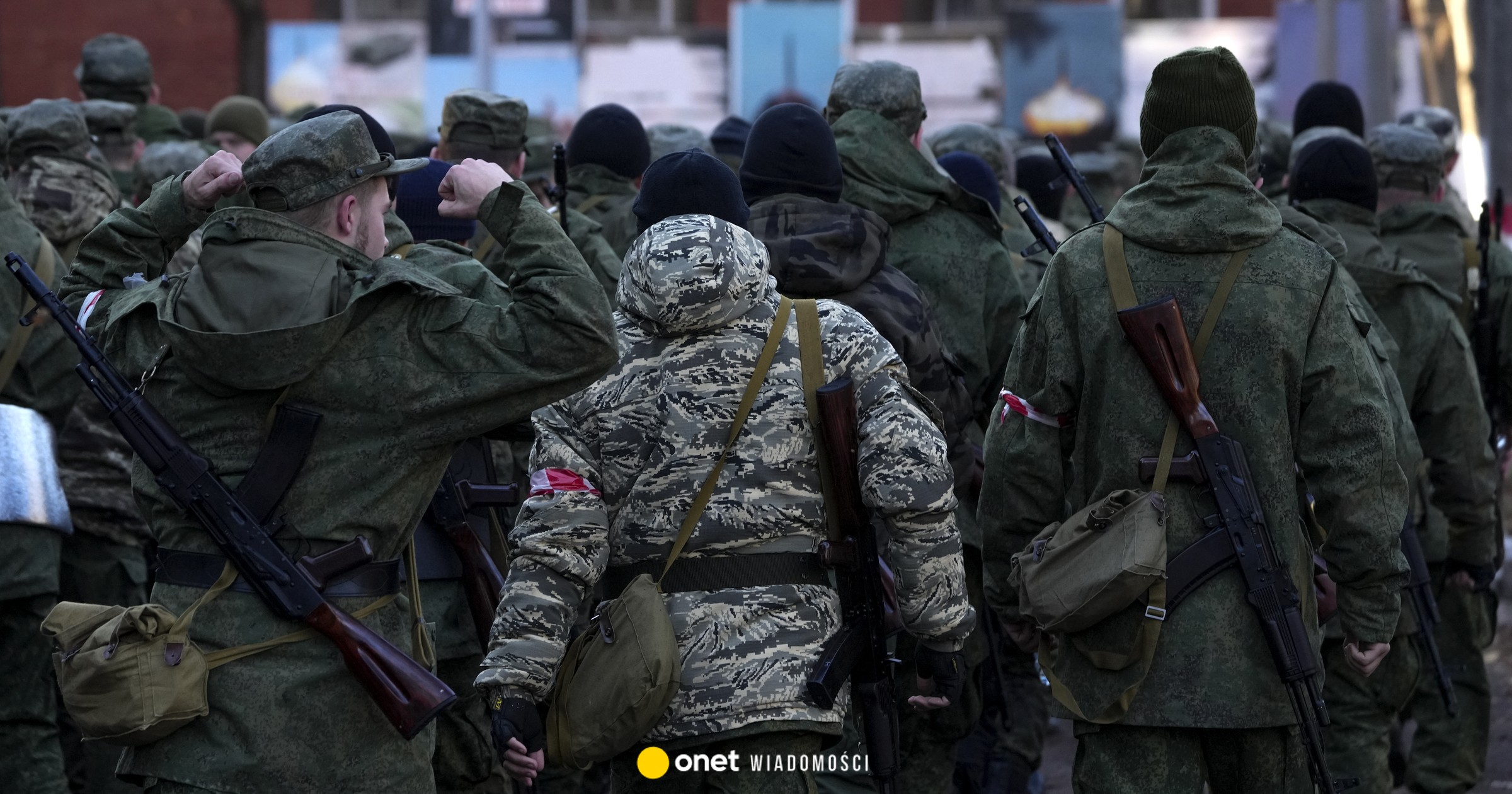
According to data published in May by the Istories portal Since Russia's full invasion of Ukraine in February 2022. at least 50 thousand Russian soldiers escaped from the army. Among them there are more and more conscripts: young men, often poor and from distant regions of Russia. They claim that they were forced to sign contracts with the Ministry of Defense, and then sent to war.
Despite the denials of Vladimir Putin and other high officials, conscripts participated in the fighting from the first days of the invasion. At least 100 conscripts were killed, captured or disappeared during the Ukrainian offensive to the Kurski region from 2024.
Conscript relationships with which the editors of The Moscow Times interviewed for the needs of this article, were verified by Intransit and Idite Lesom [Zgub się] – Two organizations that help Russians escape from the war.
In January 2022, Witalij was transferred to the unit 02511 in a village near St. Petersburg – there the commanders confiscated him with a military ID. He got it back, when they transported him to the Kurski region, but they changed the data in it – the new ones showed that he was a contract soldier.
– The officer took me aside and said: “You haven't heard it from me, but soon the war will start” – says Wasiliew. – I didn't believe it then.
February 24 [2022 r.] At 3.00, the commanders gathered his and other conscripts at the meeting site and informed that they would defend their homeland. The military received opioid painkillers, grenades, pistols and uniforms, and then packed into tanks and trucks and sent to war.
“Some laughed, as if they didn't understand what was really going on,” says Vitaly. – Later I learned that one of the other conscripts a few days later shot himself in the trench. He just couldn't stand it anymore.
Wasiliev refused to participate in Russian aggression, but in March 2022 he was forced to be sent to Krama in eastern Ukraine.
“I prayed not to kill anyone”
– The headquarters was at school, and we were stationed in a nearby private house – he says. – The family who owned this house escaped in a hurry, leaving everything, even photos and documents. The atmosphere was terrifying. Our commanders regularly returned in an armored vehicle filled with alcohol and drank it on the second floorwhile we were guarding – he says. He adds that Russian troops chased local men and closed them in the basement under the grocery store for an unclear purpose.
– Grabettes were on the agenda. A plaque hung on one of the houses with the inscription “A child lives here”. The soldiers were hacking anyway. They stopped robbing only when they found a child and mother hiding in the basement – says Wasiliew.
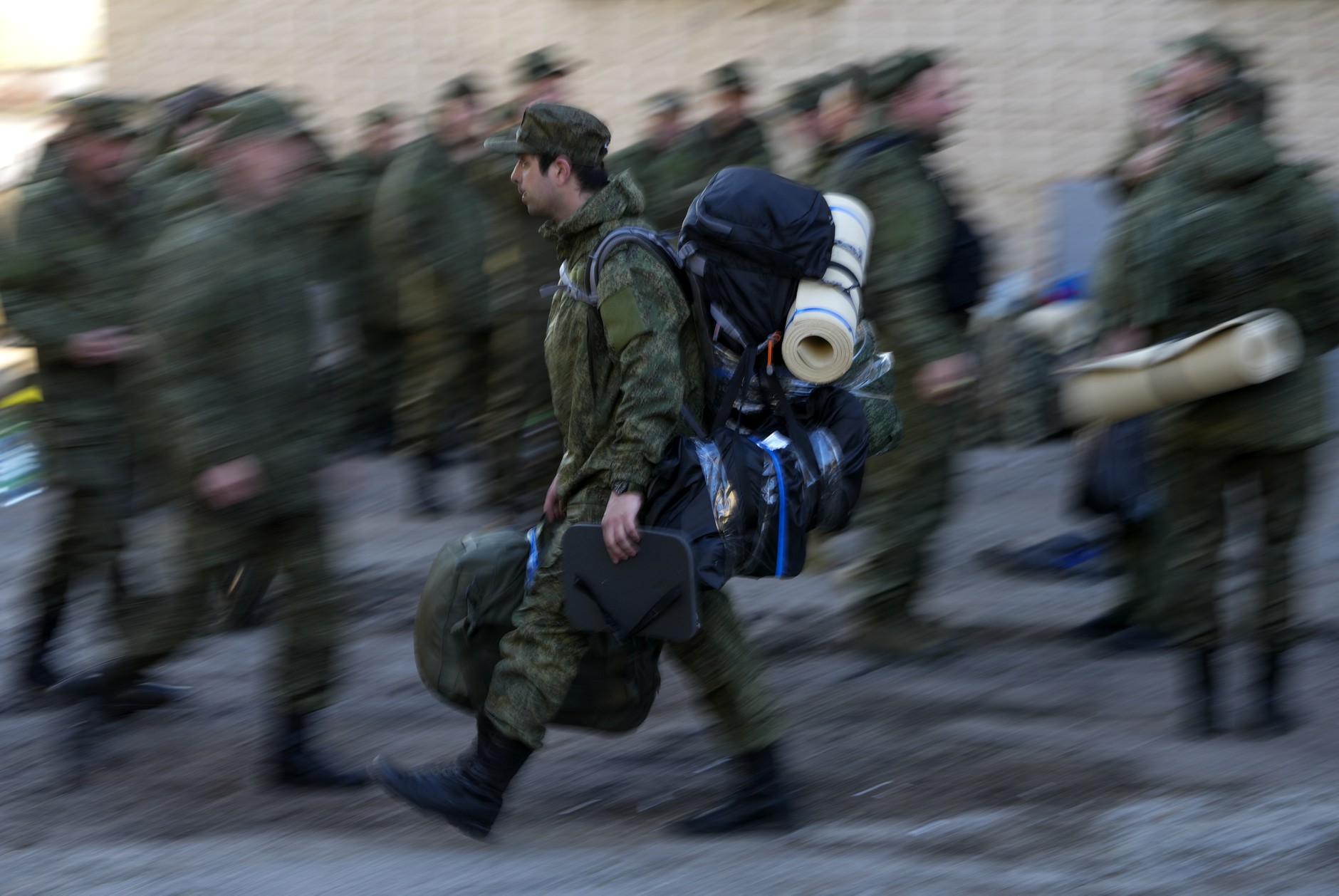
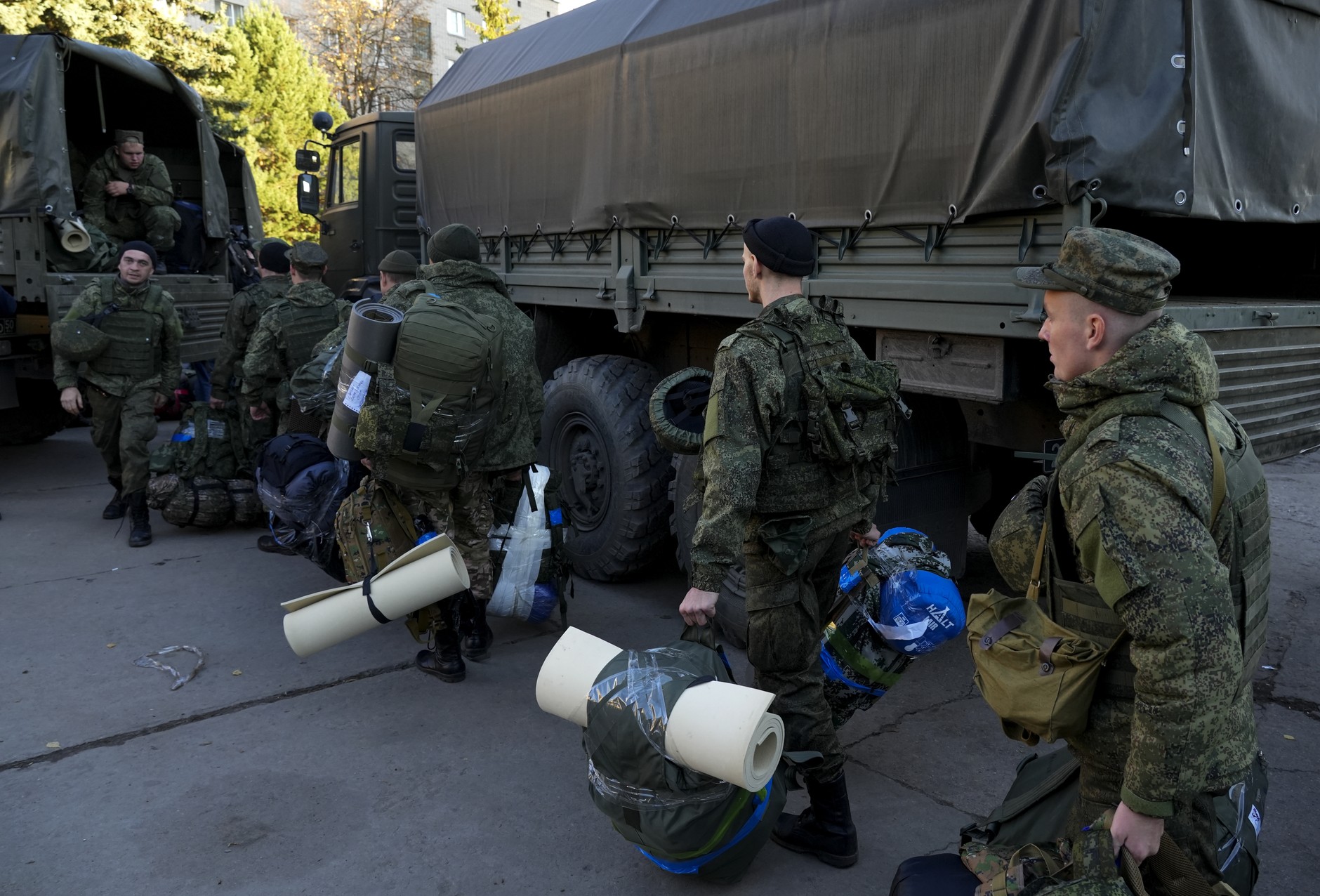
Russian appointed to service as part of partial mobilization, October 10, 2022, an illustrative photoAnadol / Contributor / Getty Images
After a week of his stay in the Krama, he shot himself with a rifle at the foot.
– We were assigned to the guard service. This is not my war. I prayed not to kill anyone. I came up with a plan: I loaded 31 cartridges into the rifle so that it looks like it. It was the first time I was shooting with weapons. This shot saved me – he says.
Despite the wound, he was not released from service – the commanders took him to the interrogation, and then accused of self -mutilation to avoid service. And this, according to Russian military law, is a crime.
From a field hospital near Izium in Ukraine, he was taken to a hospital in Moscow. There, a friend of the doctor helped him obtain documents qualifying for dismissal from service for health reasons. He says he wasn't the only one who went to such a maneuver.
– There were others like me. One guy shot himself and also claimed that it was an accident – he says.
“I almost didn't leave the house for two years”
During his stay in Moscow, the Federal Security Service (FSB) called for the interrogation. – I came up with a story: someone accidentally shot me when I jumped out of an armored vehicle. The FSB agent did not care about self -mutilation. He wanted to know who I saw, who I talked to and whether I killed someone – he recalls.
He was finally released and allowed him to return to his hometown.
– I almost didn't leave the house for two years – says. – I was afraid of the police. I ordered food with delivery. I felt like I was in pandemic insulation again.
Continued article under video material
In November 2024, the military contacted him – they obtained contact details from his parents. They told him to appear in the military unit the next day.
– I knew what to do. I was in contact with the Idite Lesom organization [Zgum się]. That same night I ran to Belarus, then flew to Yerevan – he says.
At the airport in Minsk, the border guard asked him about military status and made a phone. To Wasiliev's surprise, he was allowed to board the plane. He is currently in the capital of Armenia, but he is still afraid that he will be forced to return. His younger brother, called to service in 2024, is still on the front.
“Those who resisted were tortured”
The case of Wasiliev shows how Russia uses conscripts in the war with Ukraine. Many of them are forced to sign contracts or simply sent to the front without it. In April 2023, state pride adopted a law enabling conscript to sign contracts from the first day of service.
For Nikita Zwezdów, a 19-year-old who was appointed to serve in June 2024 after expulsion from a technical school, the choice was equally difficult.
– The command organized conscripts into units. Every six months trucks came to take them to the front. Some hoped that they would receive a salary, but eventually they received 2,000 rubles [87,5 zł] monthly – he says. He adds that Those who resisted were tortured – The commanders closed them, for example, in dryers for shoes set to very high temperature and beat until they finally buckled.
Russians appointed to service as part of partial mobilization, 2022, an illustrative photoAnadol / Contributor / Getty Images
– Later they tortured me at a training ground in Sergejewka – they forced to do 200 pumps and squats in the anti -rag mask and protective overalls. I also had to run 50 laps in full gear, all with constant mockery. I thought I would die – he says.
He adds that the commander regularly fired at the conscript with rubber balls. Some soldiers had a heart attack or mental breakdowns. At least one committed suicide. Finally, being after constant pressure, in September 2024, Zwezdow signed a contract. In October he was already at a training ground in Bikinski – he kicked his pits on waste and burned it, waiting for orders. He was to be sent to Mariupol or Melitopol.
– The commander changed the placement plans every day. Finally he said that we had two weeks left. I was thinking about step on a face or somehow crumble. I understood that I would never come back alive – says.
He managed to convince officers to give him a short vacation to “say goodbye to his loved ones.” He decided to take advantage of the situation and leave the country.
– At the beginning I was thinking about hiding and even giving in and serving a prison sentence. But then I realized that it is better to have some life abroad, since my own country does not want to accept me alive – he says.
“I'm glad I didn't get to the front”
Just as Wasiliew came to Armenia, one of the few countries to which Russians can enter without an international passport. Even there, however, they can't feel confident. Both deserters talk about constant fear of being taken by the Russian forces stationed in Giumri. This would not be the first such situation – it is officially known about at least two such cases.
Zwezdow says that he once published an advertisement on the sale of a laptop. At one point he discovered that buyers are Russian soldiers from the base in Giumri. – I was worried that they were chasing me, I tried not to show me [strachu]. But they just bought a laptop and left – he says.
Considering the presence of the Russian armed forces in Armenia, many deserters say that their only hope is to reach Europe and apply for asylum. In July, the Armenian police prevented the Russian military detention of a Russian soldier who escaped to this country.
Despite the uncertain future, Wasiliew and Zzezdow feel relieved that they managed to survive.
– It is hard for me to feel good that my life happened in such a way that I wasted the best years. But I'm glad I didn't get to the front. I'm already quite restless. I have no idea how I would live with a post -traumatic stress syndrome – says Zwedow.
I’m Ashley Davis as an editor, I’m committed to upholding the highest standards of integrity and accuracy in every piece we publish. My work is driven by curiosity, a passion for truth, and a belief that journalism plays a crucial role in shaping public discourse. I strive to tell stories that not only inform but also inspire action and conversation.