During the closed meeting of the parliament last week, the President of Ukraine Volodymyr Zelanski did not hide his indignation against critics.
According to two parliamentarians present at the meeting, they talked to Politico, provided that anonymity (for fear of the President's anger), Ukrainian president He gave vent to his frustration towards his own party, the servant of the nation. Zelanski was dissatisfied with a small attendance, because about a hundred deputies from his party did not appear at the meeting.
He complained about members of parliament, civil society activists and journalists who do not promote the invariably favorable image of Ukraine among Western partners.
He condemned those who tell “against Ukraine”, but His criticism only increased the voltage in the party.
Referring to reports of corruption and violation of rights, the president stated that Ukrainians speaking negatively about the situation in the country divert attention from what to focus on – i.e. from warfare and strengthening support from foreign allies.
The legislators expected Zelanski to be milder in the tone – especially in the light of his attempt to eliminate two key independent anti -corruption agencies of Ukraine. In the summer, these intentions caused the first nationwide street protests since Russia began the invasion in 2022.
Continued article under video material
The whole situation meant that many MPs began to wonder why Zelanski and his advisers did not foresee such a violent reaction of the public. Public opinion polls consistently show that even during the war, Ukrainians consider corruption to be the main internal problem of the country.
“The presidential administration has more and more difficulties”
The Ukrainian leader focused on the situation on the front and clearly expressed his intention to run in the elections that would take place after the war.
Political opponents have long been complaining about the impatience of the Ukrainian leader in the face of the restrictions and complexity related to the governance of democracy and his innate irritability to criticism. Zelanski's defenders, however, disregard these allegations, claiming that the war requires strong and firm action.
“Especially during the war, decisions must be made quickly and clearly,” said influential head of the Zelnski cabinet Andrij Jermak at the beginning of this year.
President's advisers also point out that their boss is highly popular in public opinion polls. However, they also emphasize that other war leaders adopted a completely different approach – especially British Winston Churchill, who willingly used the best, the most talented and most competent people from the whole political spectrum to cast positions in war bureaucracy.
Not only the political rivals of Zelanski are currently worried about the pursuit of centralization of power. Some legislators from the Zelanski party also question recent events, including releasing selected mayors and exerting pressure on independent state agencies.
The presidential administration is increasingly difficult to collect the votes needed to approve the preferred laws, partly because the rulers of legislators are increasingly frustrated with pressure to comply with the president's office. They are afraid that they will be blamed by their voters when the matters will take a bad turn.
This anxiety appeared before the attempt to liquidate anti -corruption agencies. Also a series of purges among more independent ministers and state officials caused anxiety behind the scenes.
As a result of changes in the government, there was a forced departure of famous personalities, such as Foreign Minister Dmytro Kułyba, the head of Ukrenergo (state -owned operator of the electricity transmission system) Wołodymyr Kudrycki and the very popular commander of the armed forces general Wałerij Załużny – currently the ambassador of Ukraine in Great Britain – who clashed with Zelnski on war strategy.
“Much deeper problem”
Each reorganization meant that a group of trusted friends and advisers of the president gained more and more power and control, while people ready to question and undermine the decision – or showing signs of independence – were removed.
The mood in the party was also not improved by the loud quarrel of Zelanski with US President Donald Trump in the oval office.
After this quarrel, the member of the Servant of the Nation and the chairman of the Ukrainian parliament Rusłan Stefanczuk issued a statement in which he stated that Ukraine must fix relations with Trump – hence the expectation that the Ukrainian leader would try to consolidate his party during the last week's meeting.
However, two deputies in an interview with Politico said that this did not happen.
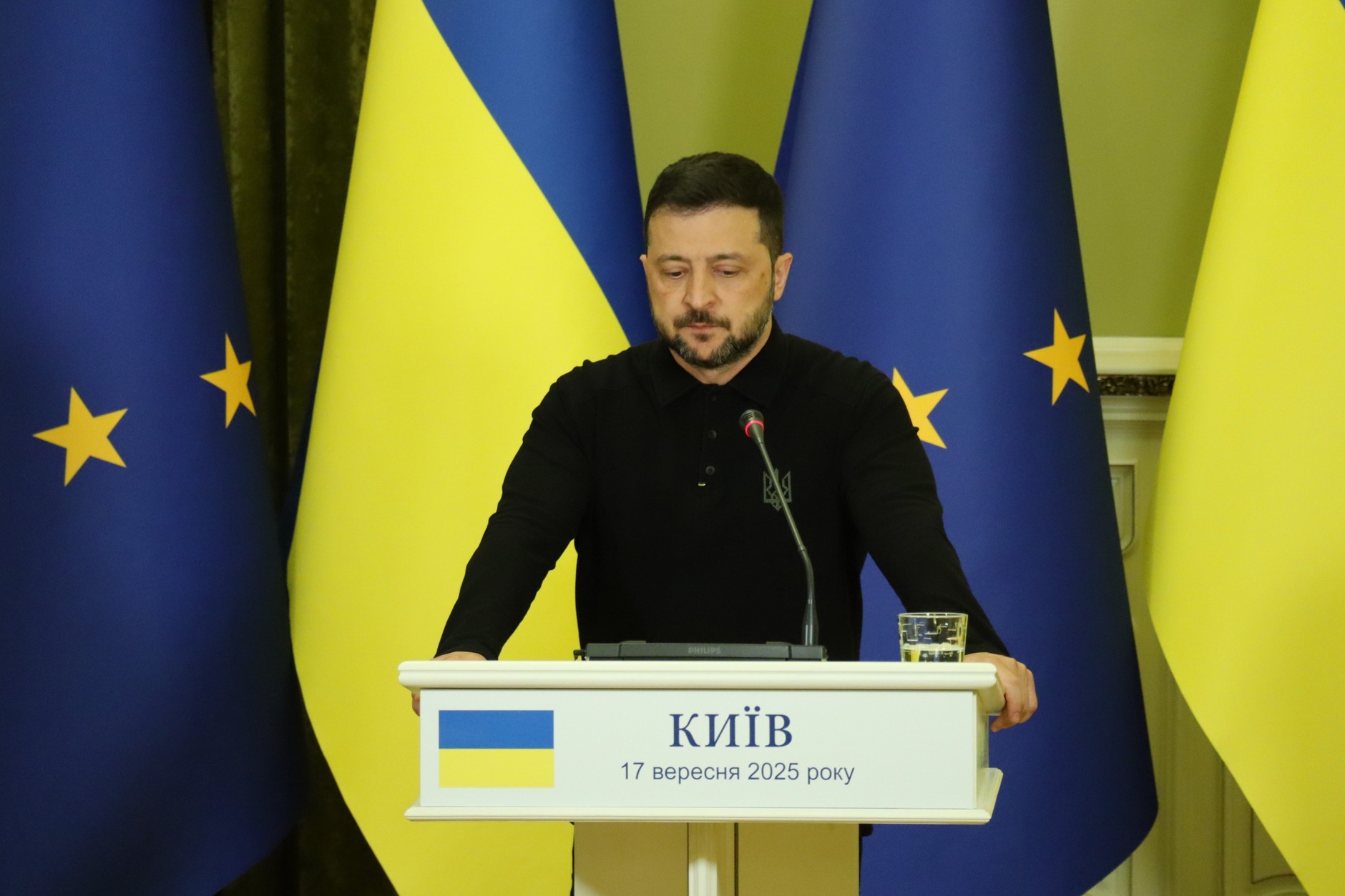
President of Ukraine Wołodymyr ZelnskiAndriy Zhyhaylo / camp / Global Images Ukraine via Getty Images / Contriubutor / Getty Images
The tension increased when one of them questioned the sense of the liquidation of anti -corruption agencies when they focused on people from the president's surroundings.
Although Zelanski said that in the future he would consult his party more often, “it seems unlikely” – he regretted one of the deputies. “The whole narrative indicates further exacerbation of politics in the country. From the point of view of the President's office, either you are on the Zelanski side or you are a puppet of Russia.”
Indeed, the president tightens the screw. For example, this month a group of about 20 former and retired Ukrainian diplomats and officials were covered by a regulation prohibiting traveling abroad without the explicit consent of the authorities.
– It is difficult to understand why in the fourth year of war suddenly it became so important to prohibit a group of no more than 20 people – people who have contacts and authority to promote the interests of Ukraine in the world – said Kułeba in an interview with Politico, which is one of the people to whom this prohibition concerns.
“The only explanation may be political considerations. And when such political logic will consolidate, it will be possible to arbitrarily decide which categories of people can and which cannot do specific things. Ambassadors are only an example, but an example that reveals a much deeper problem.”
I’m Ashley Davis as an editor, I’m committed to upholding the highest standards of integrity and accuracy in every piece we publish. My work is driven by curiosity, a passion for truth, and a belief that journalism plays a crucial role in shaping public discourse. I strive to tell stories that not only inform but also inspire action and conversation.