Why cannot be solved the problem of traffic in Bucharest / Capital with some of the most crowded inhabitants

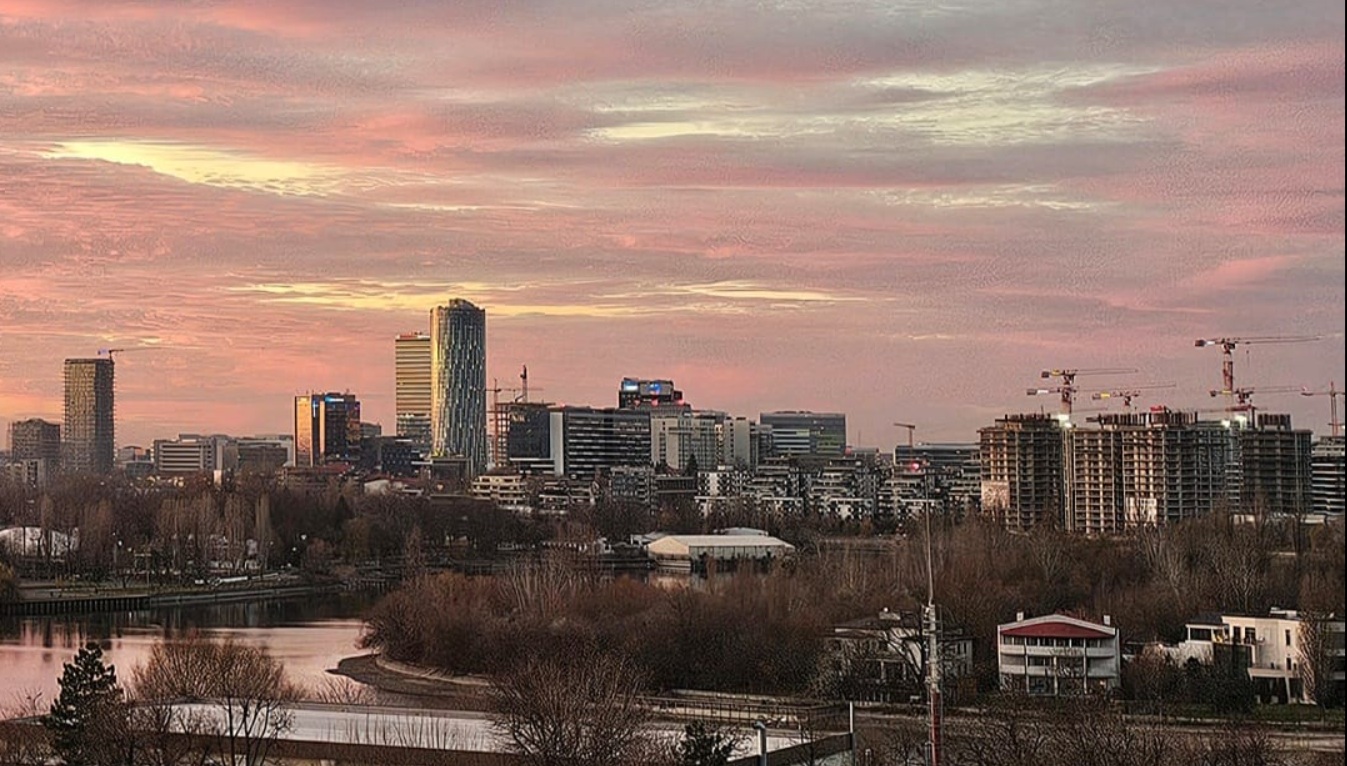
Did you know that Bucharest is one of the busiest capitals in Europe, in density? Regardless of the calculation methodology used by the Eurostat Statistics office, Bucharest is ranked among the first places. That is, in Bucharest, people live very crowded compared to the inhabitants of other capitals. In the absence of intelligent metropolitan development, this very high density is strongly felt on mobility in Bucharest.
Cătălin Drulă, who wants to be a candidate for the Capital City Hall, spoke, in an interview for Hotnews, about the need in traffic order. He also says, on Facebook, that “the city is blocked. Again” and that “it will become even more crowded with the return of the students”, which is why it is necessary “a plan that reduces the travel times”.
Like many other politicians before him, who have applied or were mayors in Bucharest, at the General City Hall or a sector, Drula talks about diversifying the means of transport to reduce traffic, without analyzing the problem as a whole.
Bucharest, on the 2nd place at the population density in Europe
At the density of the population by metropolitan regions, Bucharest is on the 2nd place, after Oslo. A metropolitan region includes the neighboring suburbs and areas that have strong functional links with the city. For example, Bucharest plus Berceni or Tunari commune, from where the inhabitants do the shuttle, daily, to come to work or school.
The density of the population in the metropolitan area is much lower than that calculated for the city itself, where there are bedroom neighborhoods, with blocks, on restricted spaces, such as Colentina or Berceni.
For the Bucharest Metropolitan Region, the Eurostat figures show about 1,300 inhabitants/km², after Oslo, with about 1,700 inhabitants/km². The most airy region is the area of the capital Vilnius, with 90 inhabitants/km². Somewhere in the middle of the standings is the Vienna region, with 349 inhabitants.
At the density of the population on Nuts 3 (the nomenclature of the territorial units for statistics), that is, the municipality itself, is on the third or fourth place (differs from year to year), after Paris, Athens and almost equal to the region of the capital Brussels. This methodology is calculated the density of the population strictly from an administrative unit.
In this ranking, Paris is in the first place with about 20,000 inhabitants/km², followed by Athens, with about 11,000 inhabitants/km², the region of the Capital Brussels, with 7,700 inhabitants/km², and Bucharest, with 7,400 inhabitants/km².
The data was updated by Eurostat in 2024.
In the case of Bucharest, both methodologies are important to analyze. Residents in neighboring areas come to work or school in a city already extremely crowded.
Subdimenstated infrastructure, great vulnerability
But do you know what the big difference is between Bucharest and the other crowded capitals in these charts? Infrastructure. For example, the Brussels region is surrounded by highways, in the center of the city you can reach one of them very quickly, using the tunnel network. To figure out the size, one of these tunnels (Annie Cordy's tunnel) has 2.5 km. Yes, 2.5 km below that urban agglomeration.
In Bucharest, the City Hall of the General Capital was tormented, along with the City Hall of Sector 2, to build the Mrs. Ghica passage, 216 meters, for four years.
On this poorly developed infrastructure, both the inhabitants of Bucharest and those in the neighboring areas are crowded.
This is how, in Bucharest, a person will lose over 12 days of work annually due to the traffic agglomeration, as the traffic index 2025, quoted by the Financial Ziarul, shows.
Bucharest is in 8th place in the world and 4th place in Europe in terms of car traffic, TomTom ranking shows.
Construction with thousands of apartments in already blocked areas
Despite this infernal traffic, along this insufficient infrastructure, in already suffocated and hyper-popular areas, new residential assemblies appear.
In the last five years, approximately 63,000 homes have been built in Bucharest, with a share of 20% in the total delivered at national level, shows an Imobiliare.ro analysis, quoted by Ziarul Financiar. That is, one in five new homes in Romania is in Bucharest.
Where are many of them build? In areas where the existing infrastructure is no longer facing traffic. For example, the Obor area is built “the largest residential complex in the middle of Bucharest”, with over 2,000 apartments, according to B365. Already the area is extremely crowded, the Obor subway station has already become inadequate at peak hours, the trams hardly take on the flow of passengers, and the car traffic are blocked every morning.
Not far from Obor, on the shore of Lake Plumbuita, a residential ensemble with 2,000 apartments is being built. It will have an exit to a narrow street, which is already blocked daily due to traffic. It is a unique street that will take over thousands of people.
The lack of new schools aggravates the situation
In all this urban chaos, new public schools are missing. In the last 30 years, many new apartments have appeared, but not schools nearby, to take over the children of residents. Many residential assemblies have appeared outside Bucharest, but there are no schools in those areas or are too small. In addition, the links between these residential assemblies and Bucharest, with public transport, are reduced, the personal car being the only solution in some cases.
Thus, the inhabitants of a neighboring commune, fresh tenants of an apartment from a large residential ensemble, put their children in the car, in the morning, and take them to a school or kindergarten in Bucharest.
Many of the students of a Bucharest school, even of a neighborhood school, are coming from the new residential assemblies built in the neighboring communes of Bucharest.
This urban chaos will persist as long as there is no effective collaboration between the mayors of Bucharest and those in the surrounding areas, as long as the erection of new housing is not conditioned by the construction of educational units and as long as new residential assemblies will appear, with many floors, in areas with under -adensive infrastructure.