We reveal the second part of the cycle of forgotten millionaires. In the first part we described, among others The silhouette of the creator of the cosmetic giant Oceanic or Barbara Piasecki-Johnson, who first cooked and then cleaned with the American millionaire to finally become his wife. This time we return to the “king of gelatin” or a millionaire, who recently returned, sharpening his teeth to the Korona Kielce club.
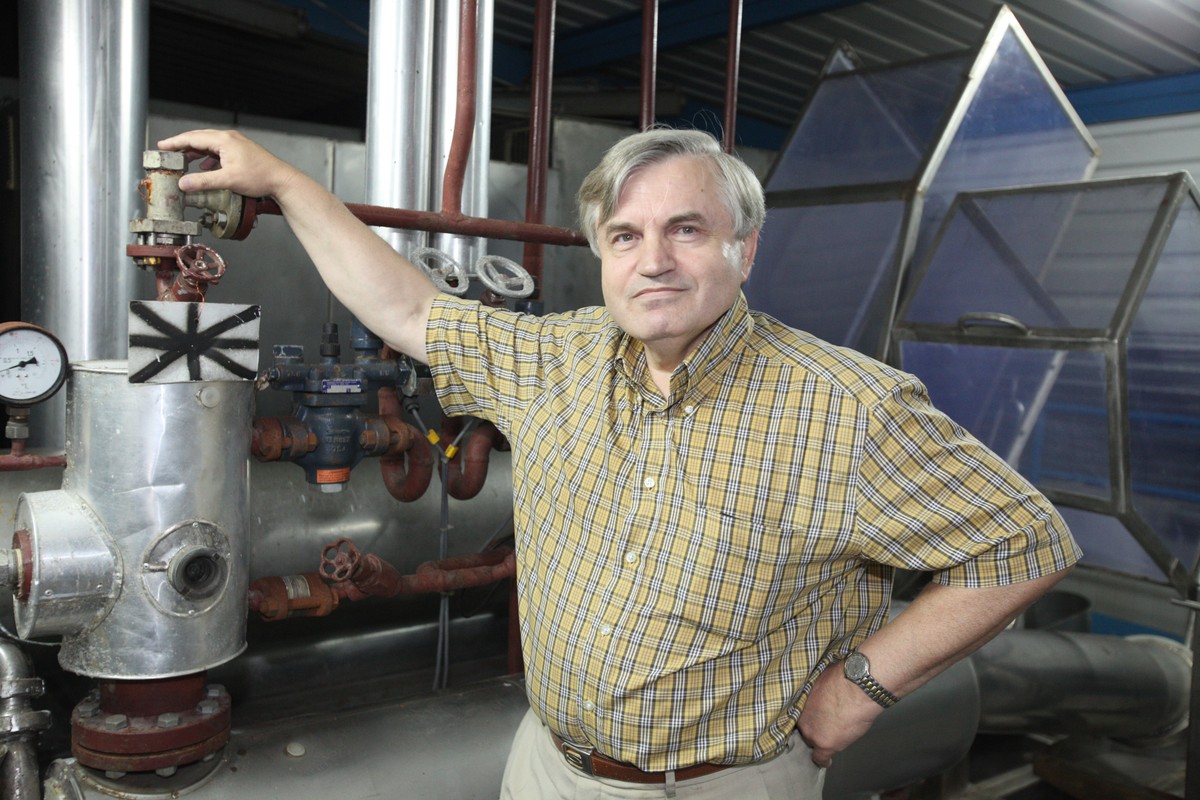
Kazimierz Grabek He was one of the richest Poles of the 90s on the list published by the weekly “Wprost” for almost a whole 90s. He was in the top ten. He was hailed as the “king of gelatin”. Born in 1949, he began his career during the transformation. In the early 1990s, he took over the gelatin factory in Puławy. Formally, the owner of the plant was his daughter. Grabek also took over the plant in Brodnica. He employed thousands of employees who dealt with the production of gelatin.
At the peak moment Grabek Industries was in terms of production volume the fourth player around the world. Jellyin was then a “must have” product. It was added to yogurt, cheese, sweets, cosmetics and finally medicines and other medical devices. The plant in Puławy was closed after a few years, and Grabek moved with his business to Zgierz.
He is considered a precursor of “lobbying”. He was famous for exerting influence and convincing politicians to his arguments. After the article “Gazeta Wyborcza”, in which the methods of the millionaire were revealed, Persona Non Grata became. Irregularities in his factories also came to light. Several cases were brought against the businessman in court. However, he was not convicted.
To this day, there is a case against him in the Łódź court. In 2019, he tried to return to the production of gelatin. He wanted to do it in an innovative way, and the investment was to be implemented in the Tarnobrzeg Economic Zone. For now, the announcements have ended.
See also: He was to fool the prime minister even at the writer. Here is the story of the Polish “King of Jagina”
Serial entrepreneur
Piotr Józef Buchner He also hosted “Wprost” on the lists of the richest Poles. He was the owner and administrator of companies in Poland and in the world: President of the Supervisory Board of Public-Dekor SA (Liechtenstein), President of the Supervisory Board of Spider-Net, member of the Supervisory Board of Bupharm AG (Switzerland), member of the Supervisory Board of Dekor Media SA, President of the Management Board of MetlexPort Sp. z o. o., President of the Management Board of Split-Trading Sp. z o. o., President of the Management Board of Clift Investemnt Sp. z o. o.
In 1970-1979 he worked in managerial positions in the chemical and pharmaceutical industry in Switzerland and France. In 1979-1994 he was an adviser to the Hopf Holding group and the general director of the Warsaw branch of the Pharmaceutical Company Solco Basel SA in 1989. He founded the Buchner Foundation, whose goal was to develop and support culture and science. He was a co -founder and member of the Polish Business Council, Polish Capital Club and Business Center Club. He graduated from the Faculty of Philosophy of Science at the University of Basel and Freiburg and obtained a doctoral degree.
See also: Piotr Śledź – who are the mysterious millionaire and king Instagram?
Football businesses
Marek Profus in 1994-1996 was the richest Pole according to “Wprost”. Profus, born in 1952, worked in a computer company. In 1977 he founded the company Profus Management, which imported RTV equipment to Poland and was a partner of the IT company Industrial and Financial Systems.
In 1992, the businessman decided to buy the Russian football club Fakieł Woroniż. In the early 1990s, he also purchased the weekly “Football”. He also sold players, mainly from Eastern Europe to Western clubs. In 2010, Profus was to be a manager of over 60 different players.
In 1993, together with his wife Gabriela, they created an international commodity exchange, which specialized in wholesale trade in military equipment, pus, fuels, colorful metals, steel, chemical products, medicines and food. Later he removed into the shadows. In 2011, he was to be interested in buying Korona Kielce and even Legia Warsaw. Ultimately, none of these transactions occurred. In 2020, it was again said that Profus could buy the Kielce Crown. Ultimately, he did not buy the club.
See also: Polish Queen Cappuccino powder. When she returned to Poland, a package was waiting in front of the door
Private airlines and advertising agency
Janusz Legań is a businessman Gdynia who started his career in the 1980s with a modest furnace factory CO In a short time she turned into the largest private company on the coast. Elgaz transformed into a multi -branch enterprise, deals not only with the production of gas boilers, but also PVC windows.
Janusz Legań on the LinkedIn platform writes that the company has been operating successfully for nearly 40 years. “I created a private multi -branch enterprise, which was compared to international concerns and which were politically attempted to eliminate. But to this day I care about over 200,000 of my clients. All industries in which I invested in, today they record colossal profits, but for others” – you can read.
Janusz Legaon had private television, advertising agency, tourist office, private airline, and even its own VIP terminal at the airport in Gdańsk Rębiechów. According to the weekly “Wprost” in 1991 he was the fifth richest Pole. In 1989, he started without success as an independent candidate for a member of the Sejm of the 9th term. He ran to the Gdynia City Council twice (in 1991 and 1994). In 1991 he obtained a councilor's mandate.
From sport to business
In 1991, he took second place on the list of the richest Poles “Wprost” Wojciech Fibak. He is the most successful Polish tennis player among both men and women of the Open Era, i.e. after 1968 on the international arena. In total, he won 67 professional ATP (Grand Prix) and WCT tournaments-15 in the single and 52 in doubles, including Australian Open 1978. It was the first title of the Great Slam won by the Pole-Mężczyzczyn and the first in the open era.
His unexpected successes caused an amazing “fibakomania” in Poland, probably only comparable to the later three decades of “Małyszomania”. Success on the court provided him with millions on his account, and this fibak willingly invested, mainly in works of art and real estate.
The article was originally published in June 2024.