The Ukraine's defense industry sets work points in Denmark, offering Kiev's weapons manufacturers protection against Russian rockets and bringing its know-how to Europe, Business Insider reports.
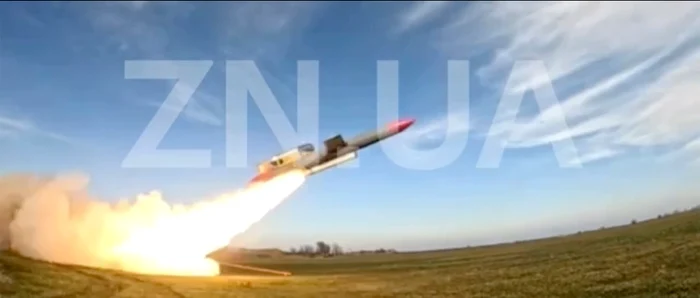
Fire Point has developed Flamingo Photo Profimedia drone
The Danish Ministry of Industry and Finance announced earlier this month that the Ukrainian defense company Fire Point moves some of its production to this country, in what it calls an important step for the security of Ukraine and which “creates new cooperation with Danish and European companies.”
It is the first stage of a new initiative called “Building for Ukraine”, in which Denmark has allocated over 50 million dollars meant to help Ukrainian defense companies start operations.
The project allows Ukrainian companies to produce in conventional ways, instead of camouflating or interrupting the production process to avoid entering the rockets and Russian drones.
For Denmark and its allies, this cooperation provides direct experience gained by Ukrainian companies in the manufacture of weapons for a major war. This perspective is invaluable.
Away from Russian attacks
The project, at least public, includes a single Ukrainian company. Fire Point, which also produces drones and missiles, intends to produce rocket fuel in Denmark.
The rest of Ukrainian companies produce howitzers, rockets, drones and more, but for now, only internally.
Even so, the step is welcomed as welcome by the defense industry. Serhi Goncearov, the general manager of the National Association of Defense Industries in Ukraine (Naudi), which represents about 100 companies, said that it offers Ukraine extended production options, with low danger. Financing, he added, also helps Ukrainian producers who have a much higher production capacity, in relation to the limited defense budget.
Troles Lund Poulsen, the Danish Minister of Defense, also stressed that this new plan means that “production can no longer be stopped by Russian attacks.”
Some production units in Ukraine were subjected to Russian attacks. The Malișev factory, which produces tanks, for example, was repeatedly hit by Russian rockets, but managed to repair the damage and continue the operations.
Or the new initiative would make the production much safer. Russia has previously threatened to attack Western targets, warning, for example, that it could target any base that houses Ukraine's F-16 aircraft. But he has not launched major attacks so far, probably because of not triggering a major conflict with NATO.
In Denmark, the risk is much lower than in Ukraine, where companies have to plan their attacks, which is a huge impediment.
Ukraine is forced to break production
Gonceov explained that Ukrainian companies must be mobile, ready to change their locations quickly, and have anti -aircraft shelters, measures that require planning and additional resources. Ideally, producers should work underground, but it would be expensive and it is not always an available option.
The loss of the machines following the attacks can lead to months of delay and can endanger the contracts that keep the companies on the waterline. They can also cause the “tearing” loss of qualified Ukrainian personnel, he said.
Misha Rudaminski, CEO of Himera, an Ukrainian company that produces secure communications systems, told Business Insider that she has to divide her production into different locations and store her stocks elsewhere.
This is to avoid becoming a bulky target that becomes valuable enough to be hit by Russia. Many companies, he said, divide production into “5, 10, 15 locations”, often sending only a few dozen people to each location. The large, centralized operations are quite rare, unless they are underground, he said.
An impulse for Denmark
Denmark considers the support of the Ukraine's defense industry as a way to strengthen its own industry, especially as it is among the European countries that warn that Russia will attack a NATO country in the coming years.
When he first announced the “Build for Ukraine” initiative in June, Poulsen said that it “will give Danish armed forces easier to some of the latest Ukraine technologies and experiences, which would otherwise be a challenge due to export control.
The Danish Minister of Industry and Business, Morten Bødskov, said that the new partnership “brings us much closer to the achievement of the great potential of the Danish defense industry.” Due to a “tragic” situation, he said, the Ukraine's defense industry has learned lessons and has accumulated valuable experiences “from which our own industry can now benefit.”
Denmark has also expressed an interest in the Ukrainian industry. Poulsen told Business Insider in February that he wants the Danish defense companies to collaborate with the Ukrainian ones and learn from them, so that he can “send some of the Danish companies learned from the Defense Firms.”
“I think we have a lot to learn from Ukraine,” he said, especially in a fast rate.
How quickly the project can be expanded is essential for Ukraine, while trying to make it better against Russia's attacks. But it is also in the long -term interest of Ukraine, as it tries to integrate into Europe's defense network.
This fact did not escape the Ministry of Defense of Denmark, which declares in June that the initiative will “finally ensure a higher degree of Ukraine integration into the European Defense Industry.”
In this regard, Serhi Goncearov, the general manager of the National Association of Defense Industries in Ukraine (NAUDI) noted that Ukraine is eager to support European defense and is not just a country where partners send money or equipment, and arguing that Ukrainians “can provide our knowledge, expertise and technology for the need for European needs, but also for the need for the needs. Ukraine, “he said.