The negative perspective given to Poland's rating by the Fitch agency on September 6 caused a storm. We had rating A— with a stable perspective since 2016, and here suddenly such a decision. Now Moody's has made a decision and it is negative for Polandbecause the rating was maintained at level A2, it is a perspective changed to negative. This is bad information for Poland, because it will make it difficult for the government to incur debt. Moody's level A2 with a stable perspective gave Poland in May 2017.
“Our decision to change the perspective to negative reflects significantly weaker forecast of fiscal indicators and debt compared to our previous expectations. If the government is not able to meet the spending pressure and obstacles to increase income, it will mean weaker fiscal strength and the effectiveness of politics compared to our current assessment, “the communiqué was written.
A2 is the fifth highest rating in Moody's hierarchy on a 22-speed scale. For comparison, S&P on a 23-degree scale gave us the seventh rating from above, and Fitch on a 25-degree scale-also seventh rating from above. Moody's treated us much better than other agencies. In the case of S&P and Fitch, we were on the verge of the “higher medium” level (upper medium) with a possible perspective of the inheritance to the “lower medium” (Lower Medium), Au Moody's A2 is a safe center of the “higher average” scale.
Continuing text under video material
Credit ratings of the “big three” (Moody's, S&P, Fitch) are very important for state finances. The Polish budget currently needs funds from debt emissions to heals a gigantic hole PLN 272 billion next year, and it may turn out that obtaining these funds will require investors to offer higher interest. Meanwhile, the debt service costs are a big problem this year, because they constitute as much as 11.5 percent. state income and 7.8 percent expenses.
In this context, Moody's decision was extremely important, because after the decrease in the perspective by Fitch showed whether it was a general change in attitude or for now an individual.
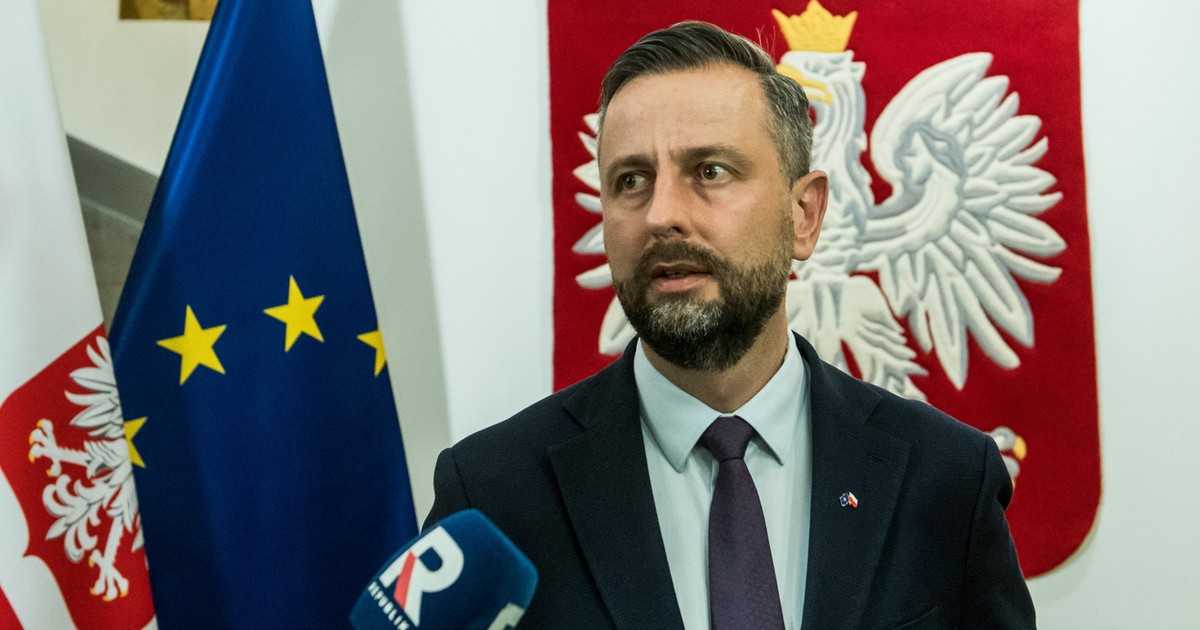
Minister of Finance Andrzej Domański with this situation buried the veto of President Nawrocki. Presidential adviser Leszek Skiba pointed out that the vetoed laws is PLN 16 billion, and the total deficit is planned for PLN 272 billion.
What does Moody's see?
In the report created by Moody's four days before the decision, we read that the deteriorated credit situation is not only the problem of Poland, but other countries have already taken some steps except to increase the deficit to remedy increased expenses for the army as a result of NATO requirements.
“We expect that all expenses covered by NATO's new obligations will be financed from public funds. In a short period they will probably be financed mainly through debt emissions, which is already a path taken by such countries as Germany (AAA – stable rating) and Poland (A2 – stable rating)” – reads in the report.
“Several European countries also have rich assets, which opens the way to financing some defense investments through privatization, although the sale of assets rarely takes place quickly. For example, the new Belgian government (AA3 – negative rating) is considering selling shares in banks taken over during the global financial crisis” – says Moody's.
As indicated in the material, this approach has a precedent: in the 1990s and at the beginning of the 21st century countries such as France (AA3 – stable rating), Italy (BAA3 – positive rating), Spain (BAA1 – positive rating), Belgia, Portugal (A3 – stable rating) and Austria (AA1 – negative rating) They sold state assets to reduce public debt and meet the criteria for entering the euro area. Poland also has huge assets in the form of shares of companies of significant value. It has control packages in listed companies, including the largest are: Orlen, PKO BP, PZU (in the PZU group are Bank Pekao and Alior), KGHM, PGE, Tauron and JSW. Their sales could free funds that reduce the budget hole for the time of increased expenditure on the army.
“Debt financing allows for quick mobilization of funds, and Sales of state assets may sometimes be less politically problematic than structural changes in expenses or income. To give countries and voters time to adapt to this change of expenditure priorities, the EU (AAA Stable) has launched a national escape clause that allows governments to increase defense expenditure without calculating penalties within the stability and growth pact. Sixteen countries – including Germany – referred to this clause to increase their defense expenses. Germany even changed its constitution in March 2025 to release defense expenses exceeding 1 percent. GDP from the constitutional debt brake ” – we read in the report.
It was also indicated that if about 80 percent Additional expenses will be financed by debt – and the remaining part will be covered with cuts of expenses, tax increases or the sale of assets – this would mean Additional debt emission of around EUR 550 billion in the next five years.
“The actual scale of growth, however, will depend on how many European governments will actually spend on defense and how they will adapt their budgets – by cutting expenses, an increase in revenues or a combination of both of these activities – to take into account these priorities” – it was written.
Moody's believes that in order for these changes in expenses to be neutral fiscal in the long run, most of the rule will have to finally create a fiscal space through Increasing income or cutting other expenses.
“Some countries already do this: the Baltic States have introduced new taxes for defense financing, dishes (AAA stable position) proposed similar funds, and Sweden (stable AAA position) and the Netherlands (AAA stable position) have realized budgets. Denmark also lifted the state holidayto increase tax revenues. These examples show that cautious budgeting can avoid direct competition with social expenditure. However, difficult decisions regarding priorities are almost inevitable if these expenditure increases are to be neutral credit, “says Moody's in the report.
Since a rich dish endures a public holiday in connection with increased defense expenses, Poland should not even think about testing a four -day work week, for example. Meanwhile, a pilot program has already been launched. 150 employers have applied who will receive subsidies for its implementation from the already overloaded budget. 694 subsequent applications at the end of August were at the processing stage.