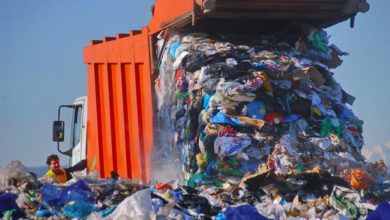
In August, the Central Police Investigation Bureau announced the discovery of new illegal dumps in the Lower Silesian Voivodeship. The waste included dangerous solvents, resins and petroleum products – some of them are most likely from abroad. In May and June, the Masovian police determined further places of illegal waste deposit in the Greater Poland, Dolnośląskie and Lubuskie voivodships.
Also less than a month ago, the police together with the Chief Inspectorate for Environmental Protection provided information about the detention of 21 members of the junk mafia. The waste burning on private properties for utilization earned up to hundreds of millions of zlotys.
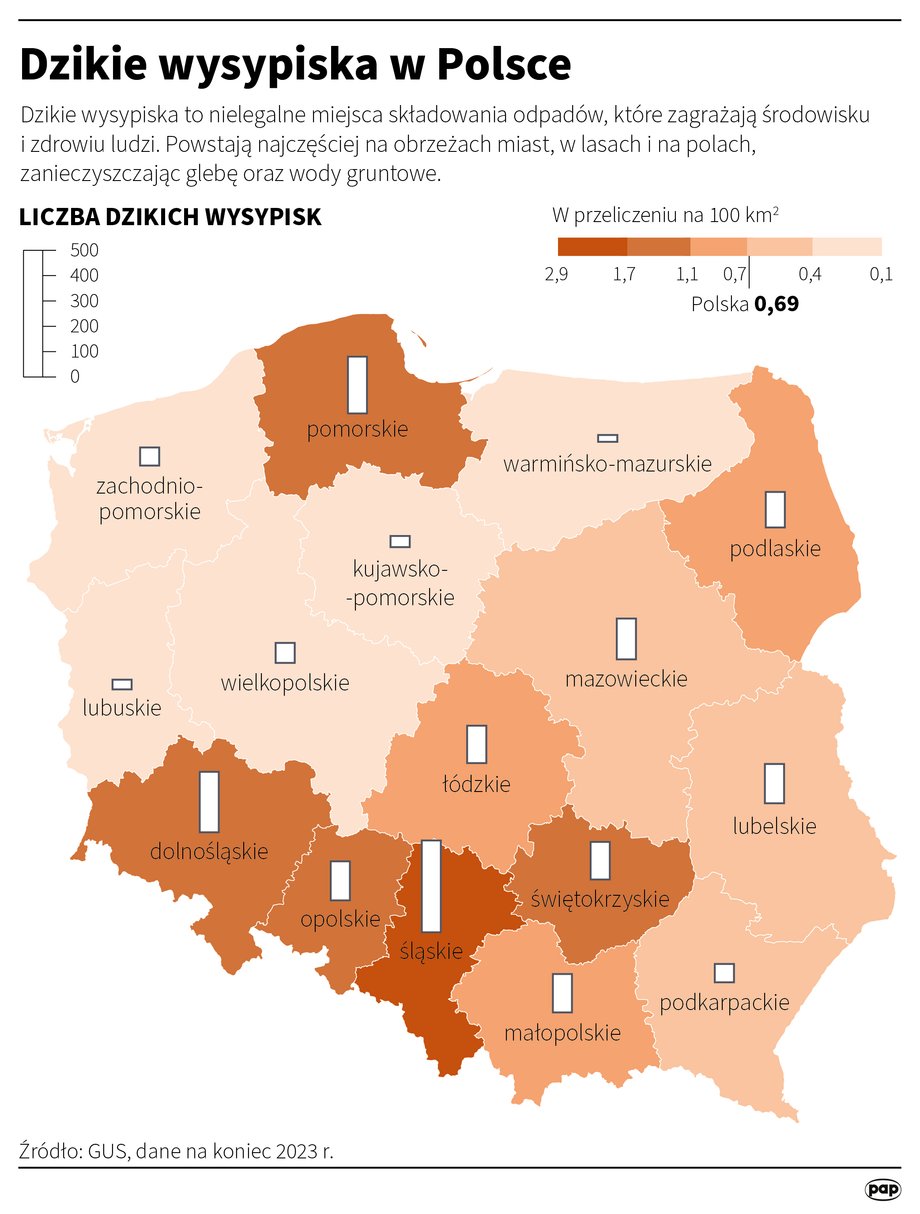
Wild dumps in Poland. There are hazardous waste on some of them
|
Michał Czernek / PAP / PHOTOS
According to experts discovered by services, loud cases of illegal landfills in Poland are probably only a drop in the sea. – although the scale of this practice is extremely difficult to estimate, It can be assumed that many cases still remain undetected – admits in an interview with Business Insider Piotr Szewczyk, chairman of the Council of the Regional Municipal Waste Processing Installation, specialist in industrial investments and waste management.
Not all the actions that the state takes can be considered sufficient.
The mafie is so rich
– Illegally stored hazardous waste is ticking ecological bombs. Due to the huge costs of their disposal, it is on them that the so -called The junk mafies are able to get rich the most. And when the situation gets out of control, not only the need to remove waste arises, but also to remove damage in the ground or in the water that caused – says Daniel Chojnacki, legal advisor and partner at the DZP office dealing with environmental protection.
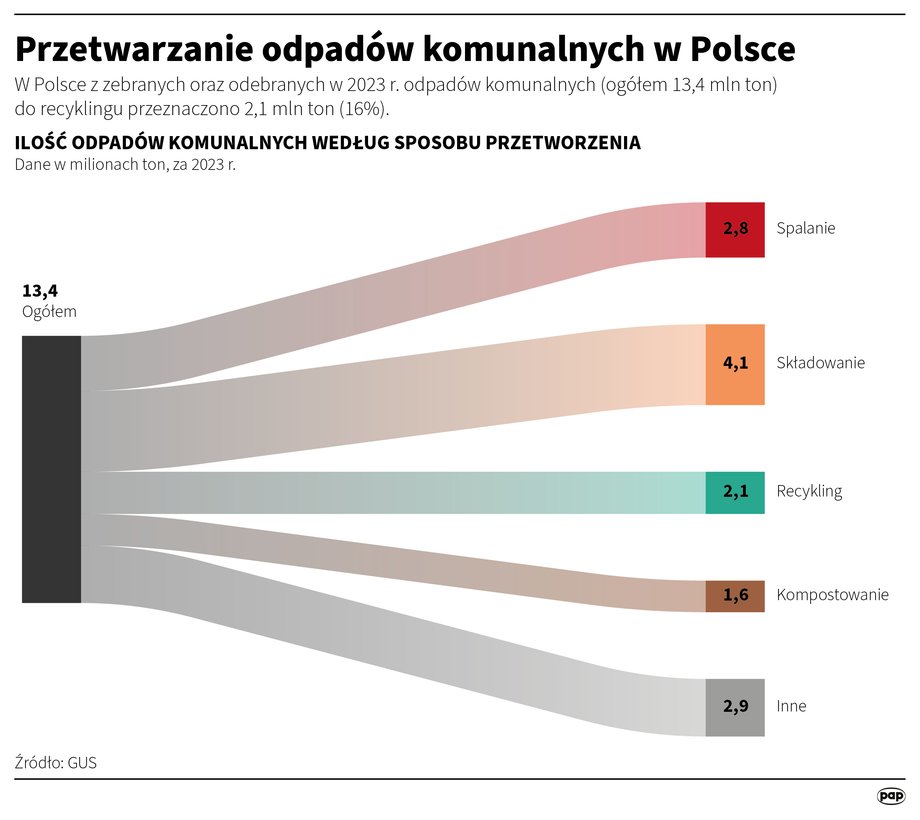
Processing of municipal waste in Poland
|
Michał Czernek / PAP / PHOTOS
The expert talks about Modus Operandi criminals. – The procedure of illegal waste storage, including hazardous waste, is extremely lucrative. A company is created that meets the minimum requirements. It often rents from people who can act in good faith, specific areas. Then, acting in the scope of its permits, he takes over the waste, in fact removing responsibility for them from the entities that produced them. Waste does not go to an incineration plant or a processing plant, but simply on a plot, under some hall, or even are buried. What this entity receives, This is a remuneration from contractors often acting in good faith – says Patron Chojnacki.
– The more difficult the waste, the higher the remuneration for its legal development. Such an entity, already by definition, illegally offers a high price, but lower than market. This is this earnings, and at the same time does not borne in principle any costs related to development – he adds.
Criminals have a new way
Lawyers also pay attention to a new way of criminals. – Once these waste was mainly buried in old clay mines, and then there was a fashion for their harvest and setting on them. Around 2018, criminals have changed and the practice of criminals has changed – Dr. Radosław Maruszkin, a lawyer dealing in environmental protection and managing the Chancellery of Maruszkin.
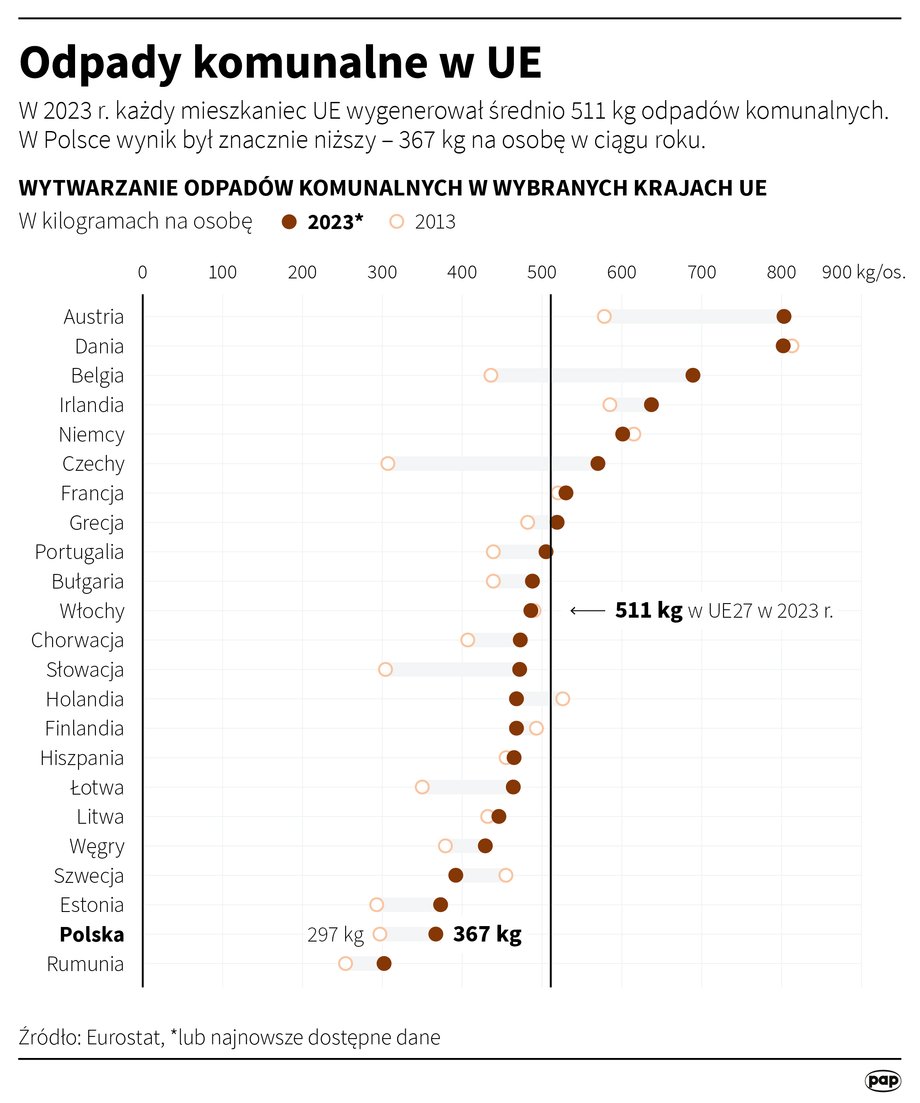
Municipal waste in the EU
|
Mateusz Krymski / PAP / PHOTOS
– Now more complicated waste is more popular – for example, chemicals in the so -called mausers, i.e. large plastic containers. Criminals either load a truck trailer and abandon it in a random place, or store these waste in unused real estate, old warehouses and disappear. In this case, the owner of the property is responsible for developing this waste – explains the lawyer.
Poland reacts. Is that enough?
Poland has been fighting a war with junk mafias for several years. The law was sealed, the awareness of citizens and the activity of services increased. The Łódź prosecutor's office dealing with the procedure regularly informs about the progress of the investigation – it already includes over 700 companies.
Our interlocutors, however, admit that there is still a lot to be done and the state's possibilities remain too small.
-The Polish situation is much better compared to what was 5-10 years ago. We have relevant regulations, society is certainly more sensitive to the issues of illegal waste storage. However, the enforcement of existing regulations and the efficiency of the state is still a problem. Large rotations in VIEP or relatively little money intended for fighting a powerful procedure is undoubtedly weak points – characterizes the situation Daniel Chojnacki.
Stopping fires are also regularly rolling through Poland – most likely largely caused by intentionally. In the years 2017-2022 a total of 754 fires of waste collection places were registered. Although in the meantime the regulations against the arsonists were tightened, 105 (two per week on average) were recorded in 2023. This is still a common phenomenon. For example, at the beginning of September a landfill in Bełżyce in the Lublin poviat was burning, In August in Tychy, in July in Wola Szacjska in the Wołomin poviat.
The rest of the article under the video:
– If there is a specific penalty for a given offense or crime, it cannot remain theoretical. Meanwhile, no offenses are found sometimes. And even when it is found, the perpetrators are not detected. And if they are rarely detected, it turns out that this is the so -called The pole (a person substituted by actual perpetrators), and if not even a pole, this punishment will be symbolic and will be imposed in many years. Unfortunately, we still deal with such situations – adds Daniel Chojnacki.
Soft abdomen
The problem is not only punishing the criminals themselves, because the institutions responsible for detecting perpetrators are also in trouble. – Environmental protection inspectors earn little and do a very difficult job. We see the phenomenon of the outflow of inspectors to the private sector and vacancies. This is a big problem – diagnoses Dr. Radosław Maruszkin.
Poland is also struggling with the problem what to do with illegal waste. The costs for individual municipalities are too high. – the amount of removal of a standard ecological bomb – of course depends on the size of the composition – between several hundred thousand and several million. Sometimes it can be even a dozen or tens of millions – says the lawyer.
As a result, illegal landfills can exist for many years. In Konin, to deal with the problem, the city took a PLN 5 million loan with Provincial Fund for Environmental Protection and Water Management in Poznań.
In Głogów, an illegal landfill containing hazardous waste “has been functioning” for seven years. It will finally be disappeared soon – the government announced in July that it would allocate PLN 400 million to remove illegal landfills. This amount consists of PLN 100 million from the National Fund for Environmental Protection and Water Management, PLN 100 million from the National Reconstruction Plan and PLN 200 million from the state budget.
Experts appreciate this movement, but indicate that it is too little to talk about solving the problem. – PLN 400 million to fight illegal landfills is a slice for a huge wound. Yes, this is an important initiative, but definitely insufficient. Sometimes removing such landfills costs even billions – says Piotr Szewczyk.
-there are 30-50 thousand tons of waste in warehouses, and The tenders show that the cost of utilization is PLN 10-15 thousand per ton. We have a lot of it – he calculates. However, money must be spent – the gets of dangerous substances to the soil or the pollution of groundwater due to abandoning utilization would only increase the costs incurred.
Billions are talked about, for example, in the context of a waste landfill in Giebnia in the Kuyavian-Pomeranian Voivodeship. It works legally. The problem, however, is that due to the illegal actions of the mafia, it was filled in just five years. Although the residents were to serve for decades.
Local authorities estimate that the cost of removing waste may amount to up to PLN 10 billion. The landfill, however, was not on the ministerial list – it operates legally in itself. That is why the local government is applying for funds from the NFEPW.
As our interlocutors indicate, there are also problems at the interface between the competences of the state and local governments. Gaps regarding the responsibility of individual public institutions are also a problem that needs to be solved – they emphasize.
Not only hazardous waste
The problem is not only hazardous waste, but the total number of wild dumps. According to GUS data in Poland At the end of 2024, there were 2,728 wild dumps. It's nearly 600 more than a year ago.
According to Tomasz Uciński, president of the National Chamber of Waste Management (KIGO), the problem of waste management will increase. So let's solve it systemically. He claims that the future is a network of local incineration plants that would end the so -called waste tourism. Local governments are increasingly planning to use waste in the energy sector, but this process is definitely too slow.
As Uciński says, it happens that The recipient is up to 100 km away two or three times cheaper than prices in municipal installations, which reach up to PLN 700-800 per ton. Such price spanities are conducive to the formation of a gray zone.
Local governments have high hopes for the manufacturer's extended responsibility (ROP) increasing the obligations of entities responsible for the launch of waste to the market. However, it is still a long way to fully introduce the regulation – it is to be fully in force in 2028.
Uciński draws attention to a small number of incineration plants in Poland against the background of other European countries. Many of them have been created in recent years, but according to current estimates There are 12 incineration plants in Poland with the power of approx. 2 tons a year. For comparison, in Germany the power is even ten times greater.
The president of KIGO believes that all cities over 50,000 residents should analyze whether such a local heat source based on waste produced by residents and which cannot be recycled, they could not be locally turned into energy.
Other experts agree with this thesis. – In terms of incineration plant, we are late and underinvested. Over the years, we pretended that we didn't need it because we would have recycling. He is important but limited. Scandinavian countries, which are a model of ecology, calculated per capita of the incineration plant much – confirms Piotr Szewczyk.
Ecological organizations oppose incineration. They emphasize the harmfulness of substances released into the atmosphere and a negative impact on the environment. At the same time, they are afraid that this will reduce the enthusiasm for recycling. And in accordance with the EU requirements, the commune will be required to prepare 65 percent. municipal waste for re -use and recycling.
Daniel Chojnacki believes that incineration plants will not completely solve the problem of illegal landfills. However, they can limit it. – They will not settle the problem themselves, because the whole system is needed and Recycles play an equally important role. However, incineration plants can significantly reduce the scale of abuse. As long as there are easily people who offer waste takeover for a smaller amount than what the incineration plant takes on the gate, it can necessarily be a problem with this waste all the time – sums up the lawyer of the DZP office.