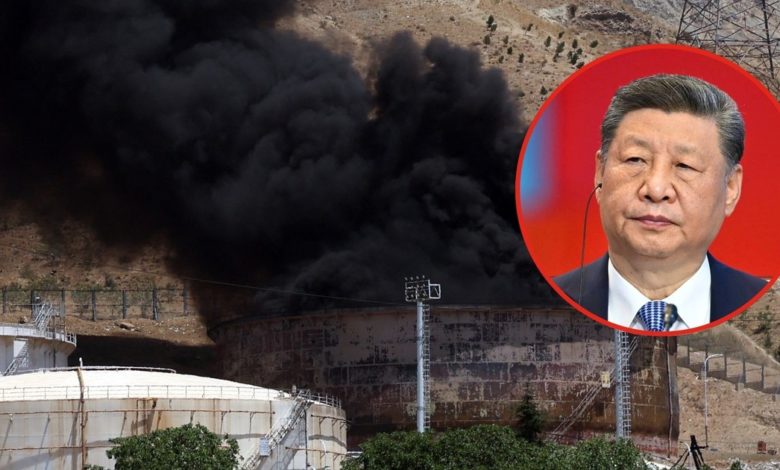
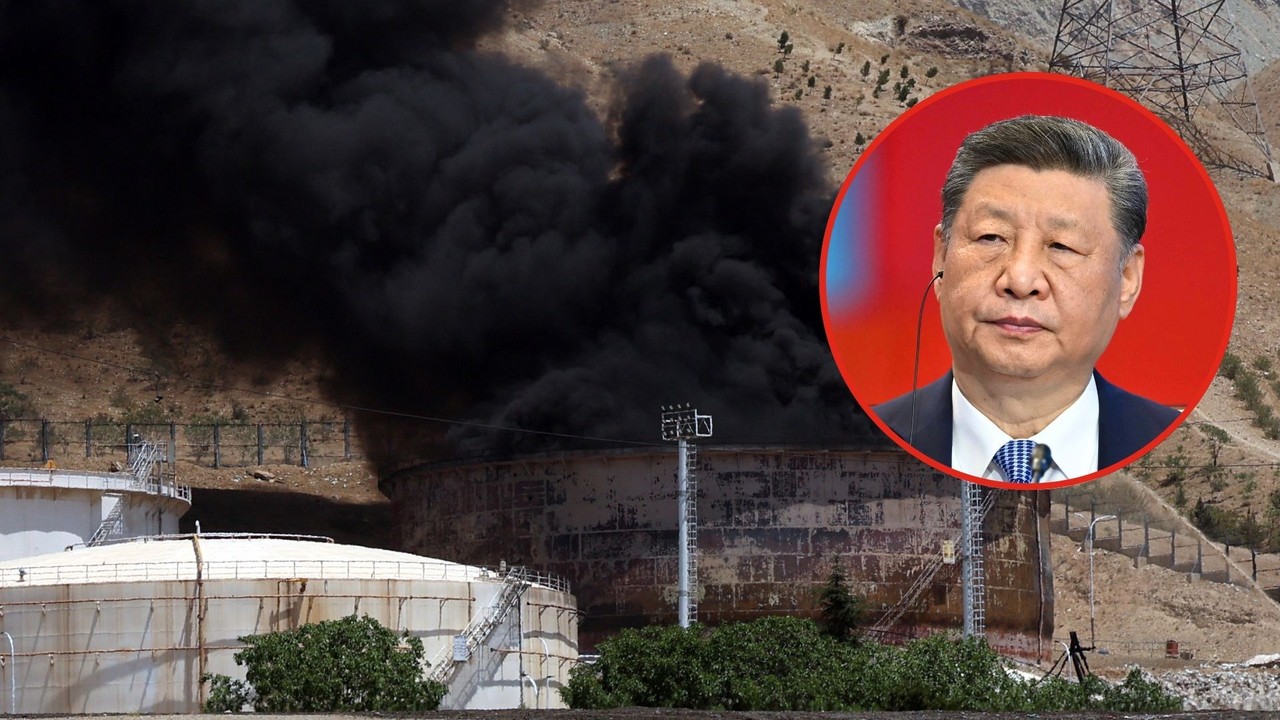
For years, China has been using their relations with Iran to expand influence in the Middle East, while making cheap Iranian oil and more broadly deliveries from the Persian bay the basis of the energy basket of the largest oil buyer in the world.
Chinese leader XI Jinping said this week that all sides of the conflict between Israel and Iran should “take action as soon as possible to prevent further escalation of tension.” Beijing said that the United States should not interfere in their “normal trade” with Iran and opposed the sanctions imposed by the US.
– Of course, China is concerned [ostatnimi atakami] – said Gedaliah Afterman, an expert for China and the Middle East at the Institute of Diplomacy and Foreign Relations Abby Ebana in Israel.
– If the situation continues to escalate, they will lose a lot, both in terms of energy security and Iran as a strategic card that the Middle Kingdom has.
Since the exacerbation of the sanctions imposed by the United States on the Iran nuclear program at the end of 2018, Beijing and Tehran have strengthened relations.
Beijing has become the most important source of income for Tehran, buying most of the Iranian oil and providing this country with electronics, vehicles, machines and equipment for the production of nuclear energy.
Last year, Iranian oil accounted for as much as 15 percent. oil supplied to the second largest world economy. According to the American Energy Information Agency (EIA) last year, China imported a total of about 11 million 100,000. oil barrels a day.
According to data from the KPLler and Bernstein research group dealing with tracking of freight transport, the Chinese import of Iranian oil increased in most 2023 and 2024, but at the end of last year it began to fall due to the growing threat of new sanctions from the USA.
In September 2024, Iran exported 2 million 400 thousand. oil barrels a day, of which 1 million 600 thousand Baryłek went to China. Until April, Iranian deliveries fell to 2 million 100,000. barrels a day, of which 740,000 Baryłek went to China. Analysts say that Malaysia is also an important exporter to China, because the loads sent from Iran are repacked or transferred to other recipients to avoid sanctions.
Analysts of the Fitch Ratings agency said this week that “Even in the unlikely case of loss of all Iranian exports,” it can be replaced by free production powers of manufacturers from the OPEC+group.
Continuation of the material under the video
There may be other, more serious interference in energy supply. The war, which threatens to spread to the whole region, has already caused threats from Iran that it could block the Strait of the Ormuz.
Every year, hundreds of billions of oil and gas from nearby Persian Gulf countries, including Saudi Arabia, the largest oil supplier for China outside Russia, go to China through this waterway.
China does not publish official data on the size of their strategic oil reserves. However, Michal Meidan, Director of China's research at the Oxford Institute of Energy Studies, estimates that in the event of limiting deliveries to the country, all types of reserves are enough for about 90-100 days.
In addition to the growing dependence on Saudi oil, S&P Global analysts noticed that over 25 percent. Imports of liquefied natural gas to China last year came from Qatar and the United Arab Emirates. Although China has 15 LNG contracts signed with these two Persian Gulf countries, importers can be forced to buy on the spot market at higher prices, say S&P analysts.
For China, the Israeli-Iranian crisis appears at the time of fundamental changes in the country's energy structure. For decades, this country has been the largest consumer of oil in the world. Under the rule of XI, China strives to increase energy independence, which ultimately requires a huge increase in the share of renewable energy and the electrification of the transport and production base of the country.
Thanks to the boom for solar and wind energy, the share of renewable energy sources in the power of the power plant increased last year to 56 percent, from about one third ten years ago.
According to Neil Beveridge, director of research on the Asia and Pacific region at Bernstein, the “key conclusion” for administration XI from the current crisis will be doubling efforts in favor of self -sufficiency.
“If it didn't happen quickly enough before, now it will run even faster,” he said.
Analysts say that in the short term China can benefit, because Washington's attention is more focused in the Middle East than on the tension with Beijing.
However, in the long run, Iran's weakness may threaten the diplomatic influence of China in the region and potentially disturb their pursuit of presentation, at least in the national arena, as a reliable mediator in global conflicts.
In 2021, Beijing signed a 25-year cooperation program with Tehran. In 2023, Iran also joined the Shanghai Cooperation Organization led by China, which is part of Chinese efforts to position himself as responsible power and offering developing economies alternatives to global institutions directed by the United States.
In 2023, Beijing boasted his role of a mediator in agreement between Saudi Arabia and Iran and published a 12-point peace proposal regarding the war between Russia and Ukraine.
Despite these activities, Beijing will probably remain off the beaten track between Iran and Israel, as in the case of the fall of the ally of Bashar Al-Assad in Syria last year, which emphasizes the limitations of the influence of Chinese foreign policy.
Jingdong Yuan, director of the China and Asia Security Program at the Stockholm International Institute of Room Research, said that although China rhetorically supports the countries “perceived as treated unfairly or subjected to the beeps from the West”, in fact the Beijing approach to regional conflicts is “always cautious”.
Beijing will be concerned about the influence of this situation on other allies in the region, such as Saudi Arabia. “The fall or collapse of the Iranian system or Iranian power we knew is not good news for China,” said Yun Sun, an expert on Chinese foreign policy from the American Think Tank Stimson Center. – It indirectly means that American influence has expanded.
Additional information [przekazał]: Wenjie Ding in Beijing.
I’m Ashley Davis as an editor, I’m committed to upholding the highest standards of integrity and accuracy in every piece we publish. My work is driven by curiosity, a passion for truth, and a belief that journalism plays a crucial role in shaping public discourse. I strive to tell stories that not only inform but also inspire action and conversation.