The forgotten delicacy of Romanian gastronomy. It was the pride of any boyar cuisine and his taste on the spell and on Shakespeare


A castrated coconut has become a true “caviar” of Romanian grainomy. It bears the name of clamp and has a very fine and delicious meat. Before, it was served especially at the boyar tables, based on recipes that would be craving even the most mournful.
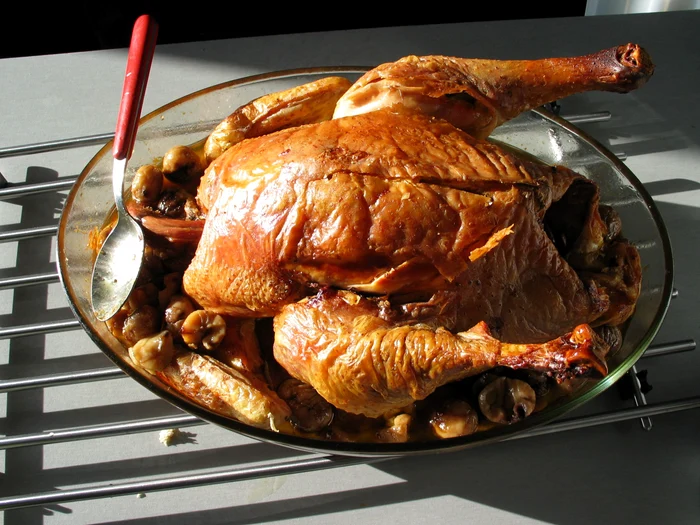
The flap is a delicate culinary photo wikipedia
Each nation is proud of its delicacies. What would be the French without the famous cheese with mold or the Brittagne coquellet (small chickens), Italians without the famous traditional cheeses and sausages or Russian Protipedeada without the Black Sea.
Well, the Romanians also had their “caviar” from the yard, namely the fatty chick only to give in the oven. For those who do not know, the flap is a coconut castrated from “childhood” and is allowed to get fat and to laziness. With the right food its meat becomes a hard to match.
Although now it has almost disappeared from Ogrăzi but also from the Romanian culinary arsenal, it remains a living legend of traditional gastronomy on the Carpathian-Danubian lands and is looking forward to being brought to date and put to its place of honor, competing with the great European gastronomic delights. If we want to boast something from a culinary point of view, the easiest would be with the preparations of carp and mangali, the two sovereign brands of Romanian pans and ovens. And this under the conditions in which numerous old recipes have been preserved, from the masters of the boyars, who make the most gângav to leave their mouths.
What is actually a clamp
The flap is drawn from an absolutely normal cock. But, be careful, from a more heavy race, meat. The chicks go out late in winter from the egg, spring are selected. The most beautiful copies of the rooster are given aside and prepared for “clamping”. That is, at the age of about 8-9 weeks they are surgically castrated. They become sexually inactive and the effects are economic and gastronomic. Instead of running after chickens, they are satisfied to live and feed on considerably. Obviously, to the joy of the housewives.
The flapons are left outdoors and fed mainly with corn, wheat and protein plants such as peas. At the boyar courts, for the chosen vines, the flapons were fed with wheat soaked in milk. The most, some pampered of the ogrăză. Due to the appropriate castration and food, some thin fat layers appear inside the muscle area. This automatically leads to a younger meat and an unforgettable taste. It is the kind of bird that is “lived”.
Increased quality clamps requires a lot of attention and well -selected food. Usually, the boyar argues were the eyes and the flap, especially because these delicacies were intended especially for the feudal masters but also to the guests with Ştaif. The flap can be cut after at least six months of life, exposed to that period of fattening, but also “finishing” in comfortable wood shelters. It must have a minimum weight of 3.1 kilograms. A 4.5 kilograms clamp is a real delicacy. There are also copies that reach 5.5-6 kilograms, the fat content being higher and the meat bathed in flavors. If the chicken is castrated in the spring, then it is only good to eat at Christmas.
From ancient Rome to the Boierești Cuchii and the Moşieri courts on the banks of Prut
The history of the clamps is long. The first operations of transforming the roosters into clamps were attested in China, Greece and ancient Rome. One of the oldest written testimonies regarding the clamping of roosters dates from 162, during the Roman Republic. More precisely, it was about Lex Fannia, which inceive the fattening of chickens to preserve cereal ratios. The Romans found the solution to cast the roosters, although this cost more wheat. But look, they came across this culinary delight, represented by the clamp meat. In the Middle Ages, the flapons were the favorites of the nobility. The medieval texts attribute to the medieval monks, from the European West, a special weakness. In France there was a true tradition of the clamps, especially by castrating the roosters of the Bresse breed, the only one in the world of controlled origin.
However, the Romanians led the preparation of the clamp to the superlative. That they learned the process from the Romans, from other nations that passed through the area or simply because they also realized what happened when you cast the roosters, the Romanians became the masters of the growth of clamps. Especially at the Boeresti courts. Because, let us understand each other, not everyone was good at this surgical operation, and not everyone allowed to grow such birds. Those of the meat breed were preferred, the best developed specimens, which obviously only find in the courts of the feudals or the renowned households. It is said that the Craiovești boyars, the famous feudal clan who played the political games in the medieval Vlahia, were passionate about flapons in the fridge. Especially of the well -greased or filled or stuffed and go to the fireplace. At the great royal courts in Moldova and Wallachia, the flapons were feeling. We also had renowned breeders, especially in the 19th century, when the promoted balls had to be fed with all kinds of delicacies, including fat and tasty.
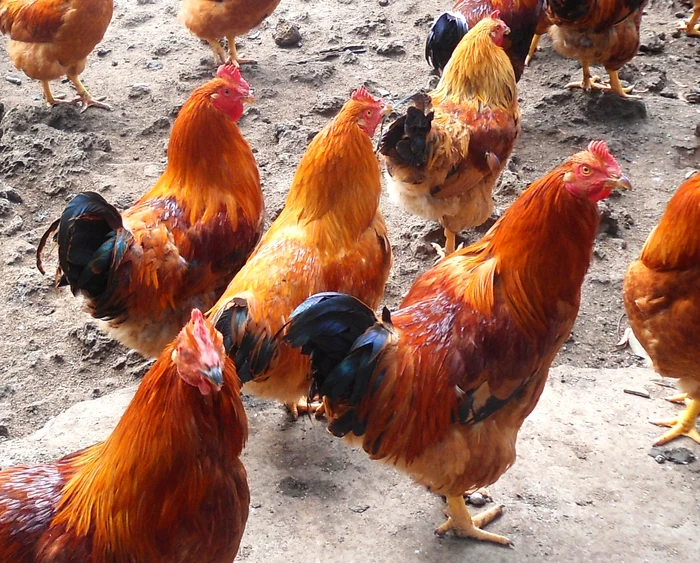
The roosters are castrated and put to fatten photo wikipedia
The flapons began to disappear with the 50s. In communism the comrades did not see with good eyes these bourgeois-mosesti dishes. In addition, emphasis is placed on a mass agricultural production, and not sophisticated things. Today the clamps, from the boyar brand, have become a rarity, on the verge of extinction. “Clapon had only the man-man. He was coming to the animals, he was casting and ready. Some were alone, but he was at risk. roller.confessed Moș Toader, a 94 -year -old old man from Santa Mare, Botosani County.
The flap, a castrated king of Romanian cuisines
Even the great William Shakespeare was in love with the carp. They mention, as a delicacy, in the famous monologue “All the World's a Stage” in the song “How you like”, written in 1600. Romanian recipes, kept to this day, come to show why “Great Will” has come to talk about clamps to the theater. One of these recipes is precisely from 1865. In fact, then it was written, but it was certainly at least a century old. That is, it was at least from the eighteenth century, if not from the end of the seventeenth. The recipe appears in the “Romanian cuisine. Coping book of several recipes of dishes and buffet” “, one of the first Romanian cookbooks. It was written by Christ Ionnin and says about the following way:
The flap is penetrated, evisced and removed, which will be used in other goodies. The bird is superficial, after which the actual cooking process begins. It is covered in the bacon or rather in a pork breast with fat, rows. Today, the Kaizer can also be used, but obviously the highest quality. After we wrapped the flap in the ham, we put it in the fridge, on a tap, or a similar device and we begin to turn it slightly, slightly, always anointing it with butter. We will also need a polonic, because the melted butter together with the bell fat will form an incredible sauce also used to grease the bird.
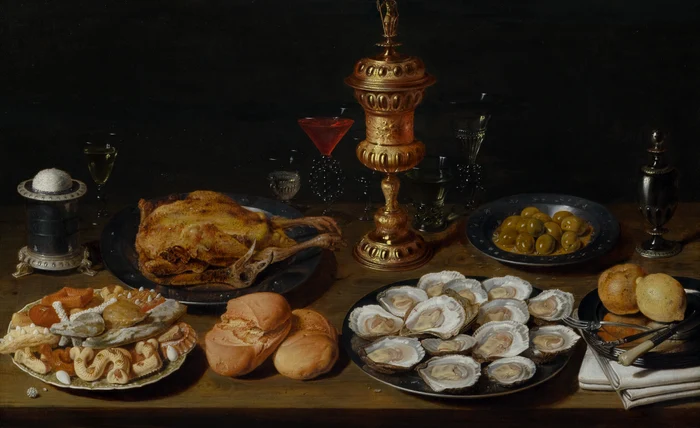
The flap was not missing from the meals of the rich Photo David Rijccka II
After the flap penetrates well, the chunks of the ham are set aside, and the skin of the clamp is browned. When it is made gold (not burnt or brown), the flap is ready. It is served with vegetable gaskets and a good garlic peak. We must not forget about a good white wine, which goes perfectly at the early white meat. “Wrap it with slices of bacon. Put it in the fridge and grease it with butter. Serve it with cardama, salt and vinegar, over which you can pour the sauce that leaked from the steak.”is shown in the recipe of 1865.
We specify that when he tells the cardama, the author refers to cardamon. As spices, you can use salt, pepper and other spices to taste. But not in excess, do not mutilate the aroma of the clamp.
Another recipe, from the beginning of the 20th century, appeared in the magazine for women “good housekeeper”, in a number of 1902. The recipe is the same, traditional, boyiene, with great pole. This is a stuffed clamp, certainly having an unreal taste. In his article, Ecaterina Comșa explains the way we prepare. We must take the fat flap, wash it and then rub it with salt. We leave it, regularly, to rest for half an hour or 40 minutes. Then we fill it, use a mixture of minced beef, slices of carrot, parsley and calf soup. Obviously, spices, salt, pepper, thyme, garlic and chopped onion should not be forgotten.
After filling the flap, we give it to the oven, to make, on a calm, stifled fire. The forerunners used a healthy roller, at a wood -based oven. Today we can cook it in a modern, electric one. It is certain that it must be allowed to brown well. I mean, the meat penetrated again, golden, golden. After removing it from the oven, Mrs. Comșa told us in 1902, we cut the sliced flap. The resulting sauce we remove, strain it, season with lemon and a bit of calf juice and give it a little on fire, to thicken. Then we pour it over the slices of clamp. Finally, we serve the bird with salads or compotes.