“Critterz” created mainly with the use of OpenAI technology. A new reality for the creators of animated films

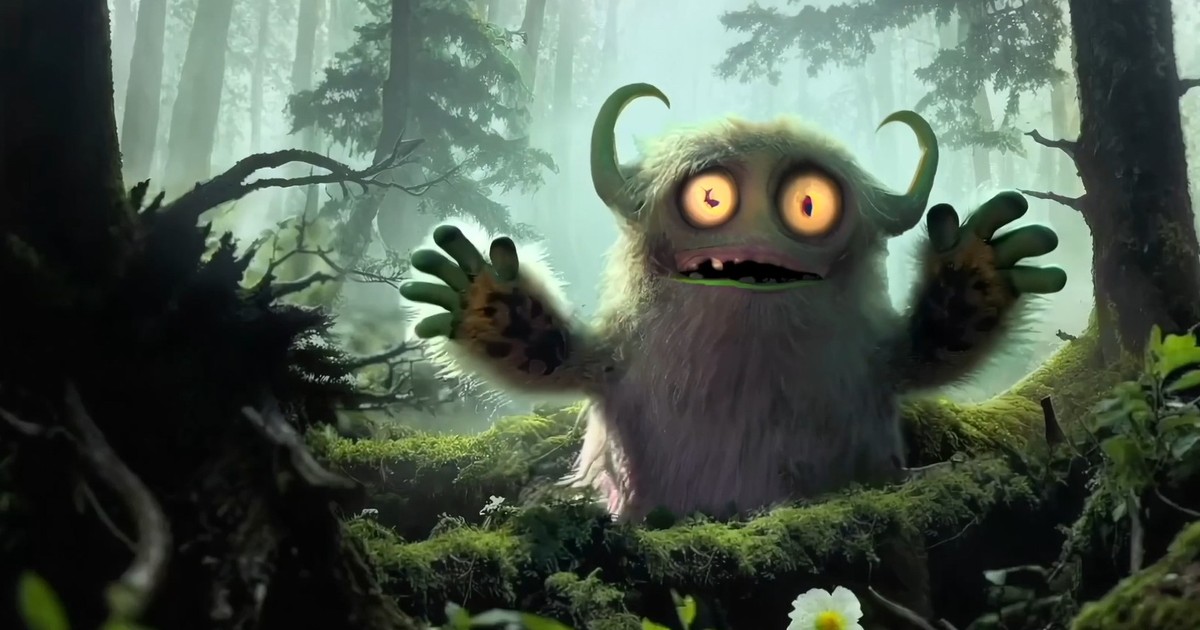
Vertigo Films from London and Native Foreign with Los Angeles are involved in the project. Opeli provides tools and computing power, and the script is written by the creators of the co -responsibility for “Paddington in Peru”. The film also has a global, cinema distribution on the horizon, although for now without the announced partner.
Cannes 2026 will take place on May 12-23. If “Critterz” is completed by that time and will be presented at the festival, It will be one of the most famous tests of real AI generative maturity in film production.
The core of innovation is about the flow of work. Artists prepare sketches and reference materials that Then they are “passed” by the OpenAI models -From the latest language systems (GPT-5) to image and video generators, including Sora for quick prescribing shots. The character's voices will be recorded by actors, and the whole is to develop a short “Critterz” from 2023, which already combined images generated by Dall-E with traditional post-production.
Check also: They trained AI on content without the consent of the authors. Now they will pay $ 1.5 billion. Anthropic contains a settlement with writers
Three times faster pace and lower costs
This hybrid model is to allow a team of about 30 people to a pace three times faster than in the classic animation process this kind. Financing is provided by the Parisian owner Vertigo, Federation Studios, and also prepares a model of employees' participation in profits.
If manufacturers keep the pace and budget, “Critterz” will be proof that a large film can be made cheaper and faster today – much cheaper and faster. For comparison, labels such as Pixar have been explaining for years why their animations cost up to $ 200 million. And they undergo many years of script and technological iterations. If “Critterz” shows that part of this work can be automated without losing quality, the wave of imitation will be inevitable. And not only in animation, but also prescribed and effects for acting films.
Further part under video material:
This is also not the first approach to a full -length animation with the participation of generative models. In 2024, the independent “Dreadlin: Vampire's Verdict”, realized almost one -man and on the budget of several hundred dollarshe showed that the entrance barrier actually decreases, although the artistic quality of such experiments can be uneven. In turn, “Where the Robots Grow” was advertised as the first original full -length AI film, which caused a discussion about how much artificial intelligence is really in such a work and Is it an advantage or limitation.
“Critterz” follows a different path. Instead of the “only AI” approach, he focuses on the story team of professionals and aesthetics control, and treats AI as his production engine.
See also: Netflix took a breakthrough step. AI was used in the series
Artificial intelligence in movies. The advantage is visible to the naked eye
The advantage is tangible. The iteration rate is the first of them. Tools like OPENAI Sora allow you to visualize shots in hours, whose prescription usually takes whole weeks. This shortens directorial decisions and limits the waste of work.
Lowering the entrance threshold for creators and smaller studies is another advantage. When the cost of rendering, layout or background falls on a row of size, more budget can be spent on history, cast, music and finishing. Added to this is flexibility-Text-Imaging/Video models allow you to create style variants and scenes on a scale, which was previously unattainable as part of the schedule. If “Critterz” proves that it can be done without compromise in artistic cohesion, the principle of faster-adly-better will gain recognition of many filmmakers.
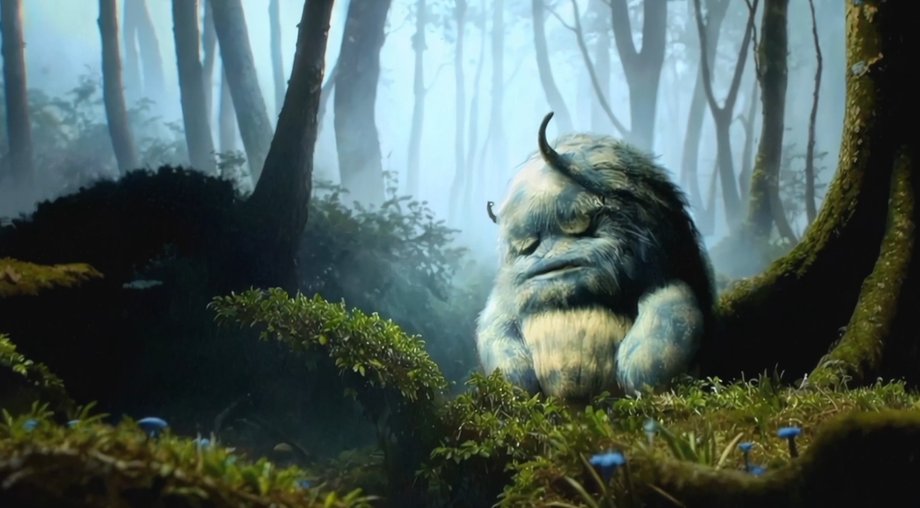
Artificial intelligence accelerates the production of animated films. Screenshot from Critterz.tv (generated by AI)
|
Critterz.tv
Risks are also equally real. Copyright is the loudest of them. The American Copyright Office emphasizes that works entirely generated by AI are not protected, although components significantly created by man, such as text, selection and arrangement of elements, can be protected. This means that hybrid productions – with voice actors and human artistic contribution – can obtain copyright, but this requires a transparent disclosure of the scope of AI's participation.
At the same time, the greatest studies are sued by the creators of AI tools for alleged violations of intellectual property in training data and in generated images. The latest lawsuits were filed by Disney and Universal against Midjourney, and a few days ago Warner Bros Discovery joined. The result of these disputes may define a legal framework for the entire industry.
Read also: Will artificial intelligence be smarter anymore? She ends “fuel”
Specialists will not like it
Employee relationships are another barrier. Trade unions after strikes from 2023 won the limitations of the use of AI in writing scripts and the rules for digital replicas of actors – the requirement of consent, remuneration and transparency. It makes him From the beginning, projects using generative AI tools must design a process in accordance with these rulesthey risk the opposition of the environment differently.
“Critterz” declares working with human screenwriters and a voice cast. If it adds clear rules for remuneration and participation in profits, it can become a production allowed by the market and treated as the one that uses artificial intelligence in a responsible way.
Third The challenge is purely artistic. The previous versions of video models impress with the scale, but have restrictions in physics, causality and continuity of movement. In the full -length animation, it is details – the consistency of space, gesture, light – distinguish film work from a spectacular technological demo. The success of “Critterz” will therefore be measured not only whether AI has shortened the process and reduced the costs, but whether the audience will recognize that he is watching the film, not “the compilation of shots generated by the model.”
Finally, the market is left. The original animations in recent years have had a sinusoid of attendance, and the audience returns to theaters selectively. “Critterz” does not yet have a distribution partner announced, so not only technologies, but also marketing and preparation of the premiere will be included in the final range. However, if the movie passes through Cannes with a good reception and won the global cinema window, The industry will get a bright signal: hybrid production from AI is not only possible, but can be profitable in business.
Is this the future of cinema? The term is more accurate: this is a variant of the future. Ai will not replace people in telling stories, but will become a powerful support tool in various fields – from development, through prescription and layout, to elements of animation and post -production. “Critterz” can become for generative animation what “Toy Story” was for CGI, i.e. a milestone that turns his promise into a craft.
It can also remain a one -time experiment if the quality of the narrative does not match the technological promise. The real test will take place not on servers, but in the cinema, in May 2026 on the azure coast.
Author: Grzegorz Kubera, Business Insider Polska journalist