“It is clear, we are in war.” Fears for what will follow in the US after the assassination of activist Magie Kirk


The assassination of Conservative activist Charlie Kirk marks a moment with important potential in the wave of political violence in the US, one that, according to experts quoted by Reuters and New York Times, could inflamed a country already divided and could generate more disorders.
The observers were horrified by the killing of Charlie Kirk, on Wednesday, in a campus in Utah, but at the same time not surprised by the incident.
“This event is awful, alarming, but not necessarily surprising,” said Reuters Mike Jensen, a researcher at the University of Maryland, who has been watching such violence in a database on terrorism since 1970.
In the first six months of the year, the United States registered about 150 attacks with political motivation – almost twice as much as in the same period last year, Jensen said.
“I think we are in a very, very dangerous situation at this time, which could easily escalate into more widespread civil disorders if we don't control it,” he said.
Signs of an imminent political crisis existed before Kirk's assassination. The increasing polarization and tightening of the public discourse have left little space for a compromise in the political and cultural dispute.
More and more acts of political violence
The acts of violence aimed at left and right personalities began to multiply.
Trump himself was the target of two assassination attempts last year. In addition, two recent attacks committed by the right -wing conspiracy scoured the country this year.
In June, a Christian nationalist killed a high -ranking democratic politician and her husband in Minnesota and injured a second Democrat.
In August, an attacker obsessed with conspiracies related to the Covid pandemic fired at the headquarters of the Center for Control and Prevention of Diseases in Atlanta, killing a police officer.
Since January, at least 21 people have been killed in incidents of political violence.
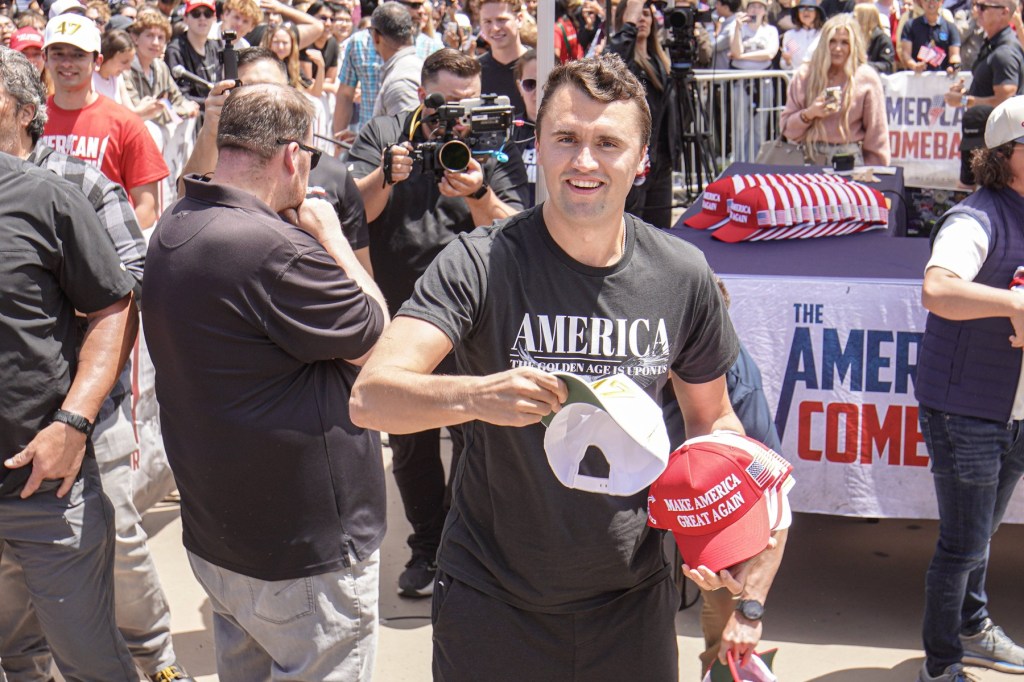 Charlie Kirk, American conservative activist and Donald Trump's vocal supporter, deadly shot at a university event
Experts in internal terrorism have spoken about a number of factors that have contributed to increasing violence in the US: economic insecurity, anxiety related to racial and ethnic demographic changes and the increasingly inflammatory tone of political discourse.
Traditional ideological divisions-which once focused on political disagreements-turned into a deeper and more personal animosity. This anger is amplified by a combination of social networks, conspiracy theories and personal dissatisfaction.
Kirk's assassination was filmed from several angles; The macabre images with blood stinging from his neck have quickly become viral.
A few days before, the Americans had watched images as disturbing with a deadly refugee refugee stabbed in an unprecedented attack on North Carolina.
This crime was related to an increasingly heated national debate on Trump's desire to send the army to cities led by Democrats to combat crime.
“No one wants to be the one who begins, but many people want to be able to finish things.”
Kirk's killing now raises the possibility that the country has entered an even more dangerous phase.
On the social networks, the voice of the left, not necessarily the most prominent, he welcomed his death, claiming that he received what he deserved.
Democratic politicians vehemently condemned the murder.
To the right, the initial messages of pain and shock were replaced by open calls to revenge and regulation of political accounts.
There have been threatening statements that the country is on the threshold of a civil war – or should be.
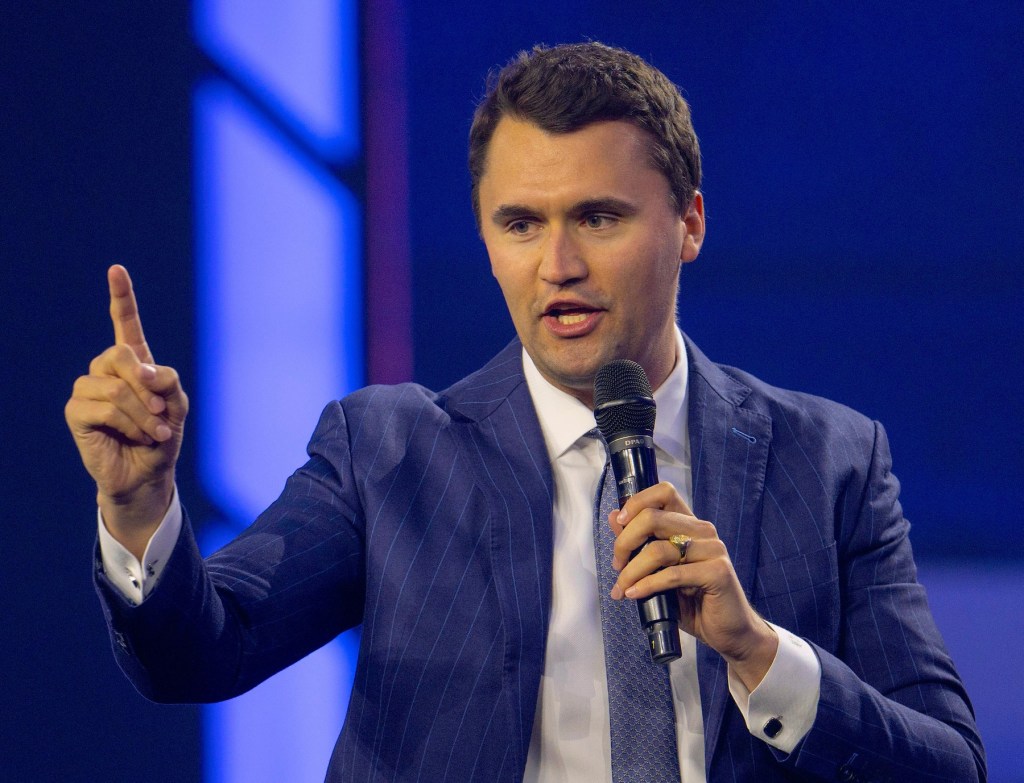 Who was Charlie Kirk, the deadly shot influence and who was one of Trump's Maga Moves
“Extreme political violence is becoming more and more the norm in our country, and Charlie Kirk's shooting illustrates a much bigger and widespread problem: acts of violence are becoming more and more frequent, even without an ideology or a clear reason,” said Reuters Jon Lewis, a researcher in the program on the University of George Washington.
Other experts studying political violence agree.
“People are reluctant to resort to violence, but they are much more willing to resort to violence in revenge,” said Lilliana Mason, a professor of political science at Johns Hopkins.
“No one wants to be the one who begins, but many people want to be able to finish things,” she said.
Who was Kirk
Kirk, an ally by US President Donald Trump and founder of the Turning Point USA conservative organization, addressed a crowd of about 3,000 outdoor people at Utah Valley University when he was killed.
He was part of an ecosystem of Pro-Trump Conservative activists-including Jack Posobiec, Laura Loomer, Candace Owens and others-who contributed to the amplification of the American president's agenda.
Kirk frequently attacked the mainstream media and became involved in cultural war issues around races, genre and immigration, often in a provocative style.
Kirk was himself deeply involved in the discussion of crime, posting X just hours before he was shot that “the politicization of the crime in North Carolina was 100% needed.”
“No one understood the hearts of young people in the United States better than Charlie,” Trump said in a social networks in which he announced Kirk's death.
About half of the country would probably disagree, the democrats criticizing Kirk's virulent speech.
Immediately after Kirk's assassination, Matthew Dowd, a political analyst at MSNBC, called him a “divisive” figure who had engaged in “hate speeches”.
“You cannot have such awful thoughts, say such awful words and do not expect terrible actions to take place,” said Dowd live. “And this is the unfortunate environment we are in,” he added.
Rebecca Kutler, MSNBC president, qualified Dowd's comments as “lacking sensitivity and unacceptable”.
“We will avenge Charlie's death as Charlie wanted to be avenged.”
Initially, many right-wing commentators have expressed their shock through urging, writes New York Times.
Benny Johnson, a podcaster who worked in the Turning Point USA in the past, the organization co-founded and led by Kirk, urged his followers to “fall to his knees and pray.”
After Kirk's death was confirmed, Johnson's tone, along with many others on the right -wing right, took a bleak turn.
Johnson named the news presenters from the television “Demons” and said that Kirk is a martyr.
At the Conservative Fox News, Jesse Watters, the popular television presenter, spoke with passion about the attack and the need to respond in one way or another.
“We are sick, we are sad, we are angry and we are determined, and we will avenge Charlie's death as Charlie wanted to be avenged,” he said on Wednesday.
Watters listed a series of threatening or violent acts committed in recent years by the left -handed people.
“Whether we want to accept it or not, they are at war with us!” Watters said. “And what will we do in this regard? How much political violence will we tolerate?” He asked, rhetoric.
“It's time for a complete repression of the left”
The federal and local authorities have not yet identified a suspect in this case, actually releasing two detained men, but the far -right activist Laura Loomer has already qualified the incident as a “professional assassination”.
Matt Forney, a right -wing journalist known for the racist and misogynist content, said that Kirk's killing is equivalent to “fire the American Reichstag”, alluding to the 1933 fire from the German Parliament building, which was used by the Nazi party as a pretext to suspend constitutional protection and arrest the political opponents.
“It is the time for a complete repression of the left. All democratic politicians must be arrested, and the party must be banned,” Forney wrote on X.
Alex Jones, another well -known conspiracy, also announced: “It is clear, we are in war.”
On Patriot.win, a far-right site where some of Trump's most focused supporters have been gathered for years, violent language included posts such as “start the process of extermination of democrats.”
However, a prominent right figure, Nick Fuentes, criticized for racism and anti-Semitism, begged his followers to remain calm in the middle of persistent calls.
“Violence and hatred must cease,” he wrote. “Our country needs Christ now more than ever,” he said.
An administration that produced deep changes
Ruth Braunstein, a teacher associated with sociology at Johns Hopkins University, who studies political violence and polarization, said for New York Times that she is worried that killing a person she describes as a “central figure” of American right could mobilize groups that were just waiting for such a catalyst.
“Right,” she said, “has well -organized and trained groups, including paramilitary organizations, which are practically waiting for the time to be called to action to defend what they consider to be the nation.”
After the tribute initially brought to Kirk, Trump blamed the press and the “radical left” for the attack, accusing them “demonizes those they do not agree with.”
“For years, those on the radical left have compared wonderful Americans like Charlie with the Nazis and the greatest massmags in the world,” Trump said.
“This type of rhetoric is directly responsible for the terrorism we see in our country today and must cease immediately,” said the president.
Since returning, Trump has reduced efforts to combat internal extremism, redirecting resources to applying immigration laws and citing the southern border as the main threat to security.
Jensen, the researcher at the University of Maryland who monitors violence for the national consortium for the study of terrorism and terrorism responses, said the future seems dark.
“This is an administration that, whether you agree with it or not, has brought deep changes in this country in the eight months since it is in power,” he said.
“Some people love her, others hate her. Those who hate her begin to act. Those who love her will act against those who hate her, and so a vicious circle is created that could lead us to something very, very bad,” he said.