After NATO airplanes intercepted on Tuesday night several drones entered in the Air Space of Poland, the North Atlantic Alliance tried to reassure public opinion, stressing that “everything worked as it was provided,” writes Reuters.
The incident is the worst expansion of the Ukraine war on NATO so far, given that the alliance aircraft were forced to engage directly against the drones that Poland said from Russia.
“The aerial defense was activated and managed to protect NATO territory, exactly as it was designed to do so,” said NATO Secretary General Mark Rutte.
For his part, Italian admiral Giuseppe Cavo Dragone, the head of the NATO Military Committee, welcomed the reaction: “The quick response of the alliance to the Russian drones that violated the Polish air space was firm. Congratulations to the involved! This means NATO in action!”.
How prepared is NATO for drone attacks?
However, the specialists warn that the episode raises serious question marks: how can foreign drones penetrate into the NATO airspace and how effective is the alliance in front of this type of threat?
“It is a clear illustration that it is not enough to be vigilant, we must be more determined in our actions,” said Peter Bátor, former ambassador of Slovak to NATO.
Although the reason for the incursion remains unclear, Bator said it is “unacceptable” that the drones can enter the NATO airspace, which means that the Alliance reacts to a threat, instead of discouraging it, as it is meant to do.
He asked if it would have been acceptable for foreign troops to enter NATO, as it would have happened for pyot air. “There is no big difference between drones and troops,” he said.
He even suggested that NATO allow Ukraine to break down Russian drones that are heading to the Member States, from the Ukrainian territory. But NATO decisions are made by consensus, and many states hesitate to accept measures that could lead to direct involvement in the conflict.
In the past, when fragments of missiles or drones arrived on the territory of Poland, Latvia or Romania, NATO preferred not to respond militarily.
Moscow denied any responsibility and a high -ranking diplomat in Poland claimed that the drones came from the direction of Ukraine.
What suggests the large number of drones entered in Poland's airspace?
The Russian Defense Ministry said that its drones had a major attack on military installations in western Ukraine, but had not planned to hit any target in Poland.
The large number of Russian drones that raped the Polish air space suggests that it was probably an intentional effort of Russia, notes analysts at the Institute for War Study.
The incursion of at least nineteen drones in one night is notable and represents about three times the number of projectiles that have fallen in Poland since the beginning of the war in 2022.
ISW believes that such a number of drones is unlikely to have entered the Polish airspace accidentally or as a result of a technical error or drone operator.
Cheap drones, expensive armament
The incident also raised question marks on the fact that the Alliance, founded more than 70 years ago during the Cold War, has the right and profitable military structure to cope with the relatively modern threat represented by unmanned aircraft.
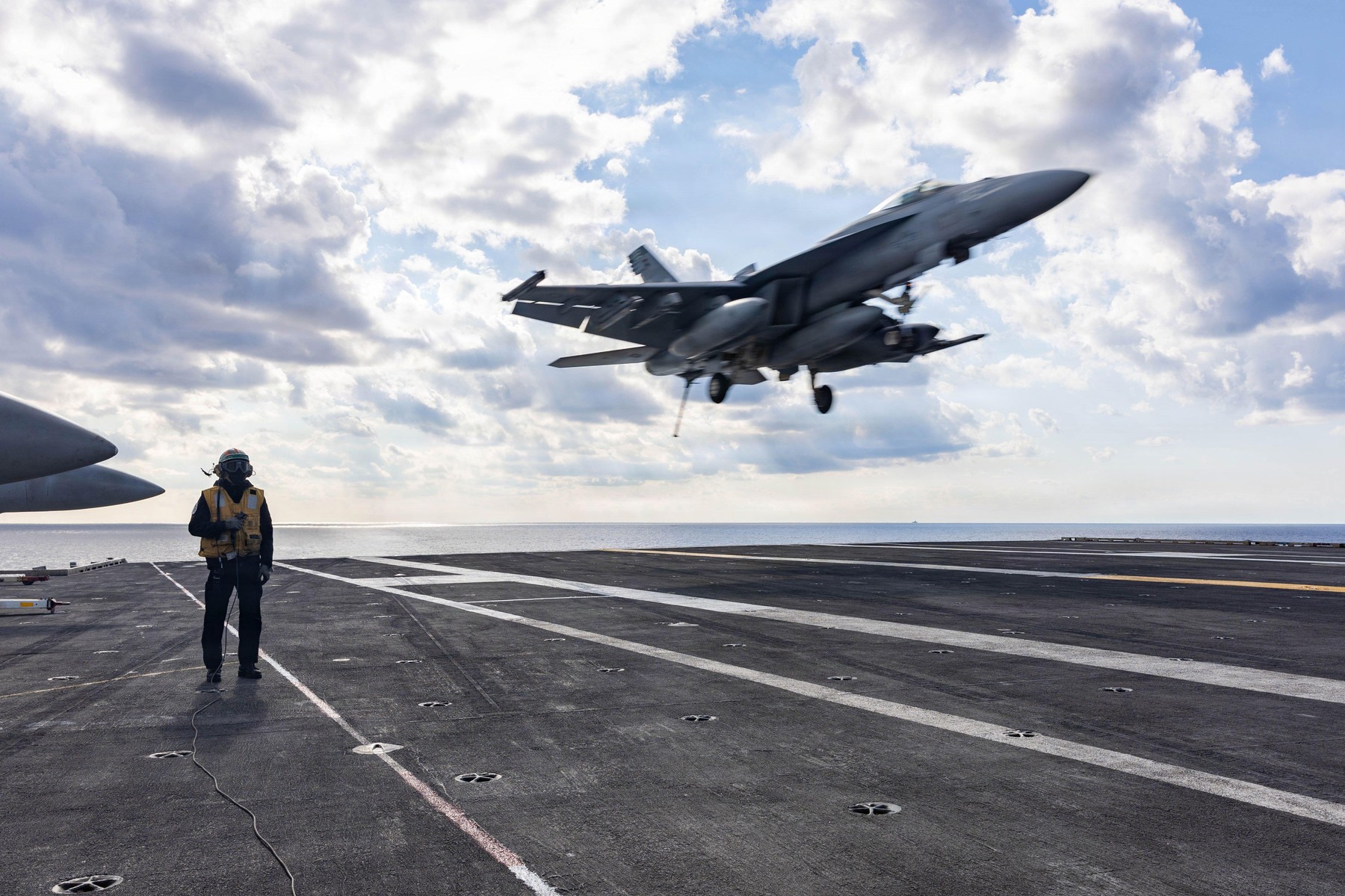
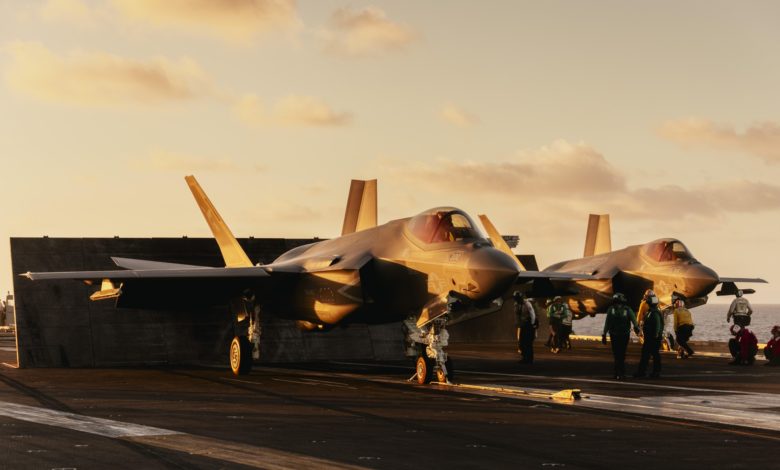
NATO was forced to run F-35 and F-16 fighter jets, MI-17, MI-17 and Black Hawk helicopters, as well as Patriot systems-to counteract “Gerbera” type drones, extremely cheap, polystyrene, autonomy of several hundred kilometers. Forces from Poland, Holland, Italy and Germany were involved in the operation.
But the Ukraine war has already shown that Russia can launch hundreds of drones simultaneously, putting in difficulty even the most sophisticated air defense systems, designed for missiles and planes, not for low-cost drones.
“Western air defenses have not been designed for such a large volume of cheap drones,” warns Fabian Hinz, a researcher at the International Institute of Strategic Studies. “You can bring them down with planes and helicopters, but it takes a huge reaction speed if the attacks are constantly repeated.”
Phillips P. O'Brien, professor of strategic studies at St. Andrews, he called the episode “a needle sting compared to what Ukraine lives every night.”
“It should have been identified as possible threats much earlier and to take defense measures long before,” O'Brien said in a substance post.
“It should have been a children's play for NATO,” he said. “God will help them if they will face 600 drones and rockets in one night,” referring to the situation in Ukraine, where Russia launches more and more powerful attacks.
NATO chief, satisfied with the answer
Asked if NATO has to improve its anti-drone defense, Mark Rutte replied: “We must always be a step forward. Last night we showed that we can defend every centimeter of NATO territory.”
Russia may have been prepared for an incursion of this magnitude into the Polish airspace since the summer of 2025, according to ISW.
Polish journalist Marek Budzisz reported in July that the Ukrainian army recovered Russian drones with Polish and Lithuanian cards and that these SIM cards could indicate Moscow preparations for testing in Poland and Lithuania. This indicates the fact that the incursion was not an accident or the result of Ukrainian electronic interferences, notes the Institute for the Study of War.
Russia is probably trying to evaluate both Poland and NATO's capabilities and reactions, in the hope that it will be able to apply lessons learned in future conflict scenarios with military alliance.
The analysts at the American Think Thank appreciate that Russia seems to become more and more daring in terms of the type of escalation that is willing to test.
Vladimir Putin seems to have targeted NATO trust and unity, with a seemingly partial blow to US President Donald Trump, CNN comments.
Donald Trump's message
What will NATO do now? This is the question that the Kremlin leader now requires the Alliance.
And the answer is one that the alliance must offer at an unprecedented stage in its history. Trump has eroded the foundation of security guarantees that Europe has based for decades, according to American television.
Has led to a key objective for the US: an increase in European defense spending commitments. But it has also undermined the fundamental principle of transatlantic security – according to which, if you attack a European NATO member, you guarantee an American military response. This may still be the case, but the conditional in this sentence is the place where Putin sent the drones.
The delicate balance for European countries NATO member is to find a response to make Putin feel uncomfortable enough not to turn these intrusions into a weekly event.
But they should not be too aggressive, in order not to invite Moscow to escalate the conflict even more, feeding its false narrative that when Russia invaded Ukraine without being caused, it came into conflict with the whole of NATO.
And Europe probably faces an even more important obstacle in the role of the White House in this reaction.
How can I convince Trump to get involved in a harsh response, without affecting the “good relationship” he seems to keep with the Kremlin leader, despite the increasing frustration of the US President?
So far, the US president has not had a firm reaction, transmitting a strange message on social networks. “What is with Russia to violate Poland's airspace with drones?” Trump wrote.