The manager “Night of Museums in villages”: “There are people who do not cross a street to see a memorial house, what claim to have from people who come from the city to visit them?”


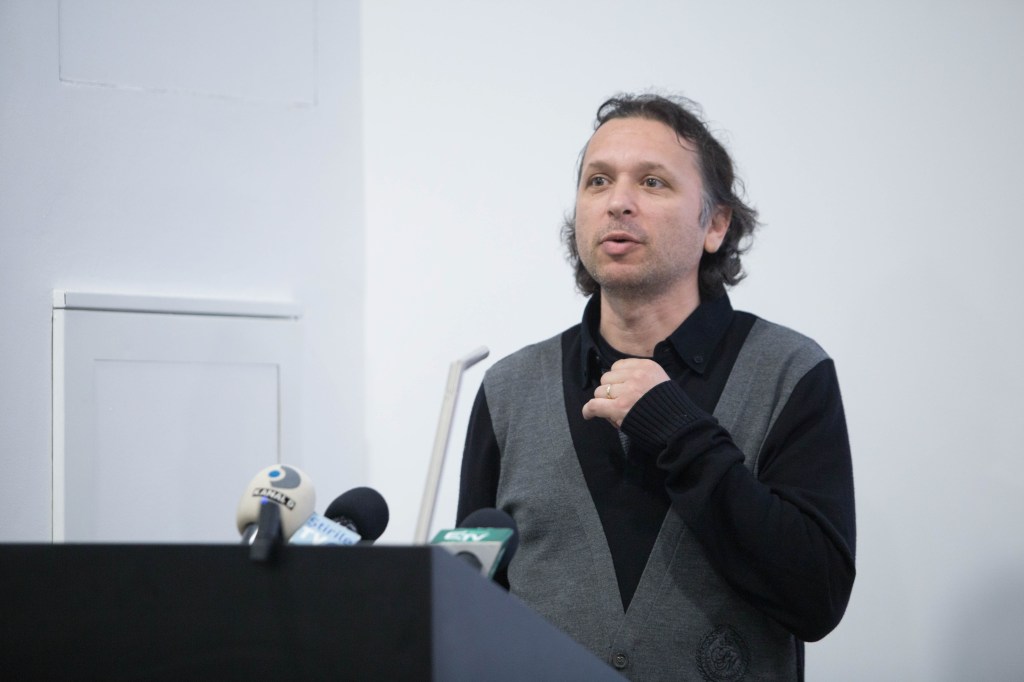
Dragoș Neamu, the manager of the program “Night of Museums in villages”, speaks, in an interview for Hotnews, about the relevance of heritage, but also about the importance of educating communities to keep their collections. An increasingly encountered phenomenon and in Romania helps the villages keep their identity: “There are many young entrepreneurs who came from the urban area and have started to invest in the rural area, open their own cultural businesses, transform the peasant hubs or gastronomic hubs, transform the traditional households into sites,”
- Today, September 6, until midnight, the Night of Museums in villages, the third edition, has opened over 140 cultural objectives from 36 counties, including two from the Republic of Moldova, and offers the public to discover the heritage of the villages. The public can enter the project address – here, looks for the county and makes a trip to one of the objectives.
- Kinedok joins the night of museums in villages, bringing a creative documentary that can be followed online and in 10 cultural spaces in the country that will be consulted here.
-What does, concrete, the living rural museum ecosystems with which you open the night of museums in the village, the 3rd edition?
– It is practically a community and local strategic alliance, which brings together artists, ethnographers, historians, local authorities, not only culturally-related people, but also key people in the community who have a ability to motivate on certain levels of discussion local communities.
We currently have five active ecosystems: in the Country of Hațeg (Densuș -Peșteana), in Făgărașului Country (Felmer -Șercaia), in Tulcea (Mila 23, with the Ivan Patzaichin Museum, and Enisala), in Bihor (Băiței area) and in Sălaj (Crasna -Marin area). In each of these ecosystems we propose some very friendly courses of museum studies, museography and museology.
– All the villages in Romania think they have a local heritage. Why certain areas or certain regions are less represented in the project projects?
– I think, however, we do not even have a heritage value in each village that could arouse particular attention. We cannot ignore the fact that there are some imbalances at the geographical level between different regions. I came to the conclusion that out of the 146 objectives participating in the event, 60 of them, almost half or 40% are concentrated in only six counties, and the most representative is Brașov county with 16 objectives, after which I have 11, Sibiu, Caraș-Severin and Vrancea with 7.
Where there is great representativeness there is not only the particular interest of those who have these objectives, but there is the interest of the public museum institutions that have many memorial houses and museums and without their presence, the Museum Night Program would be poorer and inconsistent.
– What problems do collectors face?
-The main problem reported by these people is the lack of human resource to be employed in the current activity of these objectives they have problems including, for example, to keep it on the night of the Museum in villages, the Museum opened until midnight and for this you need some volunteers.
– How can future generations relate to the village world so as to keep their identity, but also contribute to its development?
-a phenomenon that happens at European level and not only in terms of cultural and immaterial heritage is its reinterpretation and evolution in a contemporary way through a kind of crossing, with anthropological photography, art history. There are many young entrepreneurs who came from the urban area and started investing in the rural area, opening their own cultural businesses, transforms the peasant hubs or gastronomic hubs, transforms the traditional households in situ into situations of exposure of contemporary art, and on this occasion, and this time is struggling and this tendency is to be struggling. modification of traditional structures and architects by the new owners or those who tend to purchase these buildings.
These entrepreneurs solve two problems: they are the villages and increase their cultural vitality and create some habits inside them so that they put them on the map and come to visit them. And from here you know very well what the economic benefits are only social and cultural.
– How do people, villagers, these events that move a little, get that rural peace with which they got used to it?
– There are also problems of understanding from their own local communities of the importance of those objectives they have. They are sometimes strange or inconsistent interactions between the belongings and their own communities. There are problems of assuming from the local authorities of these representative collections for their own local image. There are problems of understanding the value of these goals within the community, that is, there are people who do not cross a street to see a memorial house or to see a collection with great work, efforts and resources by a councilor then what claim to have from people coming from the urban environment?
We are slowly trying to propose a series of interventions for territorial sensitization exactly in these geographical cuts because it is obvious that this is a need, we have been noticed as such and people see in the Night of the Museums at the villages a brand from which the rescue could come.
– Do you oppose the modernity brought to the village?
– Modernity is expressed, as I said, by refunding these spaces and transforming them. After all, to increase their degree of attractiveness and collections to attract the new audience, which is the public made up of the new generations that come to address their own means and learning styles in which they feel comfortable. That is, you can no longer present a traditional house only in its form, by itself. At one point you have to find some means to tell about the house using multimedia technologies.
– Is it harder to bring the culture to the village or bring the city to the village?
-It is harder for me to bring investments to the village, than culture, because culture manifests itself terribly in all forms. I can give some examples: How many of you knew that there are blue saws, art farms, fairies, peasant hubs, there are reconstituted fish, there are museums of the Venetian boyars, are there houses of the Trovvins? I am not saying about those who are in Dolj, there is the Museum of Fluiele World, and it is only in the village, you can not find this in the city. It is much more interesting, from a certain point of view, the cultural content in the rural space than that of the urban space. I am interested in investments in this village world, because there are many areas where heritage is lost
– How do you see the use of rural heritage as a vehicle for identity messages?
– Many use this tradition, manifested including in a cultural key, to generate a certain type of political or personal capital according to the status of the person, if he is a politician, which I am pleased and I try to avoid them as much as possible.
Ethnographic heritage, rural cultural heritage is at the intersection with several arts and in which ethnography is a cross -bone value, which contaminates all the others. That is, for me, the Night of Museums in villages can be a very good pretext to redefine the idea of cultural identity from the contribution of rural creativity.
– In how old should we stop seeing plastic dummies and traditional carpets, right?
– We should stop seeing them on plastic mannequins, we should see certain modules, on certain scenographic decorations that will put them much better than it happens now. We should not see all these objects collected by each of the collectors, somehow spoken, non-conventualized and presented as a deposit with everything. This thing must be changed because many people in the urban environment have become much more sophisticated, have been exposed to certain types of museums, have traveled a lot and have other expectations and now understand an exhibition from other perspectives, and here must be modified. The main thing we need to do is actually help these people gain that type of expertise to help them find their own solutions. They need a certain type of professional education that we started to do. And one important thing is that many of the local town halls take over in public-private partnership or even part of these collections, because there are collectors who want this, being in the ability to continue their activity on their own resources and their own time.
– And the administrative-territorial units do not take this heritage for what reasons?
– It's a good question. I can sense, but I prefer not to speculate. It is precisely from this point, these ecosystems I told you were constituted to find out these answers. And some of them will find out because we will have concrete meetings with these local authorities. For example, I said that in the Șercaia, in Brasov, it is such a situation in which the City Hall does not want to take this collection and we want to see why and depending on what we find out, to restore in real time and to offer their counterarguments and the solution because this is really the case.
– How much do we lose as a society if an unprotected heritage disappears?
-First of all, I lost it physically, it can no longer be recovered. And we have lost some of our historical memory and some of our identity, here I have the courage to talk about identity without being anachronistic. What hurts me the most is that if I did an experiment, it may only then may the members of the community who have never visited her to figure out why they lost. That is, you need extreme situations and actions to raise awareness and how painful it is.