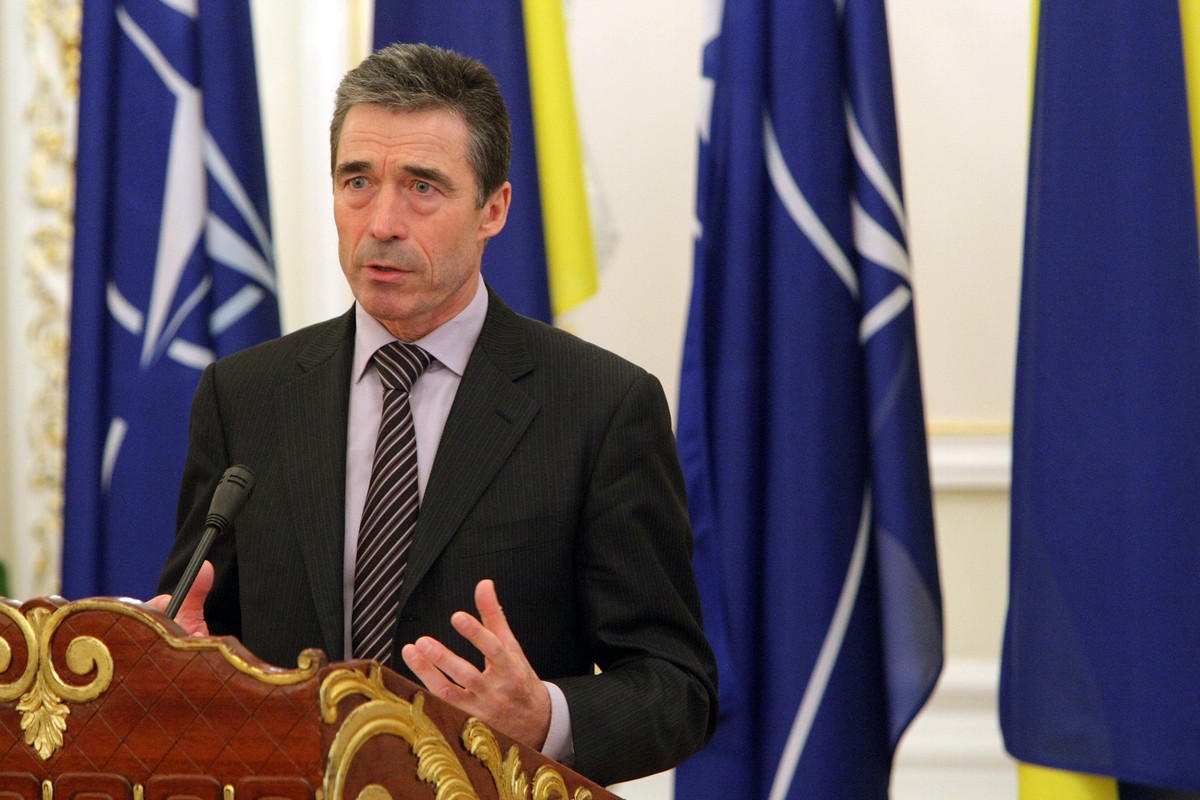
According to the Danish politician, the statement of US President Donald Trump about the support of European deterrent forces, which will operate in Ukraine for peace, is “a step in the right direction in the solution to the dilemma of Kiev's post -war needs in the field of security.” He added that Article 5. NATO, regarding the mutual defense of the Member States, “remains the most effective and cheapest available security guarantee”.
However, Rasmussen reserved that if Trump disagrees with Ukraine's membership in the North Atlantic Alliance, European allies should present their own credible commitment towards Kiev.
In the text he emphasized that “the most important element of all such guarantees must be well -armed European deterrence forces in Ukraine.” In his opinion, they could be arranged just behind the front lines to provide rapid support for Ukrainian forces. They would also serve as a clear signal for Russian leader Vladimir Putin that every attack on his part will meet with an immediate answer. “Without this particular guarantee of safety, Moscow forces will simply use a possible suspension of weapons as an opportunity to rest and rearrate,” he predicts.
In the opinion of the former Secretary of NATO, the European Security Strategy must be based on three scares.
He was the first to mention the strengthening of troops in European countries. Rasmussen estimated that an agreement that will allow Europe to buy American weapons for Ukraine through NATO, “is a good beginning, but not a lasting long -term solution.” Therefore, in his opinion, Europeans should invest in the Ukrainian defense industry, which produces weapons at lower costs than other players on the arms market. They should also look for new technological solutions in partnership with Ukrainian companies whose equipment has proven itself on the battlefield.
The second pillar, according to the former head of NATO, should be the use of existing NATO organizational structures. “Deputy Supreme Commander of allied forces in Europe, currently a British officer, (General Tim Radford – PAP) may coordinate the distribution of forces in Europe in place of the Chief Commander of allied forces (General Alexus Grynkewich – PAP)” – writes Rasmussen, thus indicating the latter as a person who can head the peace mission in Ukraine.
The politician pointed out that in operational terms it is possible to use the reinforced presence of NATO troops in the Baltic States and in Poland. He added that these forces could cover soldiers from over 30 countries that have already signed bilateral security contracts with Ukraine based on the security pact from Kiev.
The third, last pillar is the American support of European deterrent forces, focused on three key roles: air transport, interview and air defense. “Washington is unlikely to close his eyes and ears in the region after the conclusion of a peace agreement, so providing exchange of intelligence information would be a cheap way to support European forces for the United States,” noted Rasmussen.
“Ukraine also needs long -term air defense capabilities, and the European armed forces will need support in defense against the Russian Air Force, which has significant potential in the field of drones. Further agreements with the United States on the battery of the anti -cancer defense system Patriot would help secure Ukrainian cities and infrastructure, and the threat of connected forces Air and shock USA with a distant range would be an important deterrent factor, “the politician explained.
The former head of NATO emphasized in his article in “FT” that “Europe must now ensure Ukraine security so that Kiev could negotiate from the position of strength.” “If the so -called Coalition will become a coalition of waiting, repercussions will be permanent,” he concluded.