I witnessed the unusual war of Kim Jong Una. I went to the border of North Korea for the third time

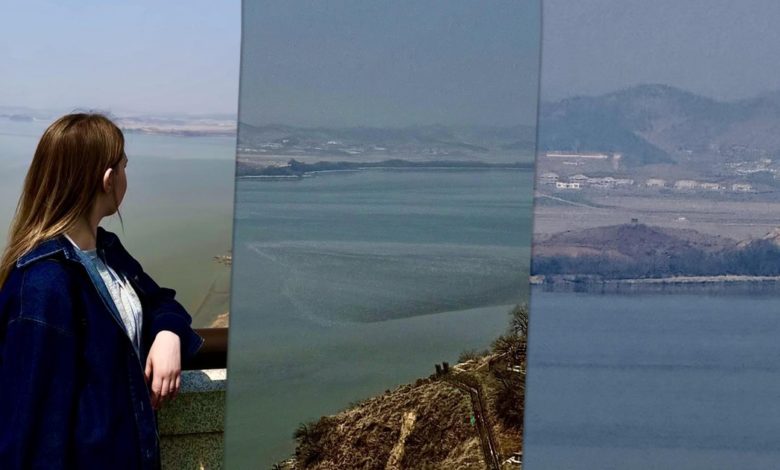
During the first (in 2013) and the second (in 2023) I was able to visit the nucleus of the demilitarized zone (DMZ, Demilitarized Zone), i.e. a joint security zone (JSA) in Panmundżom. This is the only place where (according to the law) from the South you can cross the Korean border and officially be in the north. It is also by far the most important and interesting point of visit to DMZ.
Everything changed two years ago: after the American soldier's escape through the zone nucleus (it happened only a month after my visit there), the place was closed to tourists and to this day – as a result of the constantly deteriorating relationship between Seul and Pyongyang – it was not opened (previously it was closed for three years due to the pandemic of the coronavirus – from 2020 to the beginning of 2023). There is also no indication that the situation will change in the near future.
I visited the demilitarized zone for the third time less than two weeks ago, On April 1, during a visit to South Korea on the occasion of World Journalists Conference organized by the Journalists Association of Korea. And although I knew that this time I would not have a chance to officially find myself in North Korea, I hoped that I could see her at least. I planned to visit the Odusan observatory, from which there is a view of the most closed country in the world.
Not only did I see him again, I heard for the first time and thus became the involuntary “victim” of war for the sounds led by the regime Kim Jong Una.
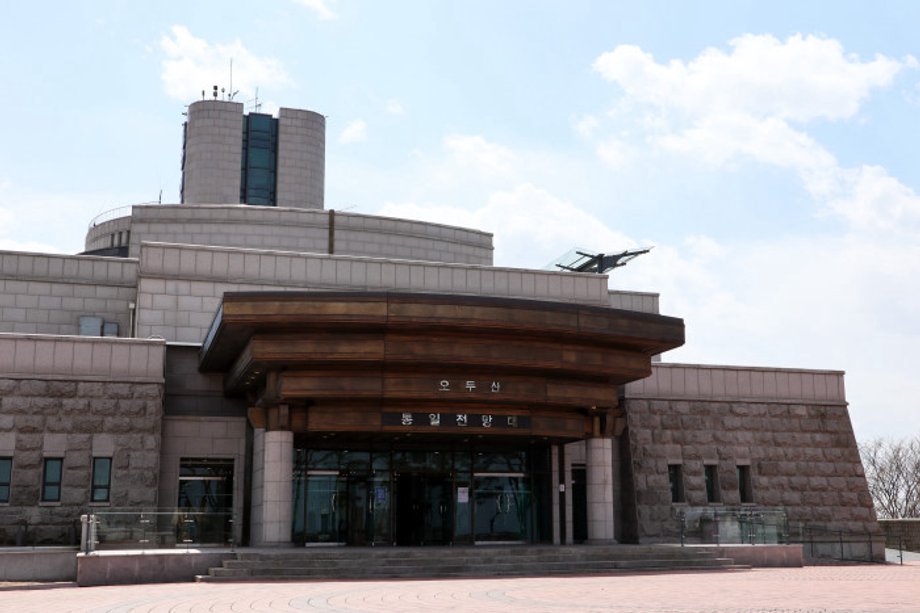
Odusan observatory building
|
Paju City
Read also: Five minutes in North Korea. I went to the most guarded border of the world
Observatory Odusan. View of North Korea from Seoul
The Observatory of the Odusan was built in 1992 at the top of the 118-meter Hill of the Odusan, near the city of Paju, in the province of Gyeonggi, at the intersection of Han and Imjin rivers. This is the northernmost point of the arms suspension line on the western front – officially located only two kilometers from the territory of North Korea. However, in the place where the rivers connect, the distance between the two Koreas decreases to just 400 m. What's more, when there is a drain from the western sea nearby, the water becomes so much tile, that the river border can be crossed on foot. Of course, in theory – in fact it is fenced with barbed wire and guarded by a number of guards who are to stop the tendencies of potential deserters.
The choice of Odusan for the location of the observatory was strategic – To this day, with the naked eye it allows the observation of North Korean territory, including directly adjacent to the village of Maegon directly.
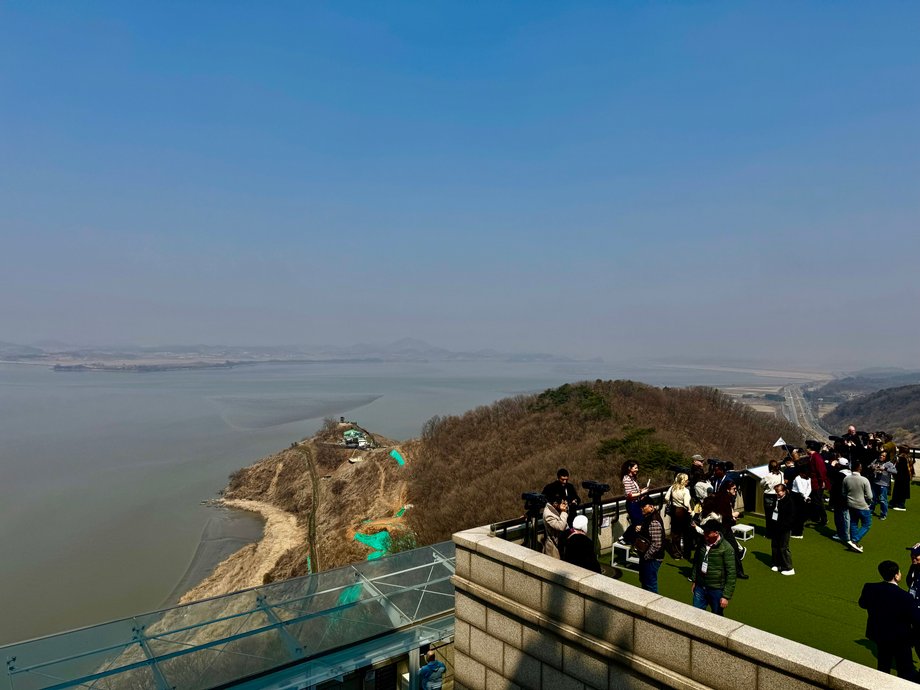
The Odusan observatory is only two kilometers from North Korea
|
Natalia Szewczak
The observatory was created during South Korea, the so -called Słoneczna, i.e. a friendly policy towards North Korea and was guided by promoting the idea of unification of countries and a peaceful ending of the conflict, which has been going on for over half a century.
Today, these slogans seem to be a fantasy. The authorities in Pyongyang Południe are described as “traitor”, and He considers projects such as Odusan as a form of provocation, which they give – literally – very loudly.
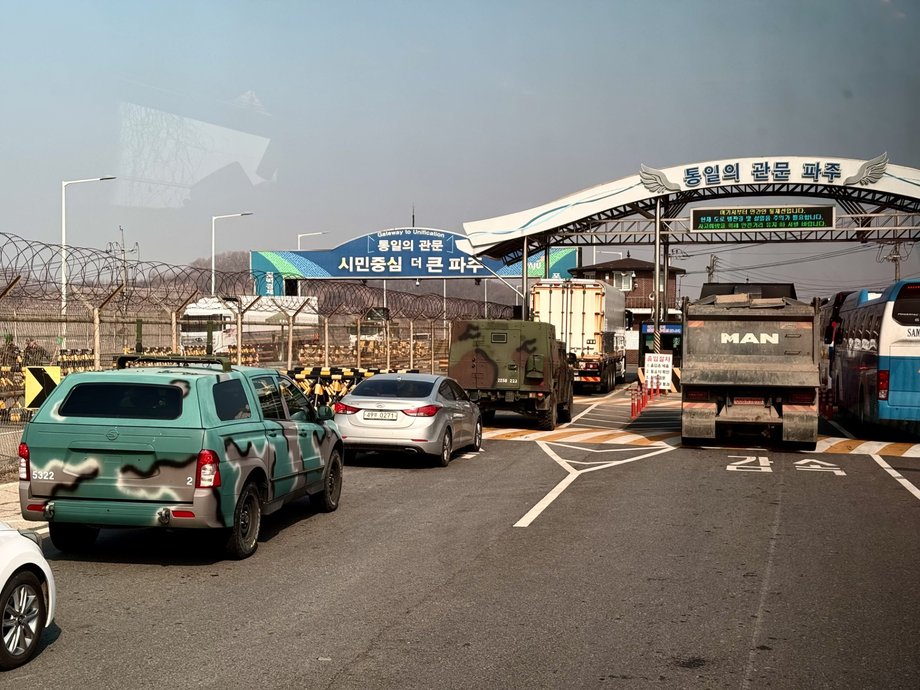
So -called Gate to unite. Here, before the entry, document control takes place
|
Natalia Szewczak
Reaching the Odusan is just an hour of travel by car or bus from a 50 km away. Seoul. The road runs along the Han River and the arguments arranged along it. – We are getting closer to the border with North Korea, it is a matter of security – I hear from the guide.
The observatory is in the border zone, admission to it is guarded. At the edge of the Unification Bridge at the Paju, the bus in which I find himself, South Korean soldiers stop us for control and check all passports.
During the several dozen minutes waiting for checking the documents by the glass, I observe the cars standing in the traffic jam, which are also waiting for the entry. Many of them do not have license plates – they belong to the army.
The village of Kima was deserted
The most important element of the Odusan observatory is a five -story tower with a terrace At each level, from which there is a view from one side to North Korea, on the other to southern. There are also free telescopes on the roof, thanks to which it is possible to observe North Korean territory more accurately.
In Odusan – as in other border observes, such as Dora, from where you can see the giant North Korea flag – the weather plays a key role.
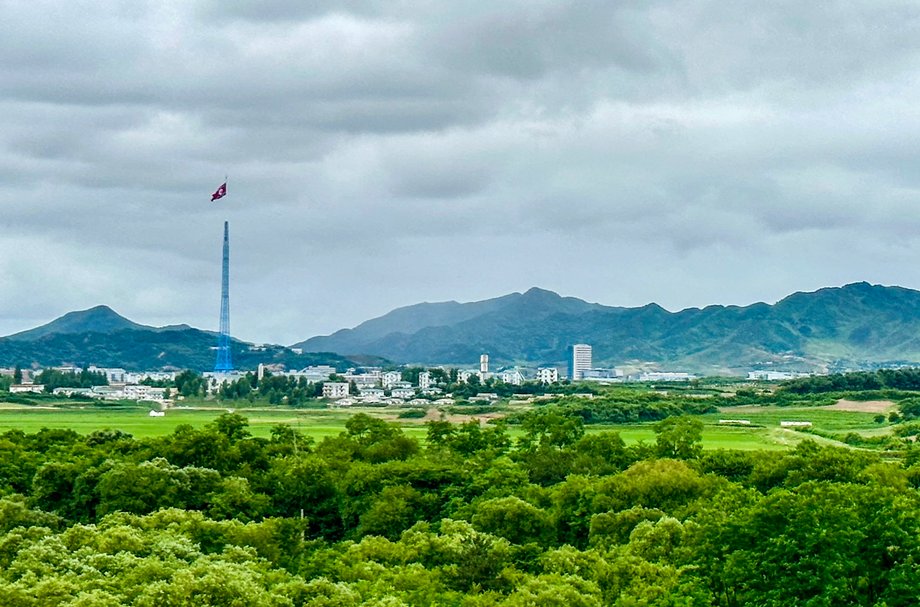
North Korea can be seen from the Dora observatory with the naked eye
|
Natalia Szewczak / Business Insider Polska
During my presence, this was initially moderately – the view of the regime of Kima was partly inflamed. Fortunately, the situation improves. White buildings appear to me, some seem to have no windows. According to the South Korean authorities, some buildings in Maegon collapsed or their construction was never completed.
From the left to the North Korean territory, I see the Guard Post, a building that is a memory room of Kim Ir Sena, the founder of the DPRK and the so -called The tower of immortality (This is a permanent element of the DPRK landscape – this type of towers are built both in North Korean villages and in cities to commemorate the eternal president). The Lim Han Primary School and the mountain range (Yeoni, Gunjang and Songak) are still drawn.
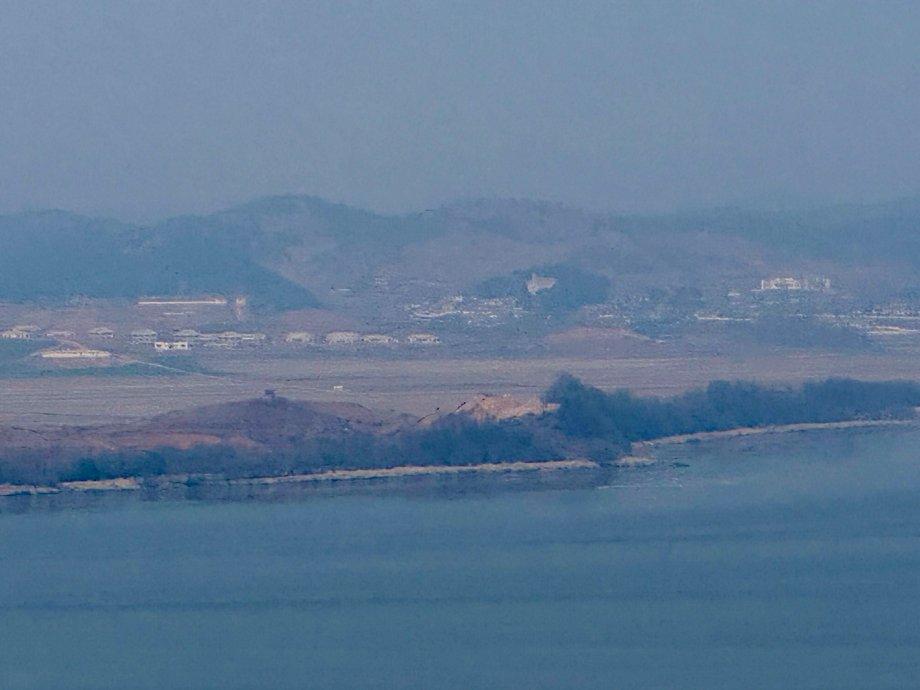
Close -up to North Korea. The weather plays a key role in observing the North Korean territory
|
Natalia Szewczak
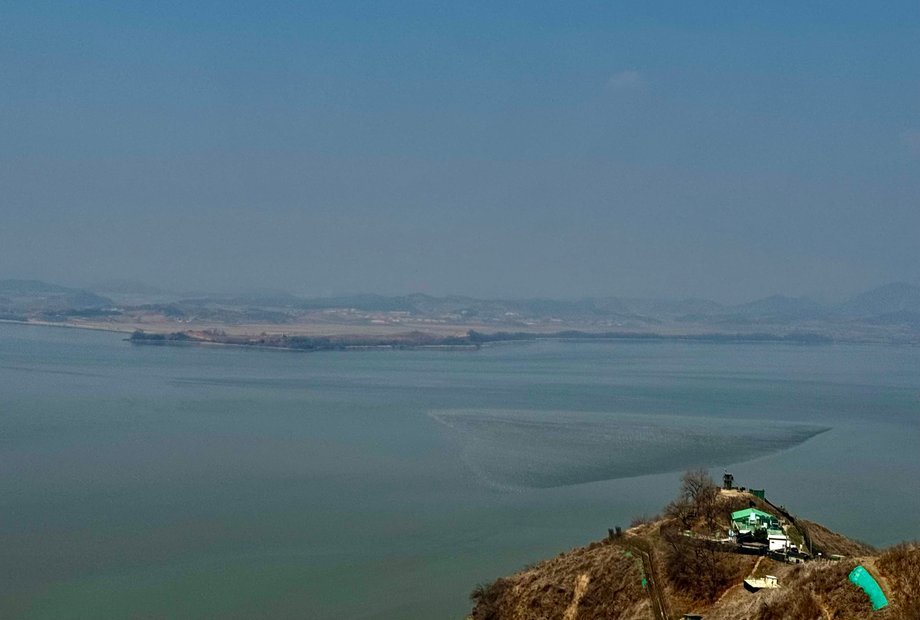
This is the panorama of the northern bark from the Odusan
|
Natalia Szewczak
I observe North Korea, but during this time I don't notice a single car or a single man. In a moment I will get the answer why this area is deserted and its view resembles a city of ghosts.
Metal grinding and a roar of sirens. This is the speaker war
At some point I am starting to hear all -encompassing noise. It resembles a combination of psychedelic rumble, metal grinding, roar of sirens and a bang of air engines.
Initially, I have a problem locating where it comes from. However, I quickly realize that this painful cacophony flows from North Korea. This is the sound attack of Kim Jong Una, which I have only read about so far.
Through at the Korean border, the so -called loudspeaker war. The speakers set along the border from the south were not only propaganda messages about the superiority of liberal democracy and the history of economic success of South Korea, but also hits of K-Pop music, such as the popular song “Gangnam Style” of South Korean artist Dogs. Former President of South Korea, Park GUUN-HEE, in 2016 even stated that broadcasts “The most effective form of psychological war” And they encouraged the inhabitants of North Korea to risk life and escape south in search of freedom.
In 2018, after a memorable peak, during which the first meeting of the Presidents of the North (Kim Jong Una) and the South *Mun Dze Ina) occurred, this procedure was suspended. “We hope that this decision will lead both Koree to cease mutual criticism and propaganda, and also contribute to the creation of a room and a new beginning,” Seul explained at the time.
The silence lasted several years. The war for sounds was resumed in 2024. After Pyongyang accused Seul of sending a drone, which dropped propaganda leaflets. In response, the north sent balloons with garbage, to which the South responded with the launch of “concerts” of k-pop music from the speakers left along the border. As you can hear, North Korea did not remain debt.
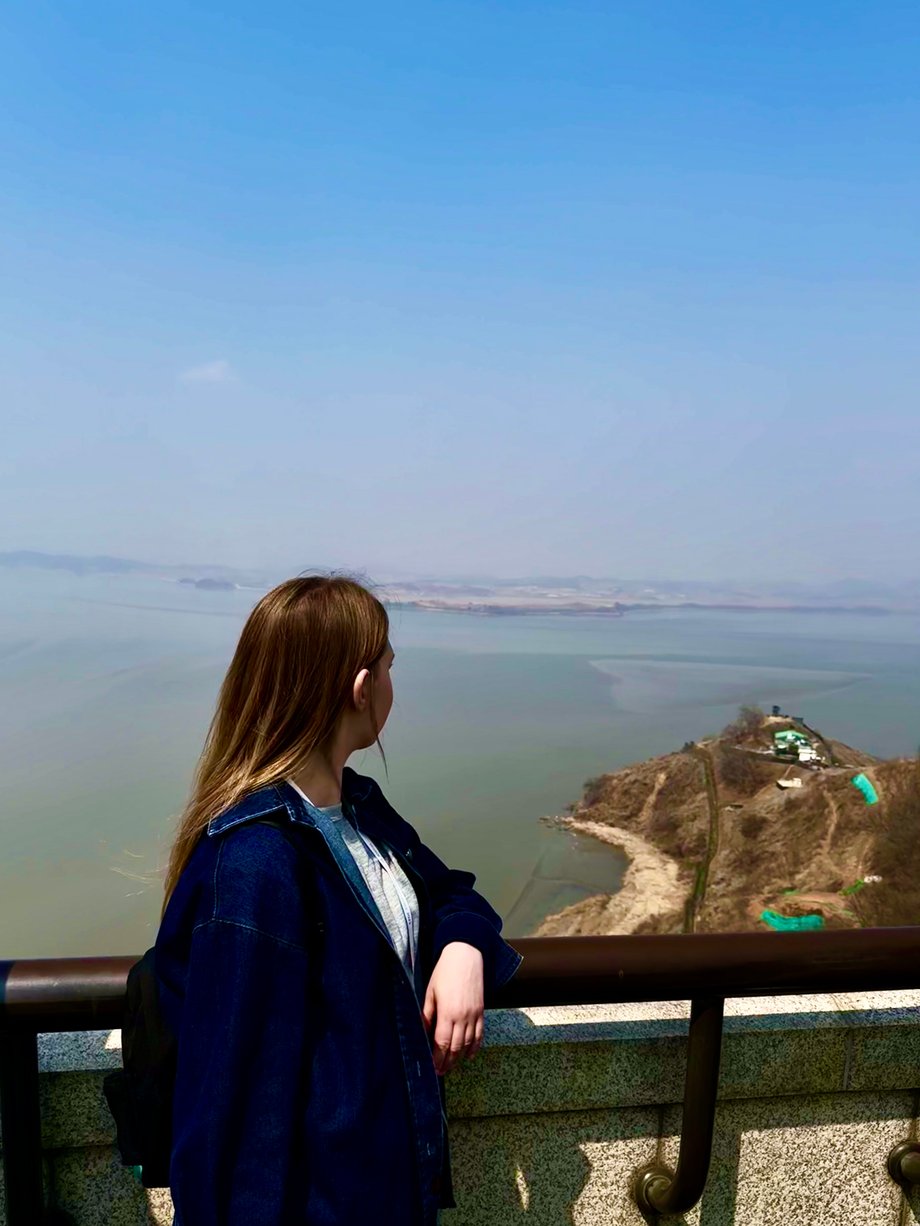
The suspicion of the most closed country in the world is impressive
|
Natalia Szewczak
“Horror sounds.” Residents complain
“Horror sounds,” comments my friend. The term is emphatic but accurate. According to information provided by the authorities, the noise from North Korean speakers can be heard at a distance of about 20 km.
“Noise from North Korea speakers can be heard around the clock, in intervals lasting from three to five hours of constant squeaking, and then short breaks lasting from 10 to 20 minutes” – said the South Korean daily “Korea Janggang Daily” last year.
– North Korea's noise makes everyday life impossible. Constant noise is so troublesome that we can't even talk to each other, and we can't sleep in the night-said a resident of Daeseong-Dong in an interview with the mentioned newspaper, a town located about five kilometers from the Odusan observatory.
During my stay at the Odusan observatory, I did not hear the answer from the south. Local media, however, reports that North from the speakers attack, among others Antikimidzong messages, weather forecasts, news about the Korean giant – Samsung, as well as hits of the popular Korean band BTS, including “Dynamite”. Its fragment is: “Look how I start fire and brightens this night. (…) it gets serious. Do you hear this sound of bass? (…) Dynnnananana, life is like dynamite.”
One of the songs broadcast from South Korean speakers in the border zone:
Author: Natalia Szewczak, journalist and secretary of the Business Insider Polska editorial ([email protected])