Israel takes into account the annexation of parts of the Westordan, as a measure of counteracting the recognition of the Palestinian state.

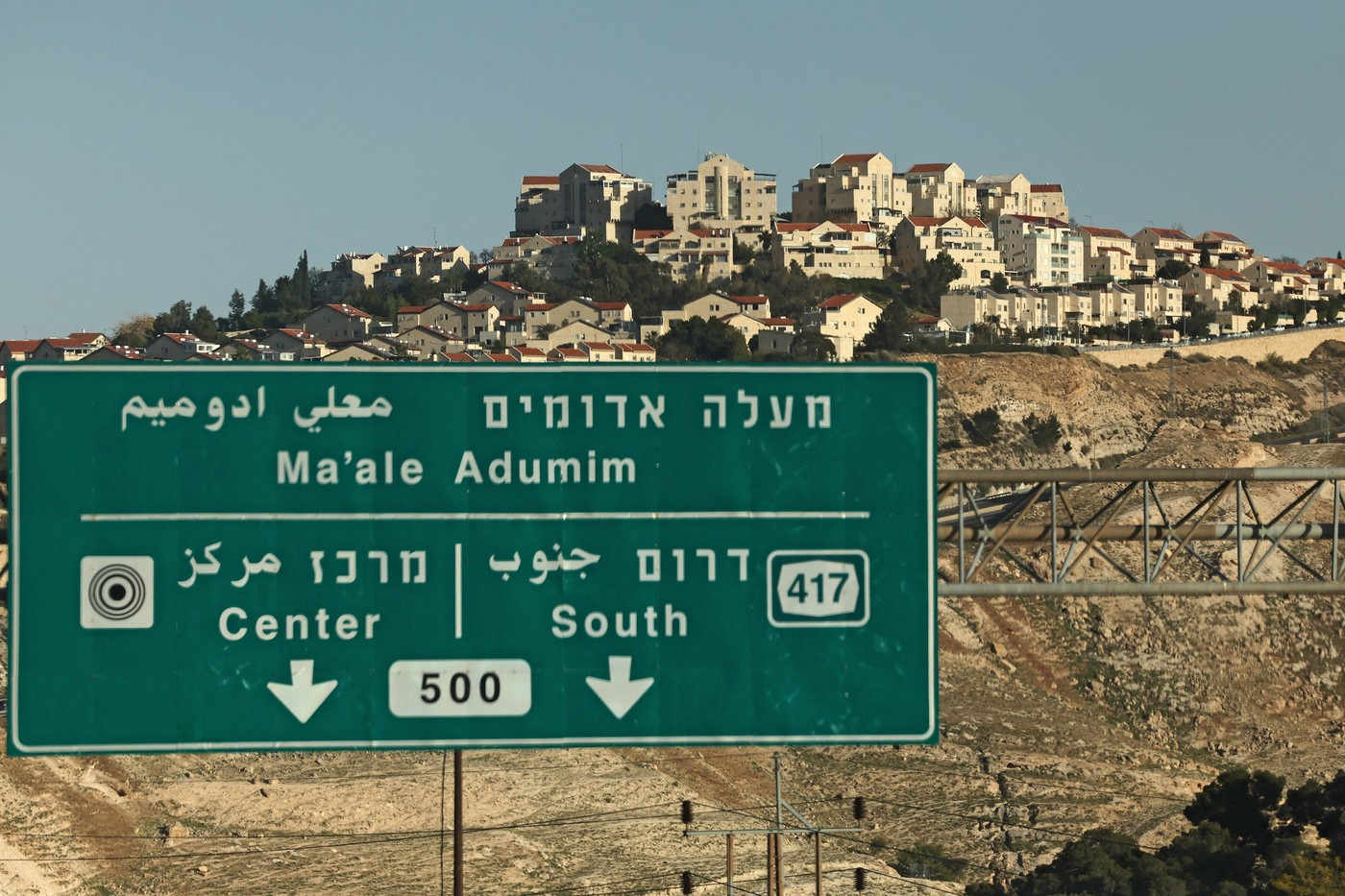
Israeli Prime Minister Benjamin Netanyahu had an initial discussion on this topic last week, but the security office has not yet discussed the issue and no decision was made, several officials told CNN, according to News.ro.
Israel considers the annexation of parts of the busy Westordan, three Israeli officials told CNN, in the context in which several Western countries are directed to the recognition of Palestinian statehood this month.
This is just one of the measures that Israel considers that reprisals for the anticipated recognition of the Palestinian state by France, Australia, Canada, Portugal and the United Kingdom, which would join over 140 countries that already recognize the Palestinian state.
Israel captured the Jordan West Bank in the 1967 war and began to establish Jewish colonies there shortly afterwards, defying international law.
Palestinians want the Westordan, East Jerusalem and the Gaza Strip for a future state, a position supported by most of the international community.
Israeli officials said Netanyahu takes into account different annexation options, from the limited taking over several Jewish settlements to a larger approach that provides for the annexation of Zone C, comprising 60% of the territory.
A series of peace agreements between Israel and the Palestine Liberation Organization in the 1990s, known as the Oslo agreements, divided the Westordan in areas A, B and C, area C being entirely under the administrative and security control of Israel.
 Israel has approved a major colonization plan that sections the Westordan / “The Palestinian state is deleted from the map,” announces the Israeli Finance Minister
The Israeli Foreign Minister Gideon Saar, informed the US Secretary of State Marco Rubio about Israel's annexation plans during a meeting, last week, according to an Israeli official. Other Israeli sources told CNN that the plans have not yet received the green wave from the US.
Asked about Israel's annexation plans, a US State Department spokesman told CNN that the Agency does not disclose details about interinstitutional or diplomatic discussions.
Variants taken into account
Two of the officials who talked to CNN said that one of the main options considered is the annexation of the Jordan Valley-a strip of land located at the eastern extremity of the West Bank, which extends along the Jordan River. Officials have stated that there is a broader Israeli consensus in favor of such a proposal, adding that the need for Israel to use as a security perimeter would be easier to accept by the international community – and most importantly by Washington.
However, Netanyahu's far -right political allies, Bezalel Smotrich and Istamar Ben Gvir ministers, as well as the leaders of the colonists, oppose the idea of a partial annexation to involve specific strips or blocks of colonies and, in contrast, promote a maximalist approach – the application of the Israeli sovereign. Palestinians.
This movement would allow Israel to surround the Palestinian population centers, further undermining the viability of a Palestinian state.
In contrast, the application of sovereignty to the territory with Palestinian inhabitants could force Israel to grant citizenship or resident status to the approximately 3 million Palestinians living in the Westordan.
The annexation of any part of the West Bank by applying Israeli sovereignty would violate multiple UN Security Council resolutions and would cause huge diplomatic reaction, writes CNN.
Israeli colonies in the West Bank are considered illegal in accordance with international law.
The United Nations strengthened this designation in 2016 by the resolution of the Security Council, which stated that the Jewish settlements in the occupied territories are a “flagrant violation” of international law and “do not have legal validity”.
Israel's calculations
Omer Rahamim, the executive director of the Yesha Council, the umbrella organization of the Jewish colonies in the Westordan, told CNN that the application of sovereignty should be “a preventive movement before France's recognition of Palestinian state.
By applying sovereignty, we will prevent the establishment of a Palestinian state, because it is impossible to establish a state on the sovereign territory of another country, ”he explained.
Rahamim said that the leaders of the colonists demand extensive annexation measures, not only in the coloury blocks or in the Jordan Valley, “because the application of sovereignty only on a few blocks of colonies or on specific blocks would mean that the rest of the area would become a terrorist state – another gas in the heart of the country.
In the shadow of the war in Gaza, the Israeli colonists intensify their Palestinian expulsion campaign in the Cisiordania
According to an Israeli official, given the expected political and international pressure, Netanyahu takes into account a step and gradually annexation plan, which would start with a selected territory, on the path to a wider sovereignty. The official said that a stage plan would allow Israel to give up complete annexation in exchange for normalizing relationships with Saudi Arabia.
The last time Israel seriously considered the anexation of the West Bank, in 2020, Netanyahu finally gave up on plans, as part of Abraham's agreements, which led to the normalization of Israel's relations with the United Arab Emirates, Bahrain and Morocco.
Saudi Arabia has stated that no normalization will take place until Israel is engaged on the path to the creation of a Palestinian state.
Other punitive measures
In addition to the annexation, Israel also takes into account other punitive measures in response to the development of a Palestinian state, including the sanction of the Palestinian authority, which governs parts of the Westordan as part of a peace agreement with Israel, or the evacuation of the Palestinian village Khan Al-Ahmar.
On Friday, the US announced that they decided to refuse the visas of the officials of the Palestinian authority who were to come to the UN General Assembly this month, where French President Emmanuel Macron intends to announce the Palestinian state recognition, thus becoming the first permanent member of the UN Security Council.
An Israeli official said the US decision to refuse visas was coordinated with the Israeli government, as part of an attempt to prevent the Palestinian authority's president Mahmoud.