“Industrial inflation” has already increased to 5% in July compared to June, even before the entry into force of the new VAT quotas and the fiscal package


Work in a car service, photo: Sarinya Pinngam | Dreamstime.com
The distribution of water, or the activities in the car services have most increased their price price in July, just before the entry into force of the new VAT quotas and the first fiscal package, the data transmitted on Tuesday of Statistics shows.
The Industrial Production Price Index (IPPI) measures the price variations from the point of view of the producers of a product (it is therefore a production price). This is differentiated from consumer prices, which measures prices from the point of view of buyers.
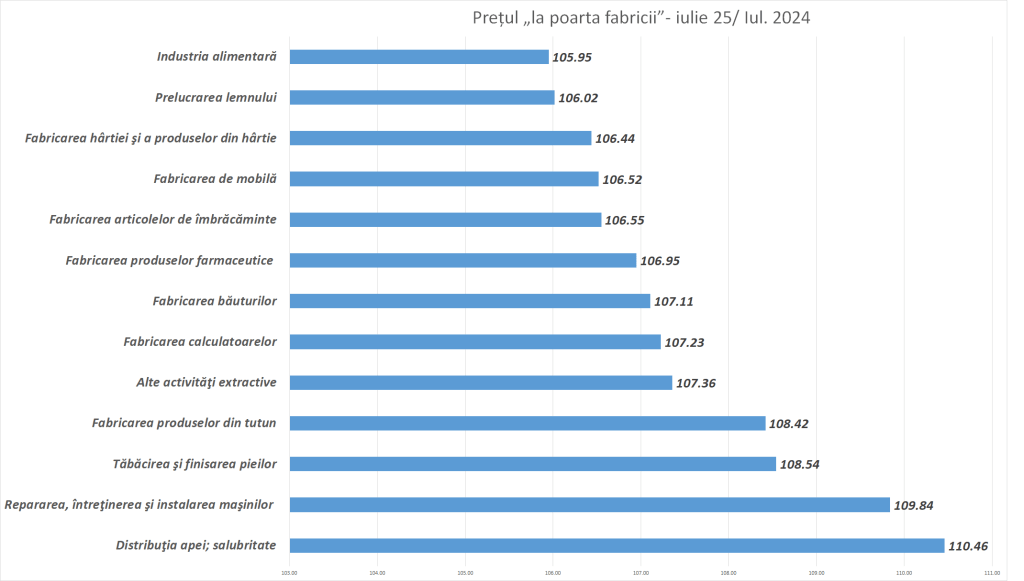
At an annual rate (July 2025 compared to July 2024) most expensive the sanitation services and the distribution of water (over 10%), followed by the activity of car services and the manufacture of leather goods.
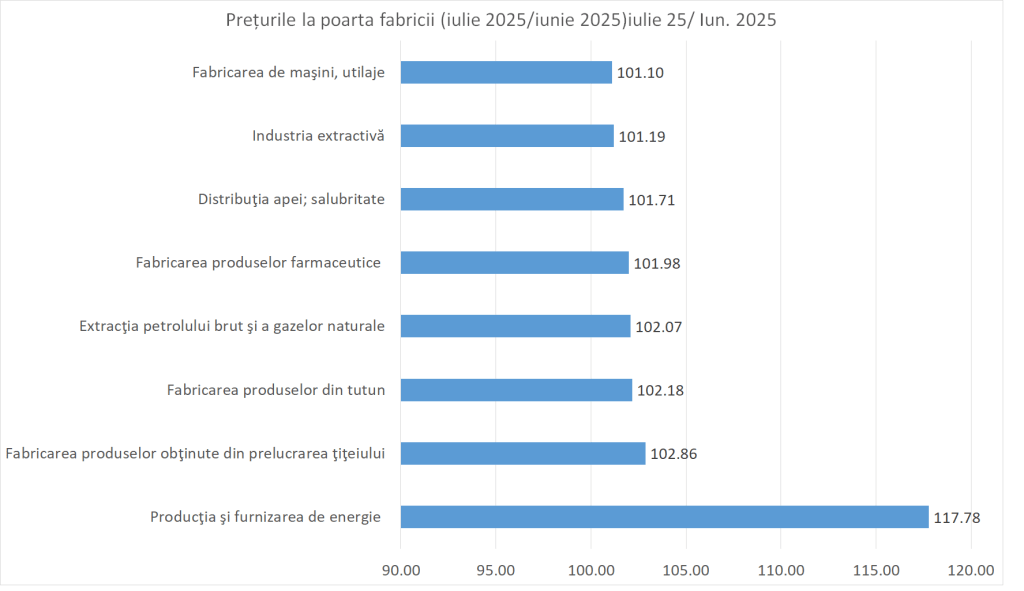
If we look at the increase in July compared to the previous month (June), the image is different: the increase in energy leads.
IPPI measures whether a product or service becomes more expensive or cheaper for customers.
The IPPI, which measures the so -called “industrial inflation” is a very important indicator because, in general, if the factories increase the prices, this will be felt later.
There are two subindics for the Industrial Price Price Index, the one for the domestic market and the one for the foreign market. For production prices on the external market, prices are calculated at national borders, FOB (Franco on board); This means that the seller pays the transport of the goods to the shipping port, plus the loading costs, and the buyer pays the costs of transport, insurance, unloading and transport from the port of destination to his factory.
The Industrial Production Price Index (PPI) measures the modification of the prices of the products or services before they reach the consumer.
Decision factors and analysts use the PPI to evaluate the pressures of the costs from various industries, contributing to the formulation of the monetary policy, the salary negotiations and the contractual adjustments related to the evolution of the prices.
The short -term changes of the PPI highlight vulnerabilities in the supply chains, the impact of prices for raw materials (energy, etc.) and the general state of economic health.
Why is IPPI important?
Given the domino effect of fiscal consolidation measures and high uncertainty, we expect a contraction of GDP this year (-0.6%, -1.4%), a BRD report transmitted to investors and consulted by Hotnews.
The risk of a recession is increasingly reminded by economists, reminding that economic indicators have undergone severe damage in the first quarter, according to information provided by the National Institute of Statistics.
Given the domino effect of fiscal consolidation measures and high uncertainty, we expect a contraction of GDP this year [-0,6%, -1,4%].