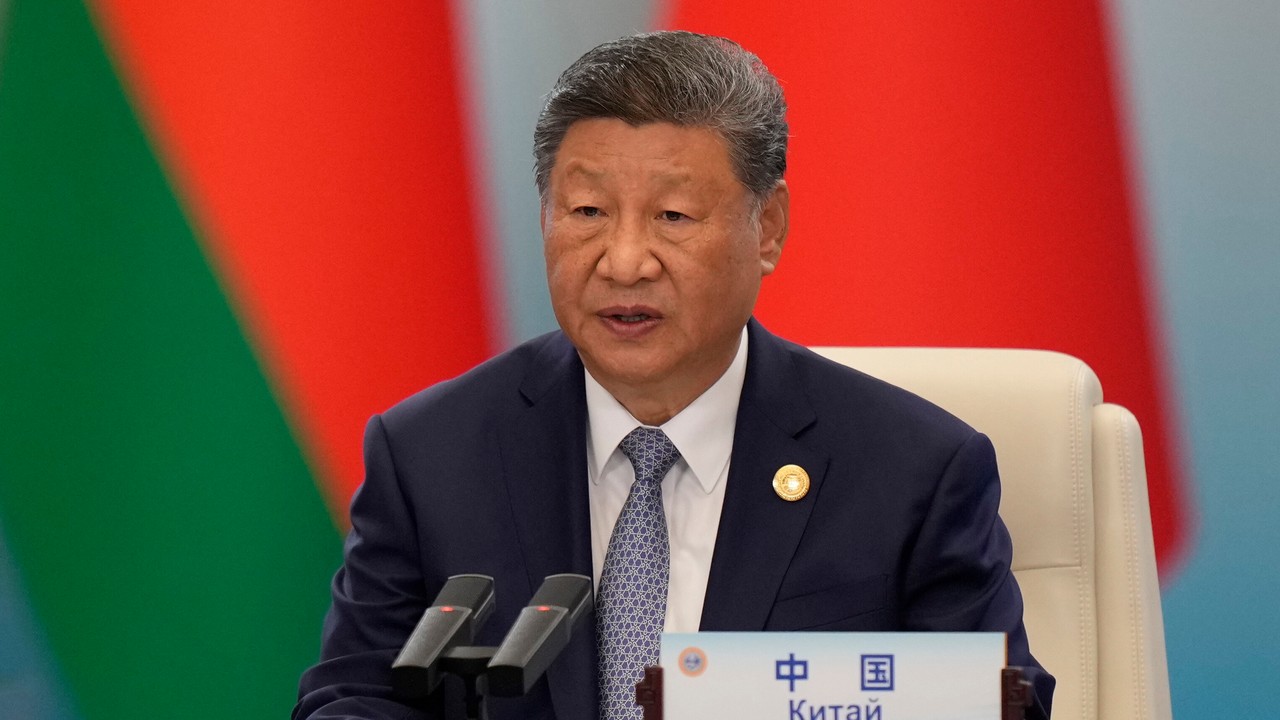
In the meeting in Tiencin, in the north of the PRC, he participates, among others Russian leader Vladimir Putin.
“We must definitely oppose the mentality of the Cold War and the block confrontation, as well as intimidation acts,” said XI. The Chinese leader presented SZOW as a “real multilateralism” model in response to global geostrategic and commercial tensions, thus referring indirectly to the United States.
XI pointed out that Szow, created in 2001, strengthened its position as “the largest regional organization in the world”, covering 26 countries and cooperating in over 50 areas, with economic potential reaching $ 30 trillion.
He argued that the organization is a “pioneer” in taking action against “three evil forces” – terrorism, extremism and separatism, “by acting and solving disputes and clearly opposing external interference, thus protecting peace and peace in the region.”
The key pillar of the development of Szow remains invariably the “spirit of Shanghai”, promoting “mutual trust, mutual benefits, equality, consultations, respect for the diversity of civilization and the pursuit of joint development” – he noted.
Looking to the future, XI emphasized the need to strengthen the spirit of cooperation, despite “global instability”. In his opinion, the key to further development will be – “respect for differences and joint pursuit of development”, which will translate into deepening dialogue and strengthening ties between nations. Further economic integration, with an emphasis on “mutual benefits”, is to drive regional growth and increase the standard of living of citizens.
Including – according to XI – openness and “promoting openness and inclusiveness” remains to build harmonious relations and support the development of civilization through cultural exchange and economic cooperation.
This year's peak is seen as the largest SZOW meeting since its establishment and aims to strengthen the influence of China in the region.
Szow took its beginnings from the “Shanghai Five” – a forum created in the mid -1990s by China, Russia, Kazakhstan, Kyrgyz and Tajikistan to resolve border disputes. Over time, it turned into a transregional organization. Currently, it brings together 10 Member States, including India, Pakistan, Iran and Belarus, as well as two countries with the status of an observer and 14 dialogue partners. The organization is promoted by Beijing and Moscow as an alternative to NATO.