In the face of an increasingly liberal political scene in Europe and deepening social inequalities, it becomes key to making societies aware of the threats of unreflective support of the richest. In Poland, recent proposals are caused by recent proposals, e.g. Władysław Kosiniak-Kamysz, who would like to make social benefits dependent on parents' professional activity. He defines social assistance as “the culmination of ambitions” – thus he is in favor of solutions conducive to class segregation. To understand what neoliberalism leads to, it is worth looking at its effects in the West, even in France, which today is struggling with a deep economic crisis.
The gradual decrease in the standard of living of the French, underfunded public institutions or the outflow of tourists is a reflection of the current economic situation. The country's deficit reaches almost 6 percent. per year, and the public debt is 110 percent. national property. For years, the increased taxation of the richest, who reach for various forms of tax optimization, which allows them to reduce the participation of the country's budget to a minimum – often derive benefits from public funds.
To start with, it is worth considering the real problem of avoiding law by the richest.
As Bernard Arnault celebrates the tax system
First of all, it is worth looking at various methods of fiscal optimization, which billionaires use to maximize profits. An example of the functioning of these mechanisms is the story of Bernard Arnault – president of the LVMH group and for the years the richest man in the world (currently the fifth in the “Forbes” ranking). He very effectively uses gaps and privileges offered by tax systems, placing, for example, his holdings in countries proposing more favorable fiscal conditions (e.g. in Luxembourg), which allows him to significantly reduce the load. In addition, it assumes in the tax haven of companies that formally provide services to companies registered in France. This allows the transfer of some of the profits to low or zero taxes, and although such activities are on the verge of legality, Arnault has effectively avoided legal liability.
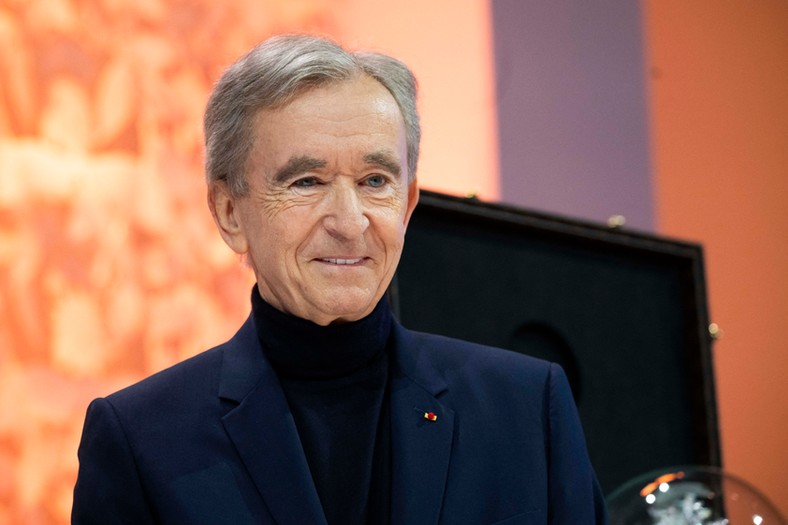
Bernard Arnault
In France, inheritance law also operates in France. Under the so -called Dutreil's pact (a mechanism that allows for partial exemption from inheritance and gift tax when transferring a family business – editor's note) entrepreneurs can reduce inheritance tax by up to 75 percent. Although this instrument was originally to support small and medium -sized family businesses, in practice it is most often used by the richest, limiting their obligations towards you at the expense of the rest of society.
Similar mechanisms occur in Poland. An example would be the Polish order program, which was supposed to support small entrepreneurs, in practice he favored large companies with extensive accounting facilities, deepening market disparities and hindering the functioning of micro enterprises.
Politics “supporting small entrepreneurs” are presented as a motorboat of the national economy, but in fact, most often corporations derive the most, using the mechanisms of state encouragement to further monopolize capital and marginalize smaller players.
Returning to Bernard Arnault, according to the data of the French accounting tribunal (Cour des Comptes) only in 2007-2017 saved about EUR 518 million thanks to the functioning of the Louis Vuitton Foundation, dealing with the promotion of contemporary art. Since 2003, French law allows companies to deduct from taxes as much as 60 percent. donations for cultural and public purposes. This means that Arnault not only avoids paying taxes, but really uses state mechanisms to finance and increase its private artistic collection.
It is also worth mentioning that, according to French law, public museums are obliged to provide free access to culture, including people under 26 years of age, teachers, unemployed, people with disabilities and using social benefits. Meanwhile, the Louis Vuitton Foundation as a private institution may bypass these duties. In practice, this means excluding less privileged social groups from access to art, which is co -financed by the state and which paradoxically serves to enrich the wealthiest.
These mechanisms show a broader structural problem: tax -privileged billionaires not only avoid fiscal liability, but also often transform public support mechanisms into tools to multiply private profit. And instead of equalizing opportunities, the state becomes an involuntary partner in deepening unevenness.
Who really finances politics
Detail for billionaires also has a political face. It is worth taking a closer look at him. Donations to political parties largely reflect class divisions: the richest have a much greater impact on politics than the middle or folk class. As the research of prof. Julia Cagé from the Institute of Political Sciences in Paris, when the poorest 10 percent The French transmits on average 10 eurocents a year, the wealthiest group constituting barely 0.01 percent. It gives them an average of 370 euros, and the most influential sponsors of the latter – 0.1 percent. – They pay an average of 5245 euros a year. What's more, the state returns some of these donations in the form of a tax relief, which is used by virtually only the richest – an average of around 400 euros per year for people from the 0.1 percent group, while most citizens do not receive this form of support. This means real subsidy of donations by the state only for the elite.
Inequality in access to public funds is also drastic: the richest 0.1 percent. Citizens use an average of 3.9 thousand. euro per year per capita public funds, while for the poorest 40 percent It falls only 73 euros, i.e. 53 times less! As a result, private sponsors easily influence political decisions.
This relationship has emphasized the last rejection in the French Senate, the so -called Zumana tax – a draft act on tax equality. Although he was approved by the National Assembly in February, the Senate rejected him in voting in June 2025.
Will a two -percent tax reduce the deficit?
The bill prepared on the basis of Analysis of Gabriel Zuman and Olivier Blanchard and Jean Pisani-Ferry and assuming the introduction of a minimum property tax of 2 percent. Annually for the richest 0.01 percent citizens (whose fortune is over EUR 100 million) will not be further processed. The authors of the document argued that the current system is conducive to bypassing taxation by billionaires, while the middle class bears proportionally higher fiscal loads. In their opinion, the proposed solution was to restore equality before the tax law and increasing justice in financing state. The Senate's decision to reject the project showed how strong the interests of the wealthiest social groups are and how difficult the path to changing the system is.

The latest cover of the weekly “Przegląd”
It should be emphasized that in the case of taxation of the richest, there is talk of actual property, their material richness, not about the speculative value of their actions. In this case, a two -percent tax for the wealthiest people would pay from EUR 15 billion to EUR 25 billion per year to the state budget.
The bill, brought by the Greens, aroused not only political, but above all social enthusiasm. As much as 77 percent The French are in favor of returning to the tax on Fortun (“Taxe Zucman: Pour en Finir Avec Le Privilège Fiscal des Ultrariche”, “L'umanité” July 10, 2025), which is why right -wing politicians (supported by billionaires) were absent when voting on the act – to minimize the anger of less wealthy voters.
In addition, since previous elections, a great problem is the adoption of a budget, which is criticized by both the left and the right side. This year, EUR 40 billion is saved to deal with the growing crisis, but savings are required from these citizens and institutions that cannot save more. Undoprocked schools and universities, lack of funds for pensions for people with disabilities or health care defeat are just a few examples of areas that require huge outlays in France. Meanwhile, Bernard Arnault is outraged at the idea of increasing the tax and threatens to delocation, although the materials for Louis Vuitton bags have long been not produced in France.
Although the law passed in the National Assembly by a majority of 116 votes to 39, the Senate blocked further work on it. The main argument of opponents of the new tax is the fear of escaping the richest citizens from the country. As an example, they often recall the situation from Great Britain, where similar solutions were supposed to contribute to emigration of approx. 4.4 thousand. millionaires and loss of up to $ 110 billion. income (“le Figaro”). A similar phenomenon was observed after the introduction of a more stringent tax system in Norway.
The issue of limited effectiveness of such tax in a real reduction of budget deficit and public debt is increased. In a sense, this allegation is justified because the capitalist system is based on a debt generated as a result of cyclical economic processes. Economic growth is usually driven by easy access to the loan, which over time leads to overheating the market and slow down from excessive debt.
Erosion of the social contract
France in these activities – or in an attempt to undertake them – is not lonely. More and more countries are taking specific steps to tax the richest. Similar initiatives appear, among others in Brazil, Belgium or the Netherlands. The draft law of the Zmanan act has gained the support of seven Nobel Prize winners in the field of economics, including such authorities as Simon Johnson or Daron Acemoğlu. Scholars emphasize that France should be a precursor of a global change that could inspire other countries to fight the growing inequality.
More and more data shows a close relationship between the concentration of wealth and the deepening crisis of democracy and the progressive climate disaster. Taleing the disproportionate influence of the richest on public life and normalization of refusal to participate in financing the common good lead to the erosion of a social agreement. The justification of excessive elite privileges by the modern right not only weakens social solidarity, but also strengthens the belief that law and responsibility apply only to the rest of the citizens.
It is a dangerous path, leading to moral impunity and total triumph of individual over -community interest.
These contrasts in Europe are getting clearer. While in Poland election successes are achieved by candidates promoting populist solutions in the style of “PIT 0 percent”, the French demand raising taxes, because they are aware that they provide citizens with security. On the one hand, pathologies are noticed, there are more and more voices that stigmatized the abuse of the rich, on the other, the scale of nepotism, cuddle and oligarchization of society is still ignored, which, guarding “Christian values”, is despised in contempt sharing with their neighbors or care for the poor.