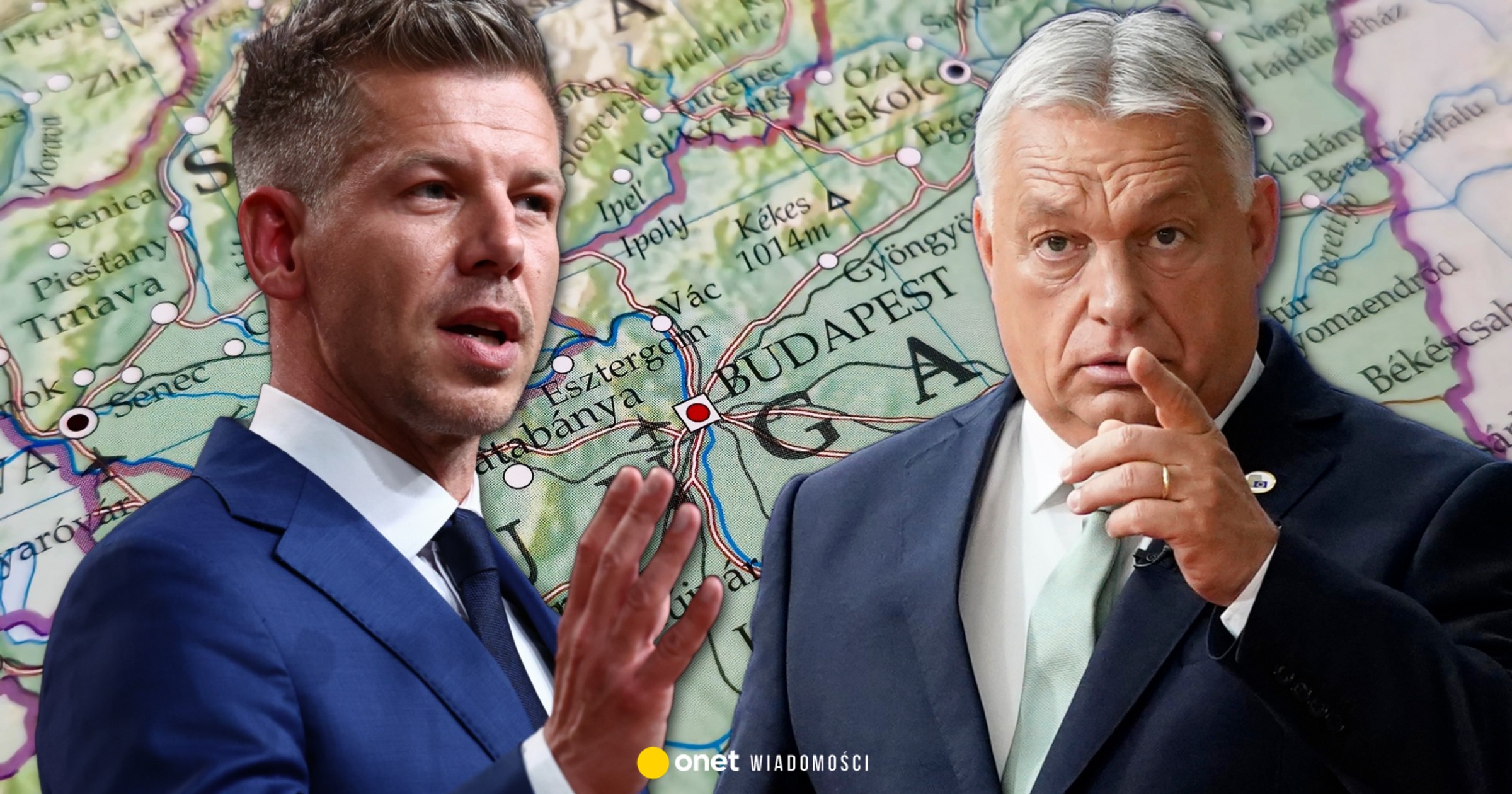
After Peter Magyar's decisive electoral victory over Viktor Orban, a major reshuffle is underway in Hungary. The new Hungarian Prime Minister will do everything in his power to completely remove the stain that Fidesz's 16-year rule has left in Hungary. Peter Magyar's opponents know he is serious. Fearing confiscation and nationalization of their assets, several oligarchs have already taken their money abroad.
According to The Guardian, Orban's friends are flying their billions of forints on private jets to other countries to keep them safe, and Orban's high-ranking friends are applying for US visas and jobs in the MAGA environment. Moreover, Foreign Minister Peter Szijjarto was said to have hastily destroyed confidential documents.
The elections are the beginning of a new era. However, in some areas, Orbán's friends are quickly covering their tracks, and the shadow of Fidesz still largely hampers the actions of the new government. Some of Orban's friends disappear as quickly as possible, while others will obstruct Magyar's reforms for a long time. We show where Orban still has strong influence.
Administration and justice – the long arm of the old system
Peter Magyar's party, Tisza, won the April 12 elections with 53 percent. votes. Orban's party, Fidesz, suffered a severe defeat, gaining 39 percent. votes.
The new Prime Minister Peter Magyar, who wants to fight corruption and become a loyal partner of the EU, will encounter great resistance. It will probably take years before he manages to repair the country.
In the state apparatus, it is particularly clear how difficult it is to change quickly. Many high-ranking officials who were hired during Orban's era still serve in ministries and offices. New policy guidance is often delayed by existing administrative procedures or adapted for technical reasons. This makes it virtually impossible to introduce changes quickly.
The article continues below the video
In the US, Donald Trump deliberately gathered thousands of loyal administration employees before his return so that he could act immediately. Meanwhile, the new Prime Minister, Peter Magyar, takes over the government apparatus, which has not been reorganized, but remains in its current operating logic.
The economy is in the hands of Orban's people
There is a network of economic connections in Hungary that is closely linked to the previous government. A structure of enterprises has developed over the years around Orbán's center of power, the development of which was often linked to state orders and unofficial personal relationships.
These networks operate regardless of government changes. Contracts are long-term, ownership structures remain unchanged, and economic influence cannot be quickly reorganized. Even if political priorities change, the economic basis of the system remains initially stable.
According to estimates, approximately 80 percent Hungarian media – newspapers, TV and radio stations – are to varying degrees under the influence of Orbán's party, Fidesz.
Magyar announced a thorough reform of the state-dominated media structure and the immediate closure of the “lie factory.” In practice, however, many structures remain unchanged for now. Newsrooms continue to operate, only under revised political guidelines, while coverage, ownership and infrastructure remain largely unchanged. No stations have been closed so far.
Europe – an atmosphere of distrust
At European level too, the impact of the Orban era remains felt. The suspension of EU funds and years of disputes have created an atmosphere of institutional distrust towards Hungary. Magyar will try to break this barrier.
Then there is ideology. Parts of the European right have seized on Orban's key arguments — especially his criticism of Brussels, migration policy and emphasis on national sovereignty.
In this way, his political model continues to have influence beyond Hungary's borders, even as his immediate power base at home has weakened.
Escapes abroad?
Magyar reported on wealthy Hungarians who “transferred tens of billions of forints to the United Arab Emirates, the United States, Uruguay and other distant countries.” He called on justice authorities to “arrest criminals and prevent their escape” to countries where extradition is unlikely.
The oligarchs' flight abroad will mean that Magyar's key promise – holding his predecessors to account – will remain unfulfilled. If the new prime minister wants to show agency, he must also cope with this challenge, in addition to dealing with Orban's influence in four important spheres of the state.
I’m Ashley Davis as an editor, I’m committed to upholding the highest standards of integrity and accuracy in every piece we publish. My work is driven by curiosity, a passion for truth, and a belief that journalism plays a crucial role in shaping public discourse. I strive to tell stories that not only inform but also inspire action and conversation.