Important blow for Trump: Justice has decided that most of the customs duties imposed by him are illegal. The reaction of the US president

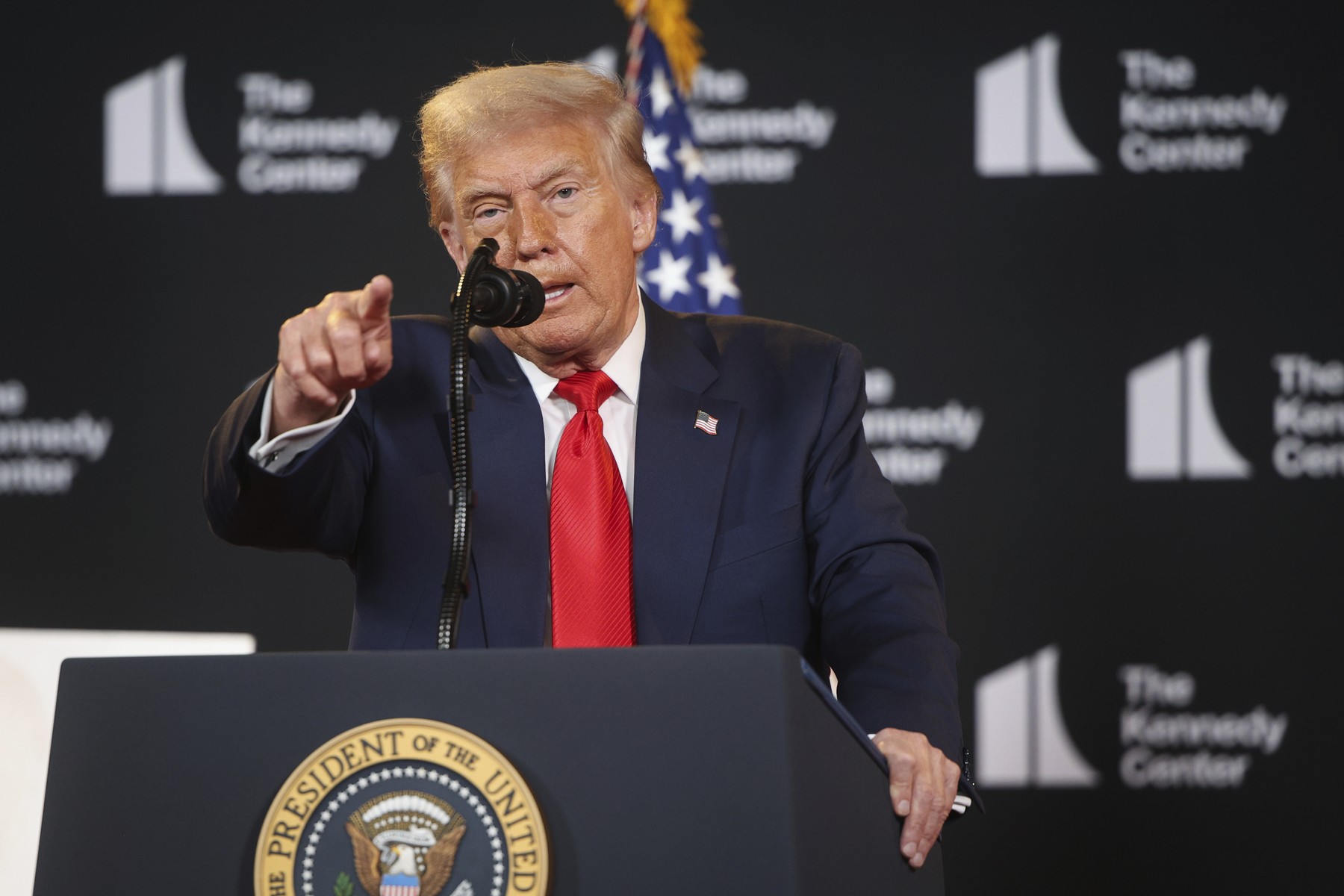
US President Donald Trump speaks at the Kennedy Center in Washington on August 13, 2025. Photo: Francis Chung / Politico / AP / Profimedia
A US Court of Appeal decided on Friday, with a majority of 7 to 4, that most of the tariffs imposed by Donald Trump are illegal, undermining the use by the Republican President of these taxes as a key tool of his international economic policy, reports Reuters.
However, the Court allowed the tariffs to maintain until October 14, to give the Trump administration the chance to appeal to the US Supreme Court.
The decision comes in the context in which another legal dispute, regarding the independence of the federal reserve, seems to be in front of the Supreme Court, which will lead to an unprecedented legal confrontation about Trump's entire economic policy.
Customs taxes, a pillar of foreign foreign policy
Trump has made customs taxes a pillar of US foreign policy in his second term, using them to exert political pressure and renegotia with commercial agreements with countries exporting to the United States.
The customs duties offered the Trump levers administration to obtain economic concessions from the commercial partners, but also increased the volatility of the financial markets.
Trump criticized the decision, which he qualified as “extremely partisan” of the Court. “If these customs duties would ever disappear, it would be a total disaster for the country,” he wrote on the Truth Social network.
However, he predicted an overthrow of the decision, saying that the customs tariffs are expected to bring the country “with the help of the Supreme Court”.
How the Court's decision was made and how it was explained
The decision of the United States Court of Appeal for the Federal Circuit in Washington, DC, taken with the vote of seven judges, while four had separate opinions, discussed the legality of what Trump calls “mutual” taxes imposed as part of his April war, as well as a separate set of tariffs imposed in February against China and Mexico.
Six judges in the majority and two judges who had separate opinions were appointed by Democratic presidents, while a majority judge and two judges with separate opinions were appointed by Republican presidents.
The decision of the Court has no impact on the taxes issued under other legal bases, such as Trump's taxes on steel and aluminum imports.
Trump justified both sets of rates – as well as more recent taxes – under the Law on International Emergency Economic Powers (IEPA). Iepa gives the President the power to address “unusual and extraordinary” threats during national emergency situations.
“The status gives the president a significant authority to take a series of actions in response to a declared national emergency situation, but none of these actions explicitly includes the power to impose rates, taxes or the like, or the power to charge taxes,” the Court said.
“It seems unlikely that, by adopting Iepa, the Congress intended to move away from its previous practice and to grant the president an unlimited authority to impose customs duties,” explains in the decision,
The Trump administration was waiting for it
William Reinsch, a former high official of the Trade Department, who is now working at the Center for Strategic and International Studies, said that the Trump administration was preparing for this decision.
“It is notorious that the administration anticipated this result and prepared a plan B, probably to maintain the customs duties in force through other statutes,” he added.
“The last thing the market or American companies need is more uncertainty in terms of trade,” said Art Hogan, a market chief strategist at B. Riley Wealth.
“I think it puts Trump's entire economic agenda on a potential collision course with the Supreme Court. It is different from anything else I have ever seen,” said Josh Lipsky, president of the Atlantic Council Economics Department.
The Supreme Court, with a conservative majority of 6 to 3, has issued a series of decisions in favor of Trump's second term, but in recent years it has also been hostile to the extended interpretations of the old statutes to provide the presidents newly acquired.