Trump used customs tariffs as an instrument for balancing the American trade balance and a tool to obtain more favorable conditions for international exchange. “The abolition of customs duties would be a disaster for the US,” says the president.
In accordance with the decision issued on August 29, The challenged tariffs may apply until October 14. This is a time to allow the preparation of a possible appeal to the Supreme Court.
The Court of Appeal for the Federal District in Washington issued a decision by the votes of 7 to 4 – six judges voting “for” were the nominates of the presidents of the Democratic Party. The case concerned retaliation and imposed in February to China, Canada and Mexico. Importantly, the judges did not question the legality of customs tariffs covering the import of steel and aluminum to the United States.
Trump made a customs policy one of the main pillars of his international strategy
Trump's first decisions as president concerned China, Canada and Mexico. In relation to China, the tariffs were to be a reaction to the influx of fentanyl to the USA, while towards Canada and Mexico – an attempt to force measures to limit illegal migration through the southern border.
On April 2, the president also announced the so -called mutual duties, covering most of the United States Trade Partnersalthough a few days later he suspended their use to give time to conclude bilateral agreements.
Until now, such agreements have been concluded, among others with Japan, South Korea or the European Union, and negotiations with China are still ongoing.
Trump's customs policy has two main goals. This Limiting the US trade deficit and creating conditions conducive to investing in the American economyincluding transferring production from abroad back to the country.
On the one hand, customs turned out to be an effective negotiating tool, which allowed the promises of new investments in the US, but on the other – caused growing uncertainty on financial markets.
“All tariffs are still in force!”
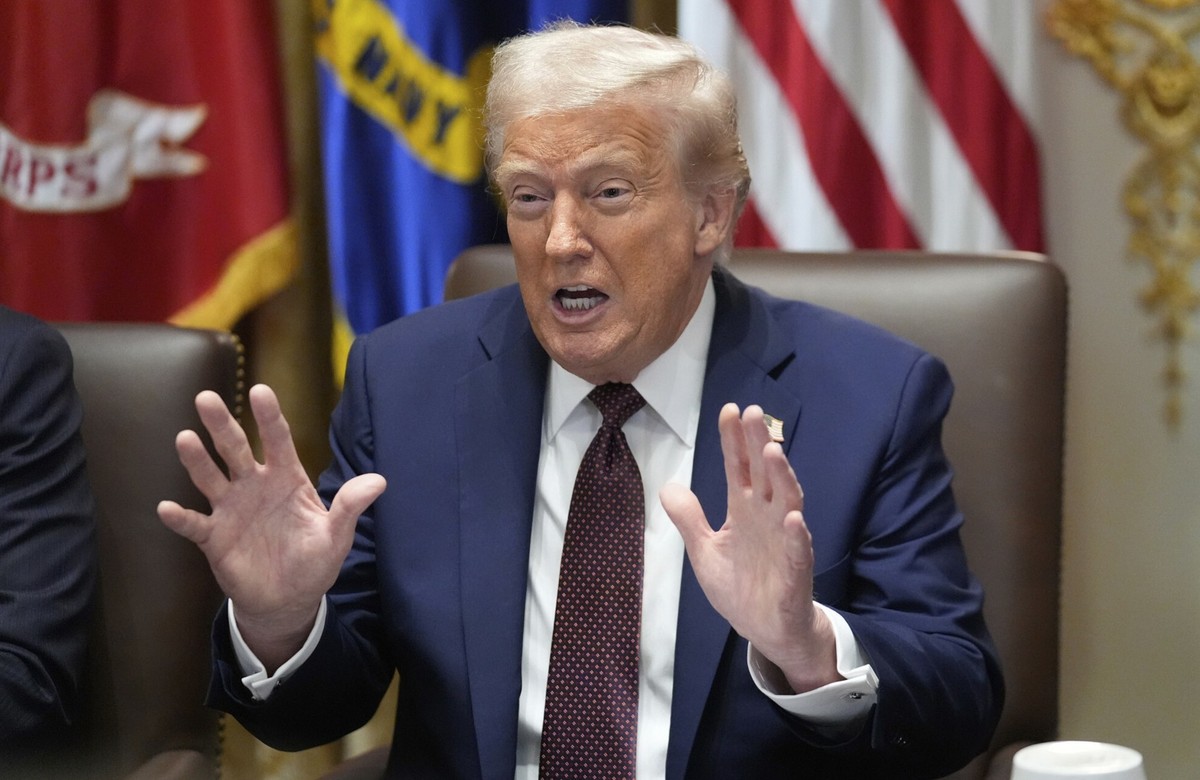
Trump on Truth Social that “all tariffs are still in force!”, Commenting on the court's decision. US President He emphasized that “a biased court mistakenly stated that duties should be withdrawn. But they know that the United States will eventually win. The abolition of customs duties would be a real disaster for the country – it would weaken us financially, and we must remain strong, “he noted. Trump also announced that the US will no longer tolerate giant deficits and trade barriers imposed by other countries, both allies and rivals.
“If the sentence persists, he would literally ruin America. (…) Clinics are the best protection for our employees and for enterprises that produce the highest quality goods signed with the slogan made in America. For decades irresponsible politicians allowed the tariffs to be directed against us. Now, thanks to the support of the Supreme Court, we will use them for the good of our nation strength and power, “Trump announced, thus making it clear that he plans to appeal.
Why did the court consider Trump's customs unlawful?
Trump introduced retaliation duties and penalty tariffs against China, Canada and Mexico, citing the International Emergency Economic Power Act (IEEPA) from 1978. These provisions allow the president to introduce extraordinary regulations in foreign trade in the event of an announcement of a state of emergency related to national security, foreign policy or US economy.
According to the Court of Appeal However, the Act does not give the president the right to impose duties, fees or taxes. “It is unlikely that Congress, when adopting Ieep, would like to leave the previous practices and grant the head of the state unlimited power in imposing tariffs” – we read in the justification of the judgment.
The case was considered on the basis of complaints from five American companies and twelve states controlled by the Democratic Party.
Current Department of Justice He maintains the position that the Act gives the president the right to “regulate” importsand in extraordinary situations – even to block it through customs tariffs.