Superstitions to cut the head of Saint John the Baptist. What are you not allowed to do on August 29


On August 29, Christians celebrate the cutting of the head of Saint John the Baptist, a holiday of a special significance by its meanings. John the Baptist was considered to be the Savior Jesus Christ, and his martyr is a symbol of the total sacrifice for faith.
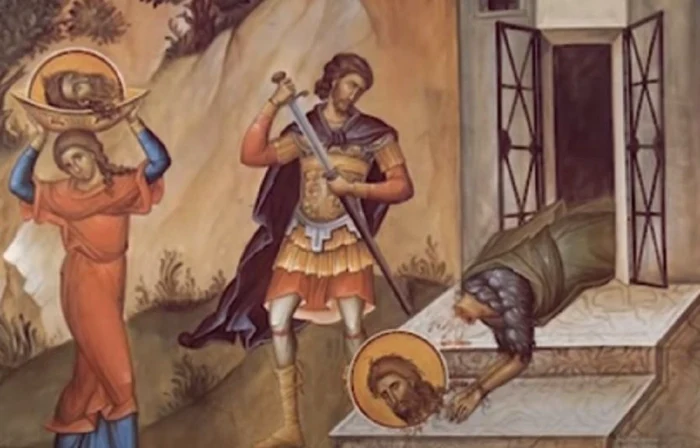
Cutting the head of Saint John the Baptist Photo Crestinortodox.ro
The cutting of the head of Saint John the Baptist is one of the most important Christian holidays, celebrated by the Orthodox Church on August 29. A biblical event is marked, presented in the New Testament, namely the killing, at the order of Herod – the clientele King of Judea, of Saint John the Baptist, also said to the Merge, who announced the coming of Jesus Christ, but also prepared the road through sermons and through the life of Sihastru, demonstrating the spirit. It is also a day loaded with traditions and superstitions present especially in rural communities. It is, at the same time, the last big holiday in the church year.
What significance does the head of St. John the Baptist have
Saint John the Baptist was probably born in the year 6, June 24, in the town of Ein Kerem, southwest of Jerusalem.
The birth of Saint John the Baptist was a miracle in itself. And this in the conditions in which his parents, the priest Zechariah, from the tribe of Aaron, and Elisabeta were too old to conceive children. His birth was announced by the angel Gavriil of Zaharia who served in the Temple. Because Zechariah did not believe the news, he remained silent until his son received the name. John the Baptist was appointed the Mermaor and because he was born six months before IIus Christ. About the childhood and adolescence of John the Baptist is known nothing. He appears at the age of maturity, being about 30 years old when he became known due to his sermons. He was a hermit who led a harsh, needy life, so that he could preach by preparing the way of Jesus and pointing the world to the true spiritual values. He, especially by the baptism of Jesus in the waters of the Jordan, is the one who presented to the world on the Messiah, the Son of God. “It comes the strongest than me, after me,” said Saint John the Baptist in his sermons.
His sermons attracted entire crowds arousing Herod Antipa's envy, the tetrarh of a part of the former Kingdom of Judea (controlled Galilee and Pereia). Herod was worried about the popularity of Saint John the Baptist and was also upset by the fact that “the one who cried in the wilderness” for his illegal marriage, Herod's sister -in -law. Herod closed John the Baptist in the prisons of the palace, and on his birthday, the daughter of Herodia (Herod's wife), Salomeea asked the prophet's head for a dance. Herod offered John's head the Baptist on a tray. The cutting of the head of Saint John the Baptist is a holiday with eschatological significance (which refers to hope in immortality) along with other holidays such as the Assumption of the Virgin. Saint John the Baptist died as a martyr, a proof of the steadfastness in faith even in the face of death. At the same time, the death of John the Baptist is a symbol that announces the martyrdom of Jesus Christ. In addition, it is confessed to defeat death by faith and to announce the eternal life of the humble.
It's a red cross holiday. What does this mean
The cutting of the head of Saint John the Baptist, due to these profound meanings, arranged by the Holy Fathers as one of the three celebrations celebrated in August, the last of the church year, as a sign of renewal, is significant in the Orthodox Christian Calendar. This means a day with special job (triode), with a special importance, as a feast. The days with red cross are often associated with discharge to fish or restrictions. Namely, Christians do not have to work both at home and in the field. Do not wash, do not sew or sweep these days with a red cross. They are intended only for rest, to go to church for the Holy Liturgy. In addition, bad thoughts are avoided, quarrel. At the same time, it is advisable to mercy on us.
Traditions of cutting the head of St. John the Baptist
In addition to the biblical and liturgical meanings, this holiday gave birth to a series of traditions and superstitions among the believers. Specifically, according to popular beliefs, no red wine is drunk and cabbage is not eaten. In addition, in the memory of the blood shed by Saint John the Baptist named in the rural and Sântion or Sântion, the tradition requires no food and cooked foods, which have the same color: watermelon, red peppers, tomato sauce.
“Tradition says that on August 29, Christians must keep a black or harsh fasting, in which only grapes and water are allowed. There is no red wine, because in the faith it represents the blood of the baptist. There are no red fruits or vegetables and no cabbage because on the cabbage the head of the prophet would have been cut.theologians said.
In addition, in certain areas on the day of the cutting of Saint John the Baptist, nothing is cut with cutting objects, everything breaks with his hand. All superstitions say that this day comes the cold of autumn. Last but not least, traditionally the cutting of the head of Saint John the Baptist was held. Some believers held the so -called post “from the cross to the cross”, that is, until September 14 when the “Ascension of the Holy Cross” was celebrated.