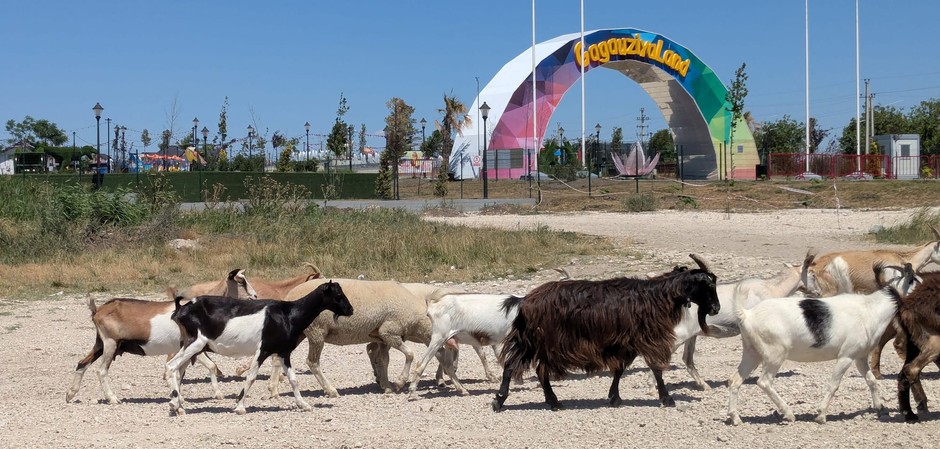
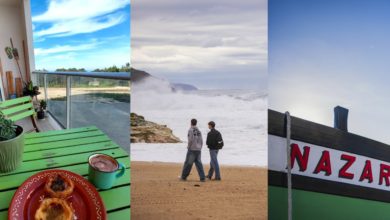
The horizon is filled with sunflowers. Gagausia is full of them – this autonomous and Russian -language region in the south of Moldova is very rural. The parking lot covered with thick gravel is empty, the shepherd chases the herd of goats. Behind him from the dust emerges a rainbow -shaped gate, the entrance to “Gagauziyaland”. This is probably the most controversial amusement park in Moldova, completed just a few months ago. Introduction and attractions are free – the park is a gift for most pro -Russian gagauz built for Russian money in mysterious circumstances – a permit for its construction has never been issued.
In the background a swimming pool is visible during construction, you can see the rubble inside. “They prevent us from further construction,” says the bearded guard and shakes his head with contempt. – The government in the capital does not allow this. They don't want Gagausian children to have a place to play here.
By the government, he understands the ruling social and justice party (PAS) and President of Moldova Maia Sandu. In 2020, she was chosen as a small country located between Ukraine and Romania. Until now, he was largely ignored by the West. Sandu wants to change it and introduce Moldova to the EU – and as soon as possible. According to her, since the invasion of Ukraine, Russia has significantly expanded its influence in the former Soviet Republic.
The EU also noticed this threat – this is evidenced by a visit to the Chisini of European heads and governments: German Chancellor Friedrich Merz, President of France Emmanuel Macron and the Polish Prime Minister Donald Tusk. They went to Moldova with a special mission.
They wanted to express support for the Sand, show that the EU unanimously supports Moldova and prevent the defeat of the pro -European Pas party with powerful pro -Russian forces in the country. Everything will be decided in the parliamentary elections planned at the end of September.
Many Moldovans do not agree with the pro -European course of their country. In October 2024, Sandu conducted a referendum on the placement of a provision in the Constitution of the Moldova path to the EU. Only 50.35 percent were followed by this move. residents of the country. In Gagauzia, where euroscepticism is the strongest, it was only 5 percent.
Entrance to the illegal amusement park in Moldova financed by MoscowJulius Fitzke / Die Welt
Gagauzja is an autonomous region in the south of Moldova. Most of the 160,000 Its inhabitants are Gagauzi, a Turkish -speaking ethnic group, which was almost completely rusified in Soviet times. When Moldova disconnected from the Soviet Union, Gagauzi, who was afraid of his rights, also took up the fight for independence.
Ultimately, a compromise was developed – in its power in 1994 an autonomous Gagauzja territorial unit was established, which was granted wide special rights. It has its own army, its own parliament and its own education system.
The official language is Russian. Many residents of Gagausia maintain contacts with Russia, work there, watch Russian television. Putin, who does not want the former Soviet Republic to approach Europe, uses Gagausia to stick the wedge into a democratic Moldova course. Moscow's various campaigns against this region are an important lesson for the West – they show how easy Putin use the use of weak liberal democracy points.
Soviet relics and Russian influences
Komrat, the little capital of Gagausia, is surrounded by fields that are larger than the city itself. Almost no house has more than two floors, the streets are sleepy, and in the city center there is a church with a golden dome. Unlike the rest of Moldova, the relics of the Soviet Union are ubiquitous: Gagarin and Pushkin's names bearing the streets, and in the city center there is a powerful pedestal with Lenin from matte brown.
Parliament is a classic administrative building in the Soviet style, before which the gagausia flag flutters. From the outside, everything looks calm, but there is chaos inside: for months there is no Jewgeniji Guczul, a governor of gagausia. At the beginning of August, she was sentenced to 7 years in prison for regularly transferring Russian funds of the pro -Russian SZOR party, while she was the secretary in 2019–2022.
Guczul ruled Gagausia for two years. She appeared out of nowhere, she is widely considered a associate of the Moldovan oligarch Ilana Szora, who founded the currently banned and opening of the pro -Russian party and is suspected of stealing a billion euros from the reserves of Moldovan banks. He currently lives in Moscow – he has been sentenced in absentia to 6 years in prison.
Continued article under video material
The fate of his party is in the hands of Jewgeniji Guczul. In recent years, she had numerous trips to Russia and smuggled money from Gagausia. These funds were used, among others, to build “Gagauziyaland” and buy voters' votes. The Moscow government uses an unstable situation in the region to poison the political climate in Moldova, boycott its rapprochement with the EU and expand its influence in this country.
– Chisinas wants to forbid us to speak Russian – the businessman thunders. – He dictates us to hate Russia. But whoever uses coercion achieves the opposite effect to the intended effect. They send the police here, harass us – says his colleague. – We, Gagauzi, didn't fall off the tree yesterday. Still, they want to treat us as fools – he adds.
Regardless of who you ask, people in Gagausia approach the government in Chisinau and with reluctance.
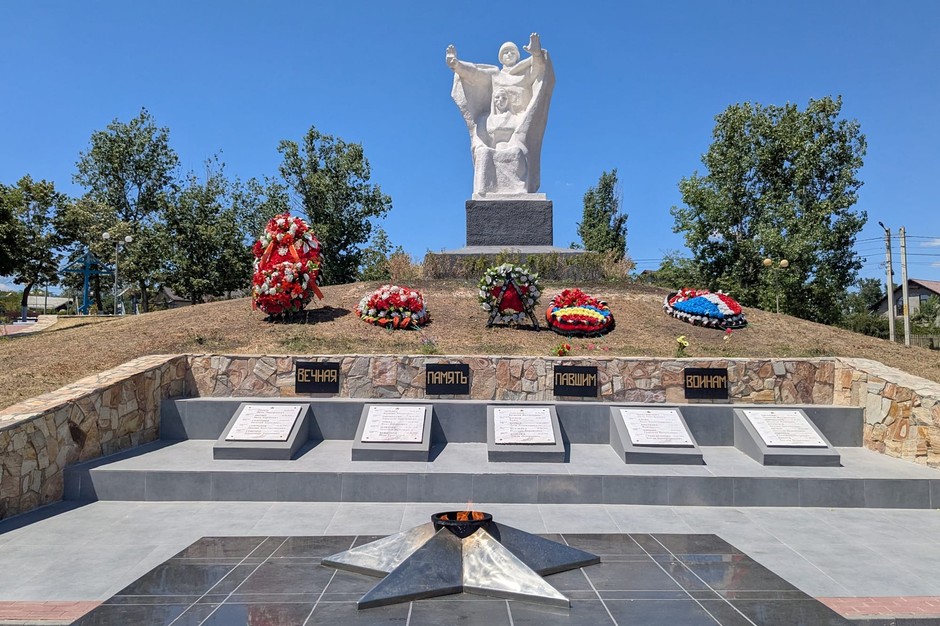
The eternal flame commemorating the fallen soldiers of World War IIJulius Fitzke / Die Welt
– I connected my grandmother the chip to the TV so that she could watch Russian television again. They banned it here. Russia should not start war against Ukraine. But this war is not our problem. We are a small country and we have our own worries. And the government in Chisinau constantly attacks Russia-says 22-year-old Witja. After that, he takes a sip of German beer. – If the sandy is going on, the Russians will finally come here – he adds.
The man in front of the furniture store frowns with irritation. – Maia sandu? She will oppress us. We don't know why. We, Gagauzi, never overflowed blood. We have always demanded our autonomy peacefully, without the use of violence, such as Basków or Irishmen from Northern Ireland. And yet we are enemies for her. Sandu strives to get closer with Europe and although people probably live better than here, we do not want these European values here. Parents of the same sex, transgender people … We could live well without these European values if only our politicians were not so corrupt – he says.
For and against the EU
In Moldova, there are constantly demonstrations – for and against the EU, supporting sand and criticizing it. However, many people no longer believe in these protests – because Guczul used Russian money to pay demonstrators. This weakens the trust of many people in democracy.
Many people do not believe that the protesters go out into the streets of their own free will – they believe that the participants of the protests have been paid. It was similar before the Sand referendum in the EU case. – People knocked on door to door before the referendum, they came to me and my parents. They pressed 50 euros (PLN 213) and said: vote against the EU – says Witja. Finally 95 percent Gagauzów voted against joining the community.
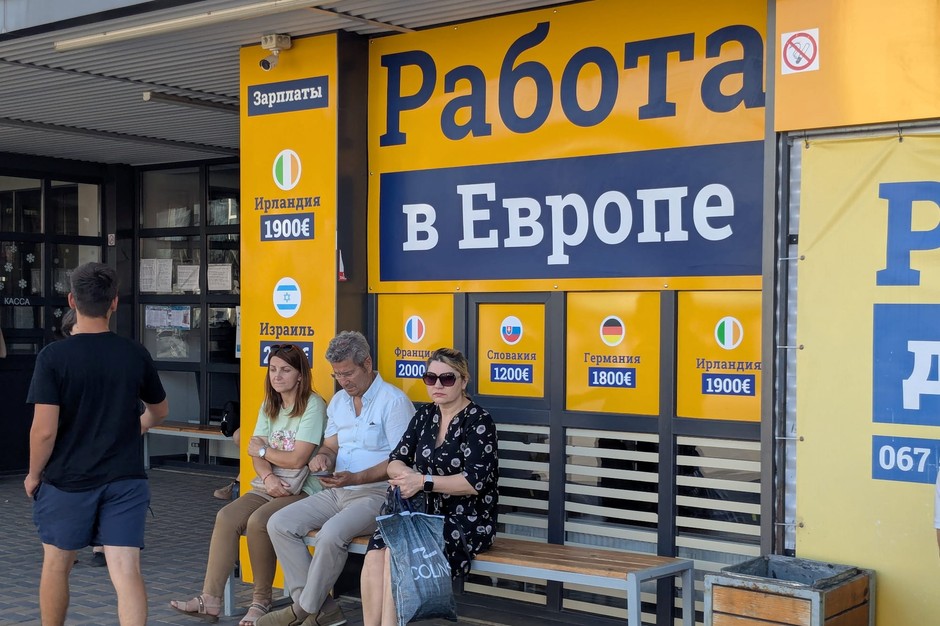
People waiting at the bus station in Komrata. In the background the inscription “Work in Europe”Julius Fitzke / Die Welt
Jewgenija Guczul denies that she was manipulating elections with Russian money. She believes that her conviction and seven -year imprisonment are the result of the central government collusion. Regardless of this, trust in Moldovan democracy has been irreversibly destroyed – it is enough for enemy camps to accuse each other of a lie.
Viktor Gara, who actually has a different name, is fluent in German – he learned him in Soviet times, when he had to serve military service in the GDR in Oranienburg. He is currently working for a aid organization that supports Gagausian children. Says that The situation in the region is terrible, there is great poverty, there is almost no job. – It makes people more susceptible to propaganda and bribery. Many people consider you corrupt anyway, which is why they can be bought. They do not believe that their voice matters – he says.
Language is another problem. Many gagauz does not speak Romanian. However, this is necessary to get a higher education and find a better job. That is why people turn away from the pro -western central government and turn to Russia. Or they go there: long -distance buses to Moscow run from the chamber, the journey lasts 49 hours. The situation of gagausia clearly shows at the Municipal bus station. Everywhere there are ads about work abroad. Large -distance buses run not only to Russia, but also to Berlin (31 hours), Istanbul (20 hours) and Bucharest (9 hours). People leave Gagausia massively because they will earn more than in their homeland almost everywhere.
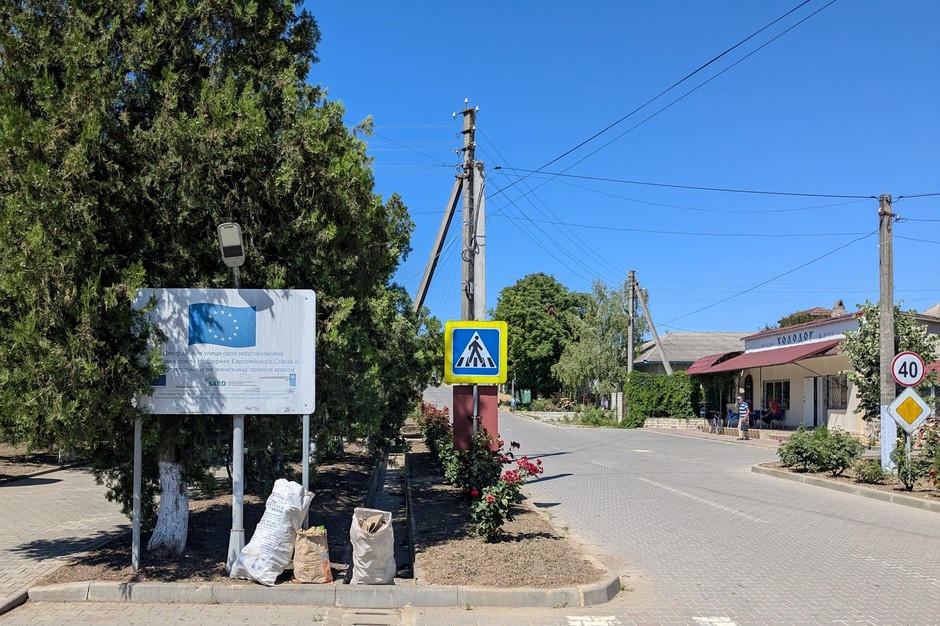
Road to the cell financed from EU fundsJulius Fitzke / Die Welt
At the end of September, parliamentary elections will take place in Moldova. Then it will turn out whether, despite the huge Russian influence, the country will manage to maintain its course on the EU. In Gagauzia, the election result seems to be a foregone conclusion.
The small family is heading towards the carousel with swans, and the sleepy guard turns on the device. – When you pull the lever, the swan's head will rise up. But please do not lift it too high! Otherwise, your head gets stuck and get stuck! – warns one of the men.
“We owe all this to Ilan Szyor,” says the guard. “He has good intentions to us, he wants to enjoy children,” he adds.
In the background you can see skeletons of unfinished houses, Lada rusting in the sun. Only the road to the capital is freshly asphalted. Near her you can see an inconspicuous sign. He informs that the renovation of the road was financed from the EU.
I’m Ashley Davis as an editor, I’m committed to upholding the highest standards of integrity and accuracy in every piece we publish. My work is driven by curiosity, a passion for truth, and a belief that journalism plays a crucial role in shaping public discourse. I strive to tell stories that not only inform but also inspire action and conversation.