publication
2025-08-29 06:00
Only a dozen or so years ago, the credit card was a symbol of modernity and prestige. In splendor, there were nearly 11 million such cards in Poles' portfolios. Today, their number has dropped almost half. 5 million is still a lot, but it is clear that credit cards no longer have such a glow as before.
Why is this happening? In part, the answer is simple – our payment habits have changed. Increasingly, instead of a traditional loan in the card, we choose postponed payments known as BNPL (“Buy Now, Pay Later”). They give you the possibility of spreading purchases in installments or postponing payments by several weeks, often without additional costs and without the need to have a special card. It is a quick and convenient solution, available in store and banking applications, which younger generations treat as a natural alternative.
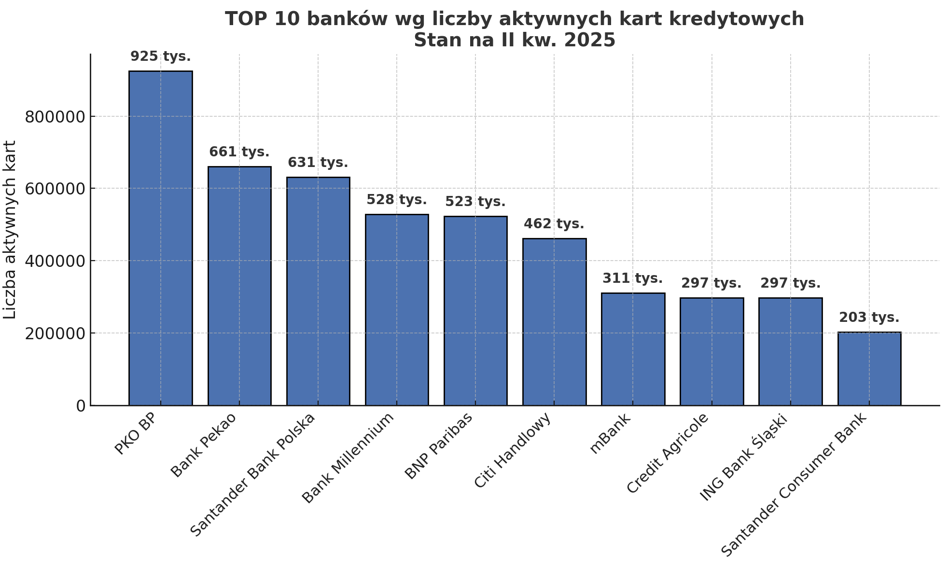
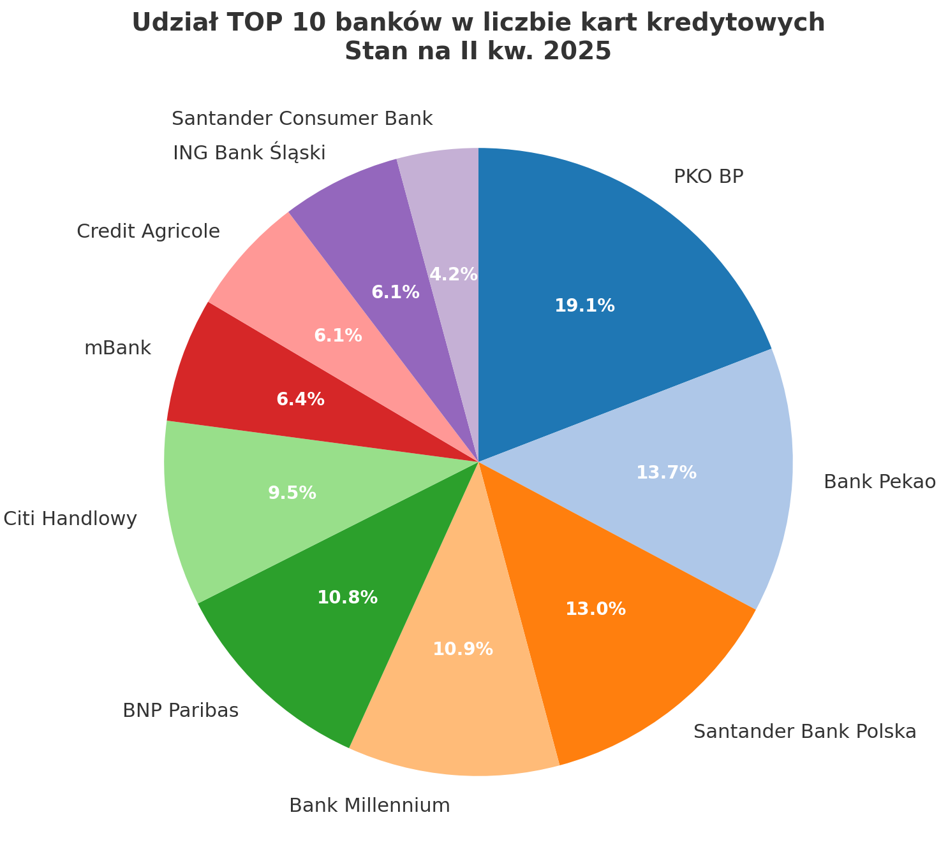
This does not mean, however, that the credit card will disappear. It is still used by several million Poles, and the largest banks are still competing for customers. The market is strongly concentrated, and its core is made up of three largest banks: PKO BP with a wallet exceeding 925 thousand. cards, pekao with 661 thousand and Santander Bank Polska with 631 thousand Together they are responsible for about 44% of all active cards. The first five banks, supplemented by Millennium and ING, already controls about two -thirds of the market. However, dynamics varies. In the second quarter, increases were noted, among others PKO BP, Pekao, Santander BP, Millennium and ING, while clear drops were visible in BNP Paribas and Credit Agricole. In an annual basis, BNP Paribas (-13%) and Bank Pocztowy (-9%) are the strongest, and Millennium (+4%) and ING (+4.2%) record clear increases.
For many people, the value of a credit card is still a hostet -free period. If we repay the debt on time, we use a free loan, which can be beneficial for larger purchases. In addition, banks tempt with additional promotions: loyalty programs, reimbursement of parts of expenses or installment offers on the card. However, this is not always enough to convince younger users who prefer simpler and more flexible solutions.
It is worth recalling how the credit card is actually different from other types of cards. The debit card works on simple terms – we only pay it with what we have on our account. The credit card gives access to the bank's money and only later we have to give it back. The load card requires full debt repayment within the prescribed period, and the pre -paid card acts like an electronic purse – we only use the funds that we will supply earlier.
The future of credit cards in Poland is therefore not clear. On the one hand, it is difficult to expect a return to record levels from several years ago. On the other – you can't talk about their total end. A more likely scenario is to maintain a stable number of cards on the market, with slow movement of weight towards the most active and financially aware of customers. Banks will invest in hybrid solutions – cards with the option of installments and postponed payments – and in additional benefits that are to attach the user for longer.
The credit card ceased to be a symbol of luxury, and it just became one of the many tools in the Pole's financial portfolio. For some, it is a convenient way to manage budget, for others – security for a rainy day. Its place in the world of payment changes, but one thing is certain: it will not disappear for a long time, although she will more and more often have to compete with newer, more digital solutions.