The reason for the killing of John the Baptist. Why did Herod be so strong of him and what sect was the saint.


Saint John the Baptist was a real historical character. At least that's what a number of specialists but also the chronicles of the time say. It would have been part of a religious community of hermits on the banks of the Dead Sea. At the same time, the specialists also talk about the real reasons for the martyr. On August 29, Christians celebrate the cutting of the head of Saint John the Baptist, a day with deep religious meanings.
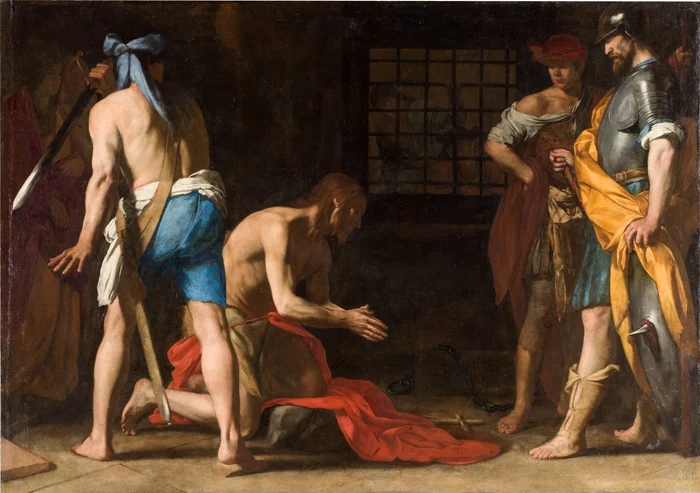
Saint John the Baptist in the Wikipedia photo
From a religious point of view, Saint John the Baptist is one of the central figures of Christianity and Islam. He was a preacher and baptist on the banks of the Jordan River, being considered the Merger, the one who prepared the way of the coming of Jesus Christ but also the one who reveals to the world the Son of God through the Mystery of Baptism. The specialists say that John the Baptist was not only a biblical character but also a historical character in flesh and bones, only with a slightly different story. Based on the chronicles of the time but also of the studies, the specialists claim that they also found the real reason why John the Baptist was killed by Herod Antipa.
The Forerger, “the one who cries in the wilderness” and a miraculous birth
John the Baptist was born in a locality southwest of Jerusalem, six months before the arrival of Jesus Christ. About his life and deeds we find mainly from the Scriptures, that is, from the writings of the four evangelists. For example, Luke says that the birth of John the Baptist was a miracle in itself. Specifically, he was born in the family of the priest and prophet Zechariah, Elizabeth's husband. The two, however, as the evangelist Luke says, were too old to conceive a child. The angel Gabriel was shown to Zaharia and became the birth of John.
Because Zechariah did not believe what the angel was said until after the birth and circumcision of the child. Elisabeta, the mother of John, was the Aunt Maria from Nazareth (no Virgin Maria). The evangelist Luke wrote that John the Baptist was intended to be the forwarder of Jesus from his mother's womb. When Elisabeta met Mary (who in turn wore Jesus), John joined the mother's womb, a sign that he had met the Messiah.
Zaharia regained the gift of speech only after writing on a tablet, the name John, the one that the angel Gabriel had told him to give the child. Moreover, he prophesied that his son, just born, will end up preparing Messiah's way. The Evangelist Matthew says that Zechariah was killed by the soldiers of Herod the Great in the Temple of Jerusalem, while Elizabeth and the child were hidden by angels in the guts of the earth. Details about John's childhood and adolescence are not known. It is only known that at the age of maturity, around the age of 30, John, according to Matei, began to preach in the Jordan area, living like a hermit and eating only wild honey and locusts. The news of the coming of Messiah and urged the world to repent.
Those who were repent of sin baptized by immersion in the waters of the Jordan. Luke said that only so he could reject them and clean them for the coming of the Savior. He preached the follow -up of a righteous life, full of mercy. In addition, he said that anyone can be saved, if he is honest in faith, regardless of the social category. “I baptize you with water to repentance, but the one who comes after me is stronger than me. I am not worthy to take his footwear. It will baptize you with the Holy Spirit and fire”, The Baptist John told the people, according to the evangelist Luke.
Finally, Jesus himself comes to be baptized. John the Baptist recognizes the Messiah. “The Lamb of God, the one who raises the sins of the world”. Initially John says that he does not fall to baptize Jesus, but rather Jesus. However, he receives to baptize Jesus in the waters of the Jordan, thus presenting it to the world as the Messiah, the one chosen. John the Baptist will suffer a terrible martyr after criticizing Herod Antipa, King Clientele of Galilee, because he had married a sister-in-law. Herod imprisoned him without having to kill him. Irodiada, Herod's wife, arranges that John the Baptist is killed. He puts his daughter, Salomeea, a very attractive teenager to dance for Herod. The King of Galilee, promises to give him everything he wants, in exchange for dance. After finishing the dance, Salomeea asks Herod's head to the Baptist. Initially, Herod refuses, but in order to keep his promise, he asks for the prophet's execution. This is the biblical story, known to everyone.
John the Baptist, the hermit in the sect of the Essenes
John the Baptist was a historical character as real as possible. His presence is attested, besides the evangelists, by other people of his time. The best known is the famous Flavius Josephus, the Jewish historian who becomes an imperial Roman. Historians assume that John the Baptist was born in the 6th year, in the village that today bears the name of Ein Karem and which is in the southwest area of Jerusalem. He had been born in the family of the priest Zechariah, from Aaron's nation, that is, illustrious personalities of Jewish spirituality. With the discovery of the Dead Sea rolls and the study of the Essenei community from Qumran (a complex of caves from the Dead Sea), there was a whole series of hypotheses regarding the religious affiliation of John the Baptist but also to solve the mysteries related to adolescence and the first years of youth.
In short, John the Baptist is considered a member of the sect of the Dead Sea. At least this is what Professor John Bergsma from “Franciscan University of Steubenville” in his work “Jesus and the Dead Scrolls: Revealing the Jewish Roots of Christianity” also argues, with different evidence. In short, the Essenes were a religious sect in Judea, which worked between the 2nd centuries and I D HR. It was a brotherhood of hermits that completely excluded the women in their groups and strictly followed the law of Moses.
However, they were differentiated by many aspects of the Jewish religion. They led a separate life from the rest of the society, in isolated communities and living in the Dead Sea caves, in the Qumran region. The Essenes had a complex of rules and rituals, including baptism as a way of entering the brotherhood. They were leading a life full of deprivation and preaching the coming of Messiah. They believed in the salvation of sins and eternal life. About this sect were a lot with the discovery of the Dead Sea manuscripts. However, the Essenes also wrote Filon from Alexandria, Iosephus Flavius and Plinius the Elder.
There are specialists who believe that these Essenes are descendants of the great priests and that they recruited children from the families of certain priests, precisely to initiate and grow in the spirit of their teachings. This is how John the apprentice of the Essenes of Qumran would have arrived. There it was initiated until the age of maturity. “There are some striking facts that indicate the connection of John with the Essenians. The whole community could have originated during the Maccabe, when the Hasmoners took control of the high priest. The rolls call the founder of the Esseni” Teacher of justice “, which seems to have descended from the legitimate line of the great priests. Regardless of the situation, many of the members of Qumran, who have led a monastic life there, have been recruited from priestly families, even since they were still young. We know that John the Baptist came from such a family, descendant of the first high priest Aaron, and the Essenian practice would give the words that “the baby was growing and strengthening in the spirit and was in the wilderness until the day of his appearance.”writes R. Jared Staudt, specialist in theology in the United States, for the Theological Seminary “St John Vianney”.
The Essenes believed that a large part of Judaism of their time was corrupt, being the time for repentance and rebirth, by chance or not, they were great with what John the Baptist and Jesus preached. In addition, says John Bergsma, there are striking similarities between what John the Baptist preached and the teachings of the Essenes. “There are striking similarities between the teachings and lifestyle of John the Baptist and those of the Qumranites. It is possible that John has been raised or formed in the community and then left to carry out their activity for the benefit of a wider audience. The manuscripts from the Dead Sea help us to see that John the Baptist, Israel ”said the specialist in “Jesus and the Dead Sea Scrolls: Revealing the Jewish Roots of Christ.” In addition, the Essenes practiced a form of ritual baptism that led to the initiation in the community. John the Baptist practiced this initiation on a large scale, the Essenes being convinced that the hour of salvation has arrived.
“John the Baptist was an apocalyptic preacher for whom baptism was a central practice. Therefore, some researchers speculate that they could be a member of the Qumran community. He was corrupt.also stated Joshua Scachterle, a doctor in the New Testament and early Christianity, in the article “Who was John the Baptist”, in Bartherman.
Why was John killed the Baptist
The specialists say that the death of John the Baptist did not necessarily come because of criticism to Herod. But rather of its popularity. John the Baptist became known throughout the Jewish world and had a lot of disciples. He was a famous character among the Essenes. John the Baptist had become dangerous by popularity, but also by the teachings he preached, especially the coming of a Messiah that was as authority and above Herod, but also over the emperor of Rome.
That was unacceptable in those times. His influence on the masses could have led to revolts. “The reason for John's death was that he had” large number of followers. ” The great crowds of Judea often led to revolts, usually against the rulers. Josephus described several other itinerant preachers at that time who had followers. The Romanian government traditionally arrested the leader, executed him and as many of his followers could find. Herod killed John because he was afraid that Rome would think he couldn't control his province. “wrote Rebecca I. Denova, doctor in philosophy and professor emeritus of early Christianity in the Department of Religious Studies of the University of Pittsburgh, for “World History”.
The same opinion is Joshua Scachterle in the same article. “Iosif Flaviu agrees that Herod Antipa married his sister -in -law. However, he says that John the Baptist attracted crowds that Herod was afraid that John could incite a rebellion. Finally, he kills John to control the crowd.”he says.