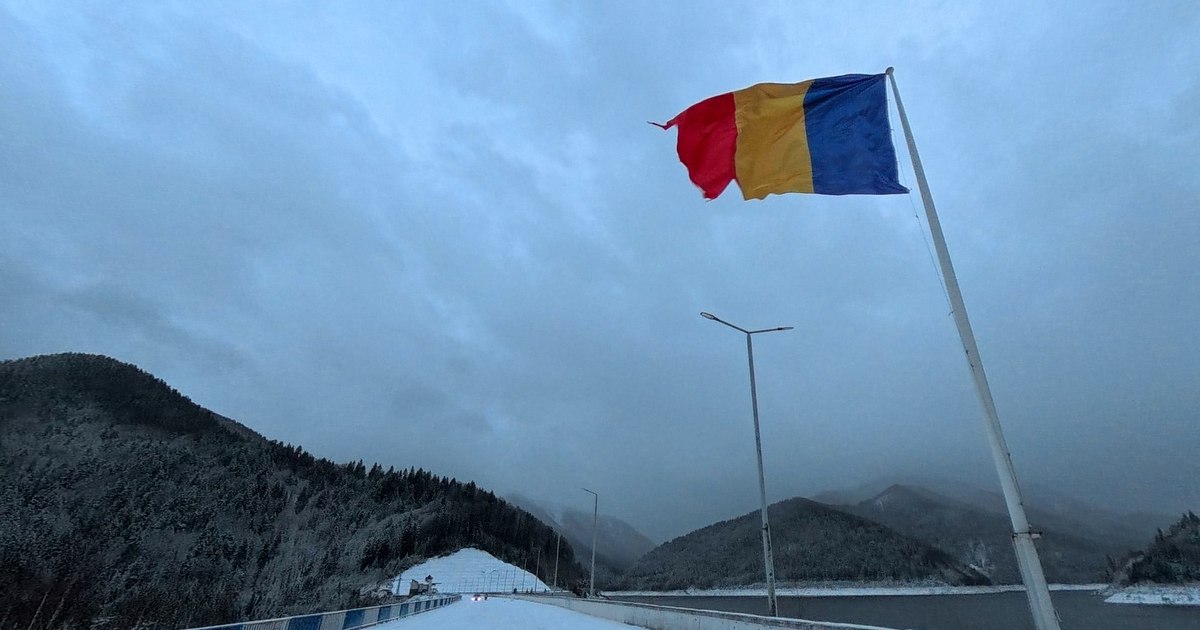
The figures show that Russia is far from being winning on the battlefield. The Ukrainian side of the map

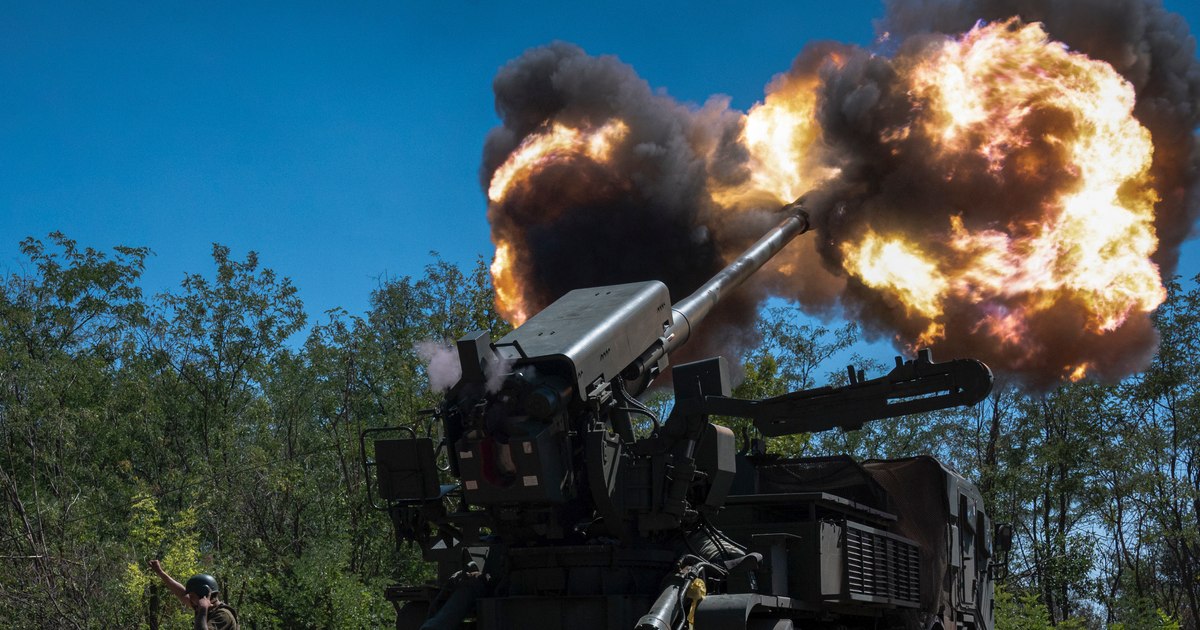
The figures related to the battlefield show that Russia is far from supremacy on the battlefield. Just a few hours before Washington's discussions, the British Defense Ministry (MOD) wrote in his report on the front evolutions that Russia would need 4.4 years, at the current pace, to conquer the rest of the territory that he claims to “annexed”.
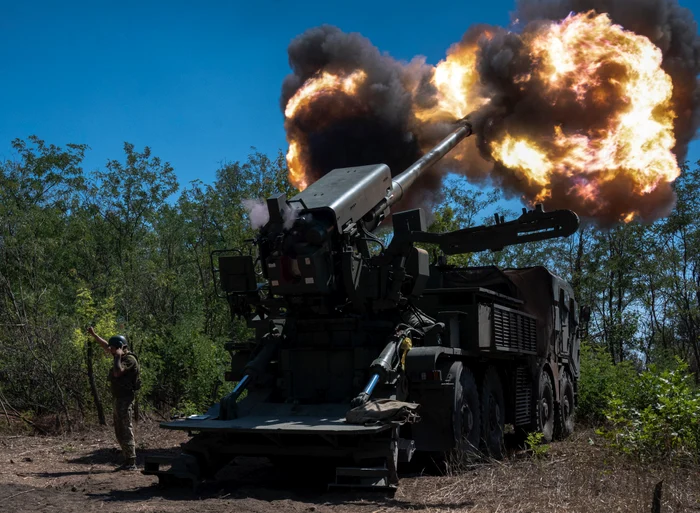
PHOTO EPA-EFE
Also, according to the calculations of British information services based on Ukrainian estimates on Russian victims, reaching Putin's goals would cost another 1.93 million dead and injured. This would be added to the more than one million victims he has already suffered.
In other words, Russia could turn to its own breaking points.
Sam Greene, a Russian policy professor at King's College London, appreciates that Russia cannot resist endlessly.
“But in the end, they will reach a critical point: there are pressures on the economy. There are pressures on the army. A break point will come,” he says.
“Because Trump is in a hurry, Putin has the ability to deviate that sense of emergency, so suddenly, it is felt as a kind of political turning for the West – while, if there was a little more strategic patience and consistency from the White House, the opposite would be true.”
These performance calculations may seem rudimentary and strategic analyzes on war went.
“The problem is that the wars are not linear,” says Rob Lee, senior researcher at the Institute for Foreign Policy Research and Expert in the Russian and Ukrainian armies.
There are no boxing matches that are decided on the basis of the accumulated points. However, the advancement of Russia is really slow, and this is not an insignificant fact in the economy of the war, especially since there are no strangers of the front. For example, the recent infiltration of 16 kilometers near Dobropillia, although initially alarming for Ukraine, failed to achieve an operational discovery. Instead, ended with the capture or killing of hundreds of Russians
“The unlimited fighting force is a myth”
At the White House, the US president led Zelenski in front of a map of Ukraine, which showed the current control line. Message: To stop the conflict, the map will have to be redesigned.
But Zelenski and his allies look at the map in a very different way.
Speaking after the Marathon discussions, Emmanuel Macron made the observation that in the last 1,000 days of war the Russian forces “occupied under 1%” in the Ukrainian territory. “Those who say …” The Ukrainians are lost. They will lose. “They are completely false news,” said the French president.
Reality is Russia has made modest progress, despite expensive efforts.
As analysts from the Institute for War Study (ISW) have underlined, Russian forces are currently struggling to complete the city of Kupiansk, despite 22 months offensive operations.
It took them for 14 months to cover the 10.3 kilometers from the eastern periphery to the western one of the city of Torețk and 26 months to advance 11.9 kilometers from the west of Bahmut to the western edge of the city again.
“The question is not how much territory Russia wins daily. The only question that was actually tested in the battles of 2024 and 2025 is which hypothesis is more likely to be true: it is Russia capable of supporting its offensive effort and, finally, to put Ukraine in an unsupported position? Or is the Ukrainian defense much more viable. Then next year? ”Michael Kofman, researcher at Carnegie Endowment and Observer of the Russian Army, appreciates.
“This is the aspect that both parties analyze to inform their decision about the time they have available and if they can hope to achieve a different, better result.”
At this moment, says Kofman, time seems to be in favor of Russia. Ukraine does not face an imminent defeat, nor a collapse of the front line that would force her to sign a humiliating capitulation, but the Russians accelerate. From year to year, their rate of advance has accelerated in 2025 compared to 2024.
Ukraine has serious problems with fighting, while Russia has a constant reserve of people to replace losses on the battlefield, which, according to British secret services, is currently up to 1,060,000, including 250,000 dead or missing.
The recent Russian infiltration in Dobropillia shows that Ukraine's drone units, despite their remarkable effectiveness, cannot stabilize the front alone, in the absence of sufficient infantment.
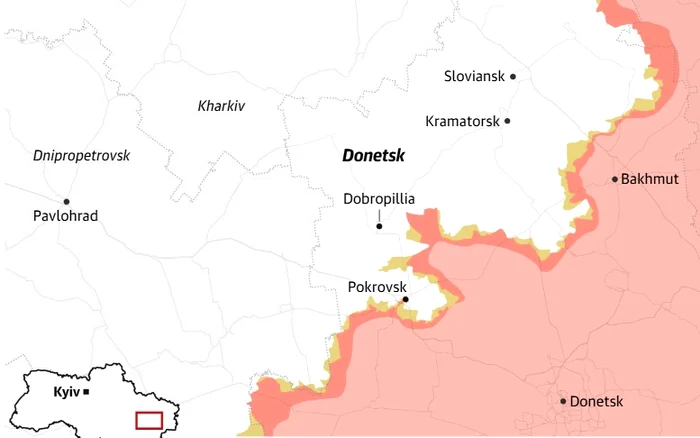
But the Russians are struggling to translate their domination into infantry into a decisive advantage.
“Russia's vulnerability is simply in the fact that it is far too slow and does not have qualitative forces, nor does it use the tactics needed to make a major discovery.
“Political leadership is not interested in this, but neither Russia has unlimited workforce – this is a myth. It does not have an unlimited time. This is another myth.”
Economic constraints
“The reality is that war represents a significant pressure on the Russian economy. Despite the fact that the ability and desire to continue the fight for many years, if the war enters 2026 and Russia does not seem to win the battlefield, it is extremely unclear if it will not be more likely to have a significant position.
This explains why Putin could be eager to conclude an understanding now: he feels relatively strong, but he knows that the moment of apparent domination may not last.
In June, Maxim Reznikov, the Minister of Economic Development warned at the Economic Forum in St. Petersburg that the country is “on the verge of recession”. The following month, the Magnitogorsk steel plants, the second largest steel producer in the country, reported a 21.1% collapse of profits and a sudden drop in production, which it attributed to the high interest rates and a general slowdown in the Russian economy.
Also, at the end of July, the International Monetary Fund (IMF) reduced its estimation of economic growth for Russia in 2025 to 0.9%, compared to an initial 1.5% forecast made in April. It is a dramatic decrease compared to the 4.3% increased by the IMF in 2024.
“The economy is an interesting thing because there is an objective point of view, namely, honestly, that they have a considerable tax and monetary maneuver margin and remain very good at managing the economy, although with increasing costs,” says Greene. “But in the end, they still reach a critical point.”
None of these factors mean that Russia is experiencing an imminent collapse, says Ian Bond, deputy director of the Center for European Reform (London).
“Russia is strong until it is no longer. It seems strong, then mental fatigue appears and things break down quickly,” he says.
“Will this happen this time? We just don't know,” Bond adds. But, he argues, it is a reason for Europe and Ukraine to resist the acceptance of a bad understanding-such as teaching the donbas-which would make them much more vulnerable.
Finally, “war is a very uncertain matter and, even if some things can be in favor of Russia, there is great uncertainty,” adds Kofman.
“And keep in mind the external factors: finally, much of what Russia does depends on things, such as the price of oil, which it can neither predict nor control. The more things go, the more it plays.”