Poland in a demographic crisis. What about the inhabitants of the largest cities? [WYKRESY]

Each subsequent statistics confirm the demographic problem of our country. “At the end of June, the Polish population was about 37 million 401 thousand. peoplei.e. about 162 thousand less than in the same period last year and by approx. 88 thousand. less than at the end of 2024 ” – we read in recent GUS report.
If we explore archival data, we will see that Compared to the state before the pandemic, there were about a million people. In total, in the 21st century, Poland had the largest population in 2011-2012 (over 38.5 million). This was the culmination of four years of statistics growth. However, this was a special period in this respect, because the trend has been inheritance for 25 years.
At Business Insider we went a step further in the statistics analysis and We checked that the largest Polish cities respond to the demographic crisis.
Read also at Business Insider
It turns out that a large part of them have lost residents (despite the trend of moving from the village to cities), but there are also many systematic growth in terms of population. We took the representatives of all voivodships.
Five cities that go against the current of demographics
There are five voivodship cities in Poland, which at the end of 2024 could boast of an increase in the number of inhabitants (in terms of residence, not registration) in three time intervals: compared to the state before the pandemic (end of 2019), over the last 10 years and relative to the beginning of the 21st century. Gdańsk, Kraków, Rzeszów, Warsaw and Wrocław.
Of this Friday compared to 2000, i.e. for almost a quarter of a century, Rzeszów scored the largest relative increase in residents. Amounted to over 23 percent Less than 25 years ago it was a place of residence of 160.8 thousand. people, and now there are 198.3 thousand people.
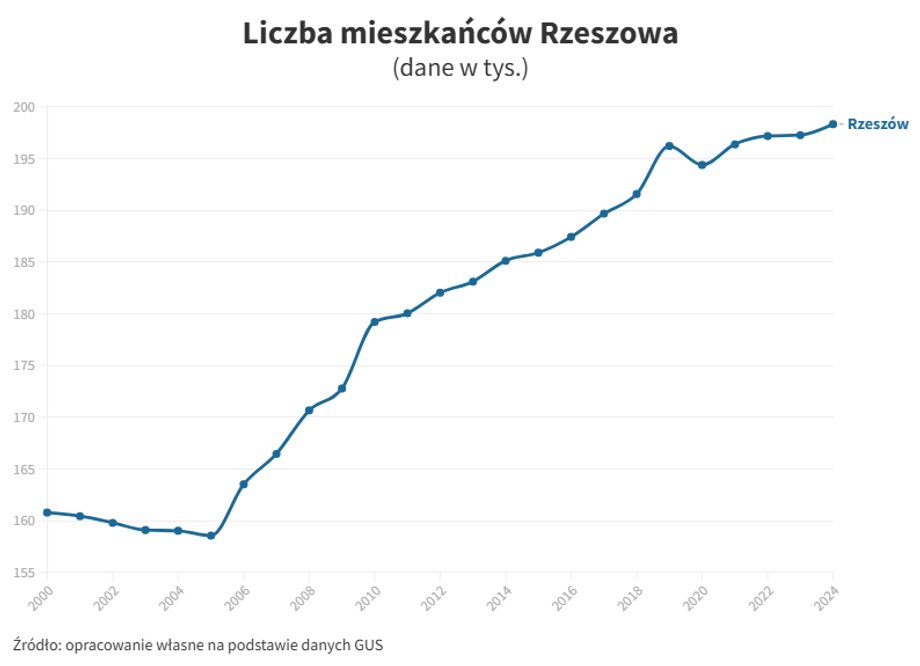
Rzeszów has more and more residents
|
Damian Słomski / Business Insider Polska
Warsaw is in absolute numberswhich at the end of last year was inhabited by 1.86 million people. For over 20 years, this number increased by approx. 170 thousand. It is like joining the entire current population of Olsztyn to the capital.
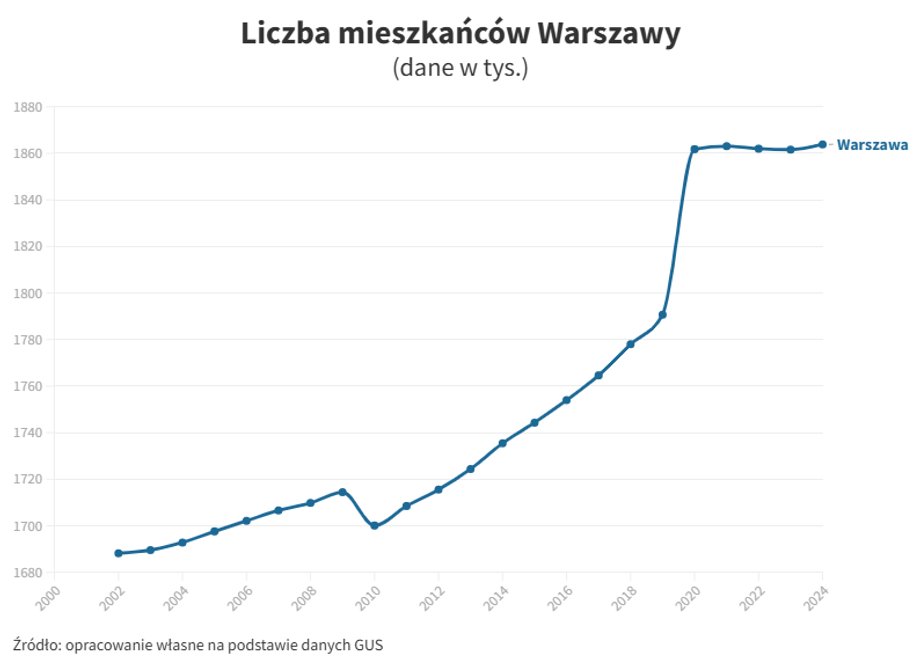
The capital is based on negative trends of demographics
|
Damian Słomski / Business Insider Polska
From 2000, a very similar percentage increase in the number of inhabitants was made by Wrocław, Kraków and Gdańsk (5-7 percent). The capital of Lesser Poland is approaching 810,000, the largest city of Lower Silesia has about 673 thousand. residents, and Gdańsk exceeded 488.5 thousand
See also: Europe has a problem with demographics. 75 percent Households have no children
Of this five cities Wrocław bodes the least for the futurebecause from 2022 you can see a light but inheritance trend. With each year there are several hundred people in the statistics.
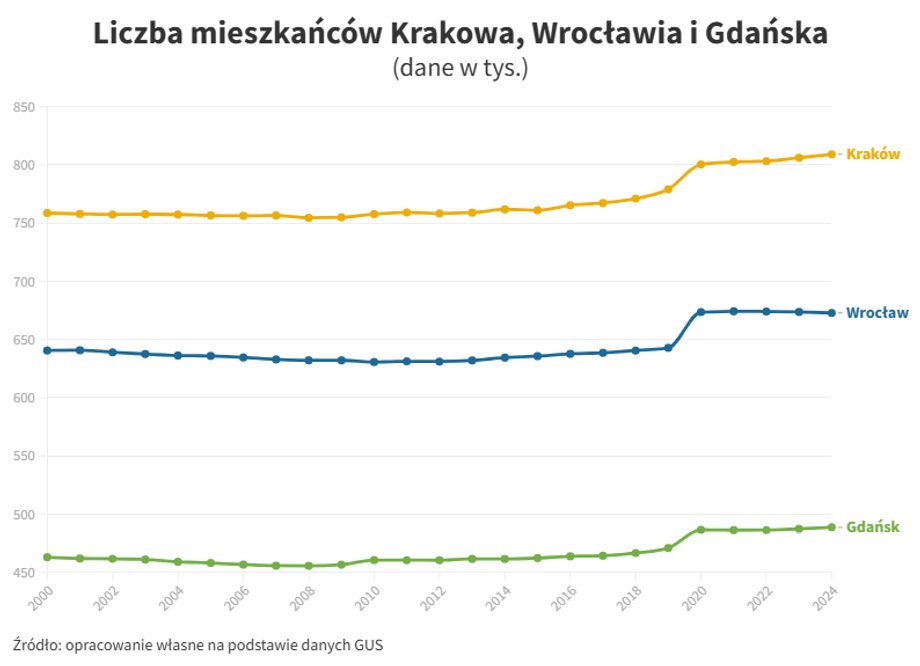
There are more and more residents in these cities (click to open an interactive chart)
|
Damian Słomski / Business Insider Polska
Demographic crisis. These cities are the most depopulating
The vast majority of voivodship cities, however, go with electricity and as less and less children are born and more people die, also their people's statistics are falling. There are nine cities that have been recreating regress since the past decade and the last 25 years. This Bydgoszcz, Toruń, Lublin, Gorzów Wielkopolski, Łódź, Katowice, Kielce, Olsztyn and Szczecin.
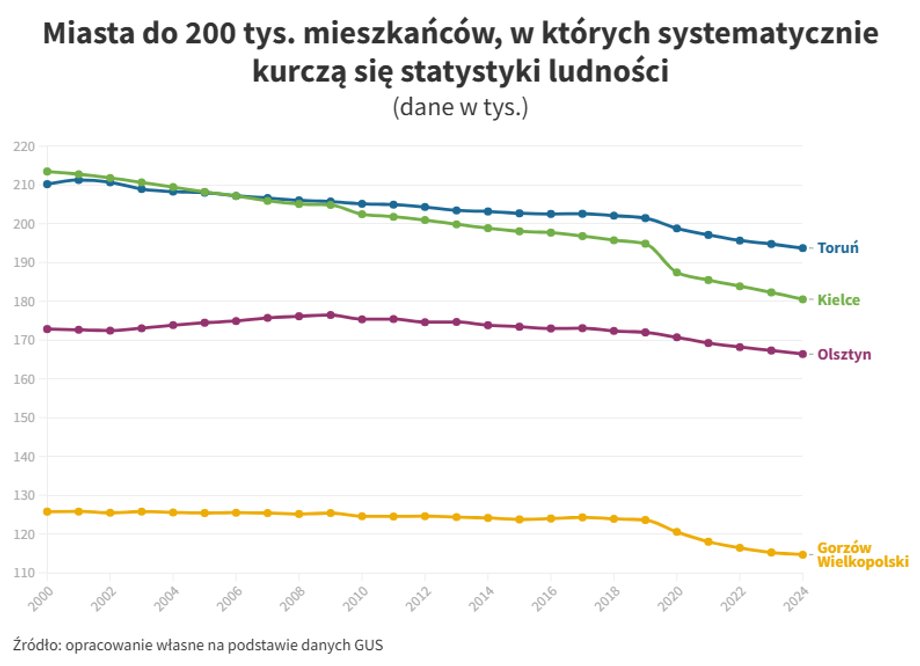
In these smaller cities, residents are decreasing (click to open an interactive chart)
|
Damian Słomski / Business Insider Polska
From 2019, the most residents (about 7 percent) were lost by: Bydgoszcz, Gorzów Wielkopolski and Kielce. In the last decade, Katowice also joins this infamous group of cities, which lost 7.6 percent in 10 years. residents and Łódź, where this defect amounted to 8.5 percent.
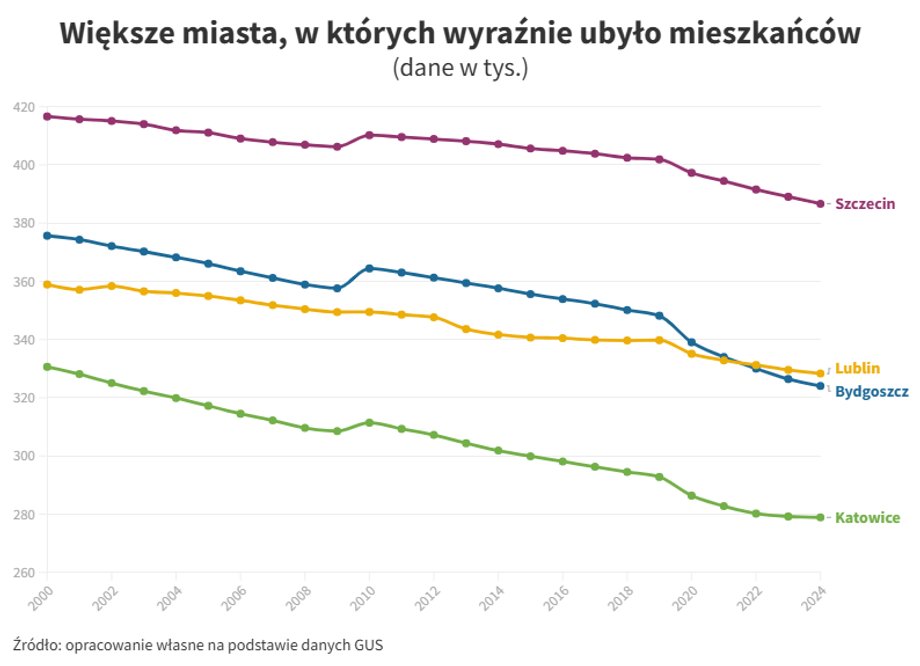
In these larger cities, residents are decreasing (click to open an interactive chart)
|
Damian Słomski / Business Insider Polska
The longer the time horizon, the greater the decreases of the population. In our ranking from the beginning of the 21st century, the largest recourse was included in Łódź – the number of inhabitants shrunk by 19.1 percent. Border 15 percent Katowice and Kielce also crossed the downside.
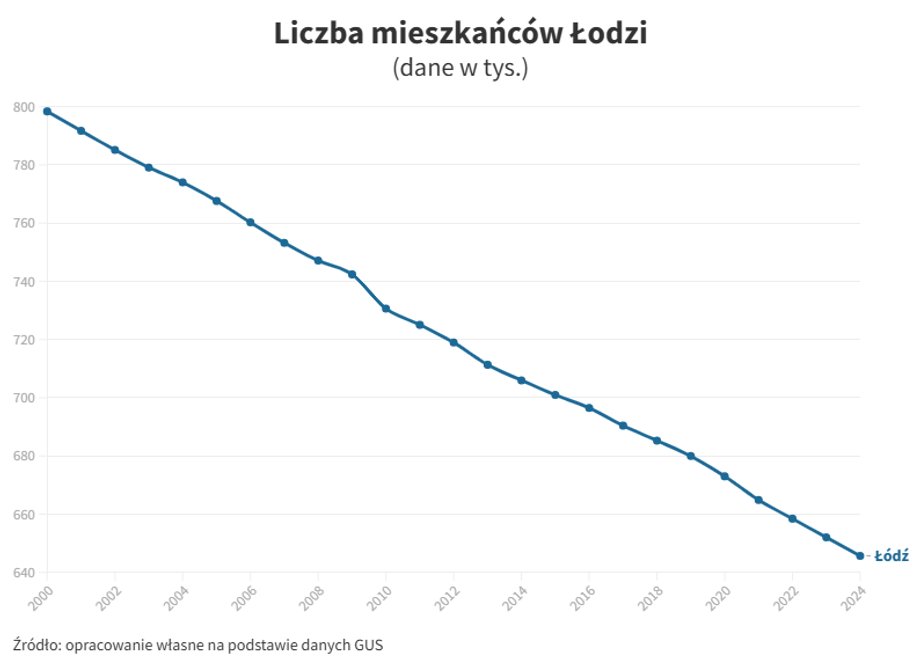
In Łódź, the inhabitants are decreasing exceptionally (click to open an interactive chart)
|
Damian Słomski / Business Insider Polska
How does the number of inhabitants change in Poznań, Bialystok, Opole and Zielona Góra?
Of the 18 provincial cities analyzed, four have not been discussed so far. In the three main time intervals of the analysis (compared to the period before Pandemia, the last 10 and 25 years), increases and declines once recorded.
Poznań in a long time of time clearly loses the inhabitants, but recently statistics have strongly disturbed the jump in data between 2019 and 2020. As a result, the balance of the last few years is positive.
The numbers in the case of the capital of Podlasie look very stable. In Białystok, 290-300 thousand has been living for over 20 years. peoplealthough it should also be noted that the balance has recently been slightly negative.
In turn, Opole and Zielona Góra are one of the least populous voivodship cities that can boast of an increase in the number of inhabitants over the last decade, because in 2015-2017 a greater influx of population was visible, followed by relative stabilization.
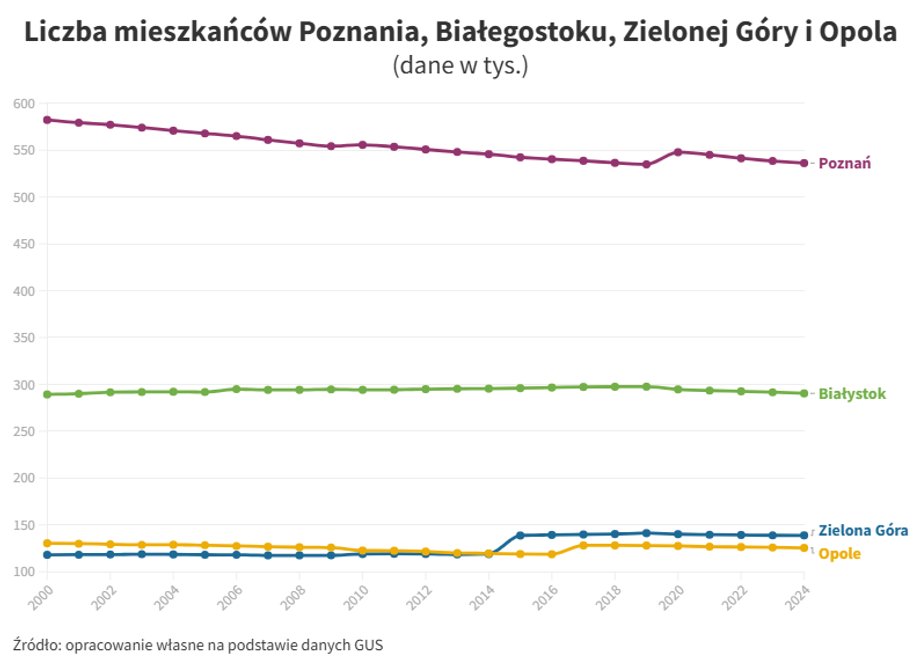
Click to open an interactive chart and check values for specific years
|
Damian Słomski / Business Insider Polska
What consequences for the largest cities can a decrease in the number of inhabitants have?
A long -term decrease in the number of inhabitants in large cities in Poland can have several important consequences:
- Financial problems of local governments – fewer residents mean lower tax revenues (PIT, CIT), which limits investment capabilities and infrastructure maintenance
- Unused infrastructure – schools, kindergartens or public transport may be excessively developed in relation to real needs, which generates costs with fewer users
- Street aging – The outflow of young people and a decrease in births will make the percentage of seniors increase in cities, which will increase the demand for health and social care
- Real estate market – there may be an overparty of apartments, which will reduce prices
- Decrease in economic attractiveness – Less number of employees and consumers will discourage some investors, and the competition for qualified staff will be more and more difficult
The report from the Polish Economic Institute (Pie) shows that the nationwide demographic collapse will be of great importance for the future of the labor market. “If current demographic trends persist, by 2035 the number of employees will decrease by 2.1 million, which is 12.6 percent. current employment. This means that in comparison with the current state, the number of employees in education will decrease by 29 percent, and in health care by 23 percent. The industry in which it will work by 11 percent will also lose. less people ” – we read in the study.
See also: Poland needs 5 million employees. The government talks about security, companies are fighting for people
PIE experts calculate that in the script of such a decrease in the number of employed in industrial sectors – assuming the maintenance of other variables at the current level – Polish GDP would decrease by 6-8 percent.
Author: Damian Słomski, Business Insider Polska journalist