
Law for the dismissal of dignitaries with at least one month of detention. Measured measure in a country where almost half of the parliamentarians are prosecuted


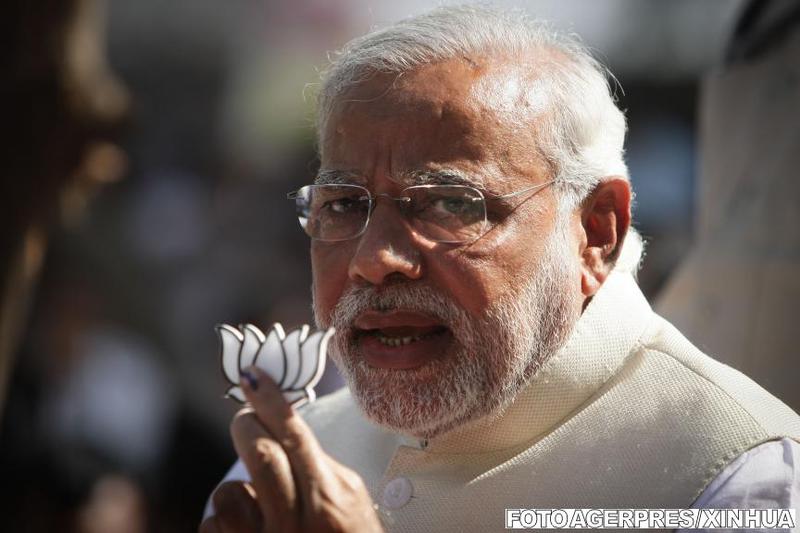
The Prime Minister of India, Narendra Modi, Photo: Agerpres/Xinhua
On Wednesday, the Indian government presented a draft law meant to dismiss the policies who performed at least one month of detention, a measure qualified as an “terrifying” opposition, which sees in it a abolition of constitutional guarantees, informs AFP, taken by Agerpres.
Several opponents of Prime Minister Narendra Modi have been targeted by an investigation or have been subject to several criminal prosecution during recent years.
Last year, Arvin Kejriwal, the head of the local executive in New Delhi, stayed for several months in prison, during an investigation triggered for bribery received by his party. He denied any condemnable act and qualified these accusations as a political witch hunt from the Indian government.
The chief minister of Jharkhand village, Hemant Soren, and he was a member of the opposition, was arrested and closed in February 2024 for corruption, accusations he rejected.
Indian internal Minister Amit Shah said his government intends to “strengthen ethics”. This draft law stipulates that politicians are forced to abandon their function starting with a month of detention for an alleged offense liable to a prison sentence of five years or more.
Fear of political persecution
The Association for Democratic Reforms (ADR), an organization that works on the electoral reform, calculated that of the 543 elected parliamentarians, almost half were targeted by criminal prosecution. Of these 215 data subjects, 170 are the subject of serious accusations especially for rape, homicide, attempted murder, kidnapping.
Shah to declare in Parliament that “you must not be ashamed” for “staying in a constitutional position in the face of accusations.”
John Brittas from the Indo-Marxist Communist Party estimated that “in an era marked by a vindictive policy, when the central agencies are carried out against the opposition leaders, the provisions will be used for hidden purposes.”
Mamata Banu, Chief Minister of the Western Bengalul State, qualified this draft law as “frightening attempt to establish a rule when (…) Constitutional guarantees are destroyed and the rights of the people are crushed.” “These draconian measures make the death bells of democracy and federalism in India sound,” Bărerjee said, also a member of an opposition party.
The American reflection group Freedon House had estimated last year that the Bharatiya Party Nationalist Party (BJP) “used more and more government institutions to target political opponents.”


