The infamous previous historical that has planned on the discussions between Trump, Zelenski and European leaders at the White House


Teaching large lines of fortifications to a neighbor expansionist determined to destroy your state tends to be a bad idea. This danger was in the foreground of Volodimir Zelenski's thoughts when he met in Washington on Monday, after the meeting that the US president had with Putin last week, writes Politico.
In 1938, Sudetenland cedar (“Suds region”) and the dense network of forts, forests and trenches led to the rapid collapse of the Czechoslovak's ability to defend against Nazi Germany. There are fears in Europe that Kiev's ability to resist Russia will be similar if Donald Trump – influenced by Russian President Vladimir Putin – will press Ukraine to teach key defensive lines in the eastern Donbas region.
While Trump could see a part of Donbas as a bone thrown to Putin to get a “understanding”, Zelenski knows that such a concession would undermine any peace agreement and position the Russians to move into the heart of Ukraine.
“It is essential that Europe will not transform this into a new Munich or Ialta moment,” said Politico Kopecký, the Czech government commissioner for the reconstruction of Ukraine, referring to the Western betrayal of the Czechs at the 1938 Munich summit and to the “selling” of Central and Eastern Europe to Iosif Stalin, in 1945.
Putin wants on the most powerful fortified area of Ukraine
According to information in the US press, Trump believes that Putin would agree with a peace agreement to conclude the war if Kiev gave the entire Donetk province and the entire Luhansk province of eastern Ukraine. In fact, Trump transmitted before the White House meeting that “President Zelenski of Ukraine can end the war with Russia almost immediately, if he wants it.”
Zelenski told Zelenski to the journalists in Kiev, last week, he wouldn't do that. “We will not leave the donbas. We cannot do this. For the Russians, the donbas is a launching ramp for a new offensive in the future,” he said.
Russia occupies almost the entire Luhansk region and three quarters of Donetsk, as shown by an oval office during the meeting between Trump and Zelenski.
Military analysts warn that any concession in Donbas could have devastating consequences on the battlefield.
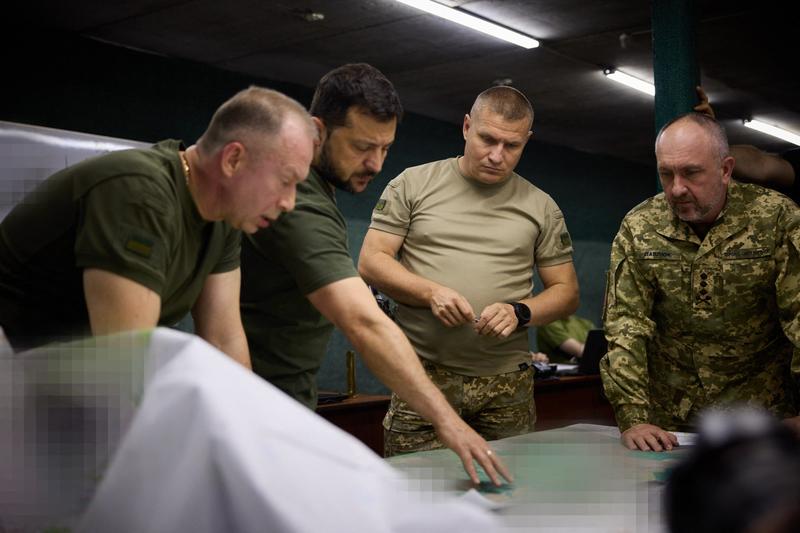
According to the Institute for the Study of the US war, the Kremlin demands that Ukraine teach what Ukrainians call the “fortress belt”-a defensive line based on strong fortified cities, which extends through hills, forests and along the rivers and which has been the spine of their defense since 2014.
“Ukraine has spent the last 11 years investing time, money and effort in strengthening the fortress belt and establishing a significant defensive and industrial infrastructure in and around these cities,” the Institute said.
If this eventually happens, Russia would move its front line about 80 kilometers west, while Ukraine would be forced to build new defensive lines on flat and open grounds, in neighboring regions Kharkiv and Dnipropetrovsk-much harder to defend than the fortified cities that Kiev now controls.
The Ministry of Defense in the UK estimated a few days ago that it would take over four years of fighting and cost 1.9 million dead and injured soldiers to completely conquer the four regions that Vladimir Putin proclaimed annexed to Russia in September 2022-Donetk, Luhansk, Herson and Herson.
The precedent of Czechoslovakia and the Suds Region
This is not the first time that external powers are eager to impose an unfavorable potential agreement to prevent a war.
In September 1938, Adolf Hitler argued that teaching to Germany of Sudetenland, a region of Czechoslovakia with German ethnic majority, would satisfy her ambitions and put an end to the threat to the war in Europe. France and the United Kingdom agreed and forced Prague to accept. Hitler, whose word was as reliable as Putin's, writes Politico, said he had no other territorial ambitions.
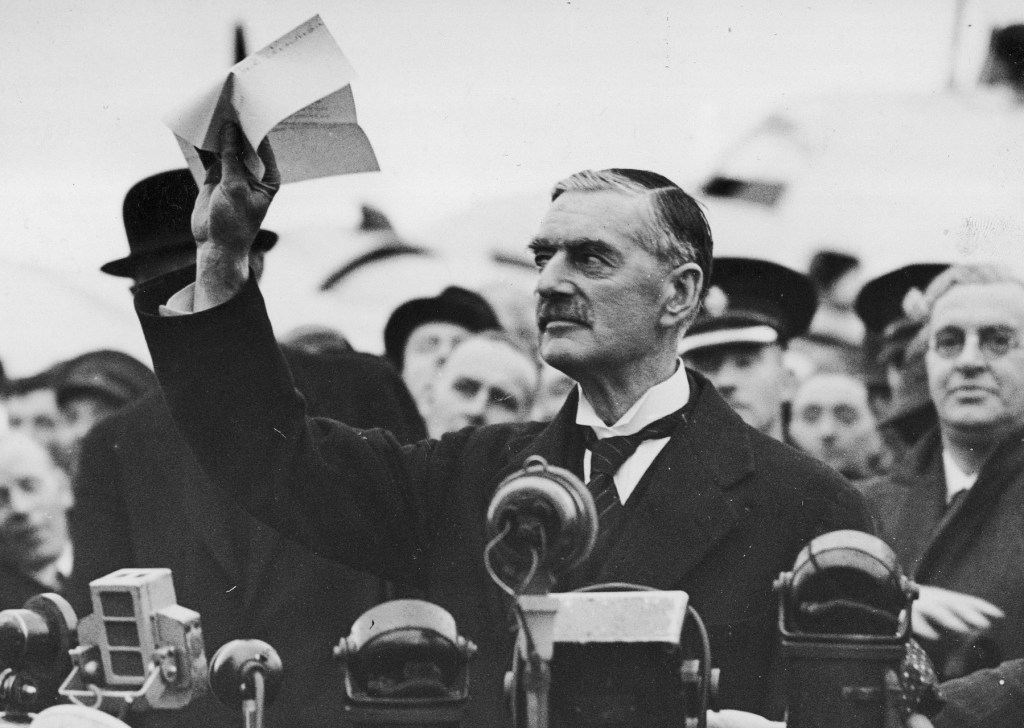
Czechoslovakia had been invested for years in the construction of thousands of casemates, bunkers and fortresses in the wooded and mountainous region – defended by a modern and well -equipped army by 1.2 million people. Germany took everything without a firearm.
In March 1939, German troops marched in the rest of the country, and the Czech army could not resist.
Kiev looks to Munich Ukrainians are very aware of what happened to the Czechs 87 years ago.
“Without security guarantees, the freezing of the war means a second Munich 1938,” Olexîi Haran, a comparative policy professor at the Kyiv-Mohyla National University, in a comment for the Federal Civic Education Center in Germany.
This is a reference to the alleged security guarantees for Kiev, about which Trump's negotiator in the Ukraine war, real estate developer Steve Witkoff, said they are similar to NATO Article 5 on common defense-although Trump has repeatedly excluded Ukraine's accession.
What could happen to the Ukrainians in the territories that Russia wants?
Haran argued that “if we sign a fire termination agreement or even organize elections without security guarantees, Putin could resume their aggression the next day.” Such an agreement, he said, would “recognize the control of Russia over the Ukrainian territories for an indefinite period” and would repeat the 1938 mistakes, when the concessions made to an aggressor only invite an additional escalation.
Yaroslav Hrîțak, a Ukrainian historian and professor at the Ukrainian Catholic University, warned that the danger is even greater than another Munich -style betrayal. “It is also the moment,” he said, in the conditions in which some analysts also remember the human element in changing the borders.
Europe has a long experience in this regard. During World War II, the Germans and Soviets imposed massive ethnic treatment programs on the populations in the territories they occupied.
If Ukraine is forced to give up the entire Donbas of Russia, Hrîțak believes that this will give Moscow the right to “decide the fate of the people living in the Soviet block.” This will be done against the will of the local population, he added, “only using the high power status of a powerful state to lead over the smaller and weaker states.”
However, despite the concerns about the possibility of Trump teaching Ukraine Putin, there are notable differences between 2025 and 1938.
When the agreement on Sudetenland was reached, Czechoslovakia was not even invited to the negotiation table. This time, Zelenski was at the White House to talk to Trump and clearly stated that he wants a ceasefire based on the current line between the Ukrainian and Russian forces.
And Trump insisted for a meeting between Putin and Zenski, who would be followed by one to attend. Europe also pleaded, through the voice of President Emmanuel Macron, to take part in these future discussions.