Life in Roşia Montană after the golden fever: “People will want to buy and develop this place”


Although it has not been put into practice, one of the most controversial mining projects announced in the last three decades in Romania has left deep traces on the town of Roșia Montană in the Apuseni Mountains, the place of the richest gold deposits in the country.
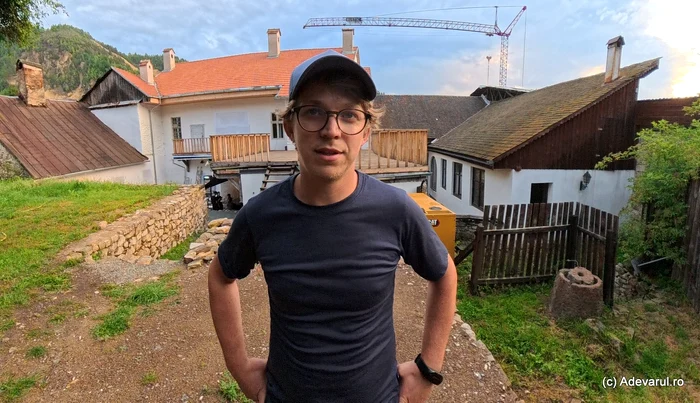
Darie Tică, one of the young people settled in Roşia Montană. Photo: Daniel Guță. TRUTH
In Roșia Montană, the richest gold region in Romania, the locals remained divided between mining nostalgia and the idea that tourism could completely transform the area.
The number of those visiting the settlement in Apuseni, whose mining landscape has been included in 2021 in the UNESCO World Cultural Heritage, has grown in recent years, and some small businesses have contributed to the development of the area.
Many of those left here, about 2,500 people throughout the commune, did not agree with the mining project initiated in the 2000s, who would have led, in their opinion, to the destruction of the settlement. They did not agree to sell their homes and move from the village. Others told that they were left, but they hoped that the mining would revitalize Roşia Montană.
“We stay here on hundreds of tons of gold. The Romanian state needs it, so it had to be exploited”, believes a former miner.
Other locals say, however, that mining is no longer an option for them, even when they have to commute about 80 kilometers to work in Alba Iulia.
“More and more tourists come in the commune, especially in summer. And some of those who sold their houses here regretted and would like to return to the village,” says a local.
Why are many houses in Roșia Montană
Two decades have passed since the closing of the gold mines in Roșia Montană (Alba County), and in the meantime the fate of the mining settlement has experienced an unexpected turn, marked by disturbing events. In the 2000s, with the closing of the exploits, many of the former miners and their families left Roșia Montană.
In parallel, Roșia Montană Gold Corporation (RMGC), established in 1997, mostly controlled by Gabriel Resources from Canada and the Romanian state through Minvest Deva, began to buy the houses and lands of the locals to prepare a large mining project.
The explorations revealed a new huge gold and silver deposit, estimated at over 300 tons of gold and 1,600 tons of silver, but the exploitation involved the destruction of historical settlements, some with valuable ancient vestiges, and the use of cyanide, with major risks for the environment.
In those years, the hearth of the historical settlement in Apuseni, with emblematic buildings of the 19th century, reminiscent of the richness, risked being depopulated.
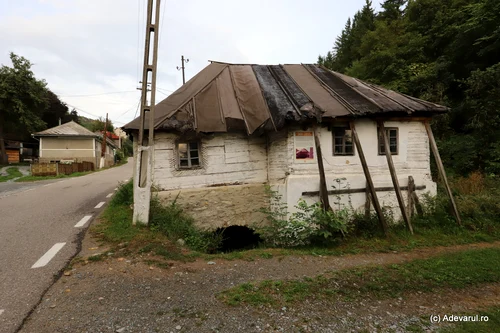
Image 1/15:
Rosia Montană Photo Daniel Guță Adevărul (301) JPG
Over time, over 800 homes out of the approximately 1,200 of the commune – from archaic houses and apartments in the communist blocks to historical buildings – were purchased by the company and left in “Conservation”. But the passage of time and abandonment contributed to their degradation.
The young man who moved to Roşia Montană
Gradually, especially in recent years, Roșia Montană has been resuscitated by the remaining locals, newcomers and tourists. Some hope that the fate of the village will continue to improve and that the Renaissance will come through tourism, not through mining – the activity that marked history.
“In 2012, being a student in Copenhagen, I came from Denmark to Roşia Montană on a bicycle, as a form of protest, because I did not agree that Mount Cârnic would be dynamite, along with three other massifs, and the villages in the area would be flooded with cyanide. He remembers Darie Tică, a young man who has lived for over a decade in Roșia Montană with his wife and children.
Darie returned in 2013, also on a bicycle, traveling over 3,000 kilometers from Denmark. He was one of the Romanians actively involved in the civic campaigns for Roșia Montană, who determined in 2014 the Romanian state to withdraw their support for the mining project.
From that year, the young man decided to move permanently to the village, where he bought a heritage building that he managed to renovate and turn it into a tourist attraction. In the center of the town, other buildings were renovated by the owners, but most, left in the possession of the mining company, remained deserted.
“Here a mining company owns 80 percent of houses and land, especially in Roșia Montană, which is the most attractive tourist, and then it is very difficult to develop something. However, there are people who have succeeded, they have opened pensions, we have a tailoring workshop with employees, we sell products in Cluj, we have opened a Bistro, and there are a Bistro, Organizations that have been involved over time in the development of the Red Montane and the rehabilitation of historical buildings and monuments ”, says Darie Tică.
Like other locals, he hopes that the Romanian state will unlock the situation of the buildings owned by the mining company, which lost in 2024 the process with the Romanian state at the Washington Commercial Arbitration Court and has to pay to Romania to cost ten million dollars.
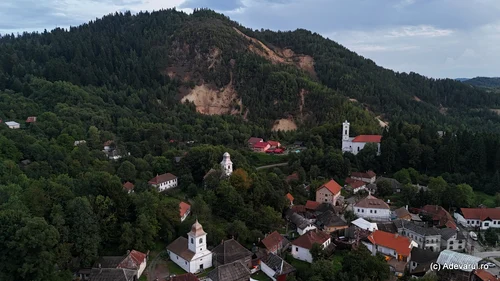
Image 1/22:
Rosia Montană Photo Daniel Guță Adevărul (255) JPG
“If ANAF will auction the houses and goods of the company, in the debt account, there will be many people who will want to buy and develop this village. It will be an extraordinary restart for Roşia Montană,” Believe Darie.
Those who have remained are forced, so far, to live among old buildings, says Sorin Jurca, a local from Roșia Montană and participant in the process won by the Romanian state against Gabriel Resources.
“However, I believe that these buildings will be able to be restored by the new owners, if they will be recovered by the Romanian State from the Company“He adds.
Rotia Montană, a history of almost two millennia
The Roşia Montană mining settlement has a history of almost two millennia, being attested since 131 d. Hr. Under the name of Alburnus Maior, one of the oldest mining localities in Europe.
Along with the Romanian Galleries in Roșia Montană, there were discovered ancient necropolis, funeral monuments, sacred buildings and the ruins of public buildings dating from antiquity.
The Romans opened the first gold mines in Dacia, after in the Dacians the gold was usually extracted from the sand of the valleys and the alluviums of the waters that crossed the land, the historian Ion Rusu Abrudeanu said.
In the 19th century, Roşia Montană had become one of the most prosperous mining centers in Europe.
The gold was present, in Roşia Montană, both in the basement and on the surface, and the locals took full advantage of the richness of the settlement. They had the most beautiful homes in Apuseni, which they often adorned with gold.
The richness of the Red Montane had become legendary in the middle of the 19th century, and the newspapers offered unusual stories about the wealth of locals.
“It was a time when the craftsmen and professionals with the pile ran from all sides to Abrud and Roşia, because these two mountain cities had their time, when they are given to the boys instead of yellow gold crossings, when the boys rivalized each other, that which of them would deliver gold. Then he wore the boy boots with golden tassels and spurs, his wife shone in garments sewn with gold and silver flowers”, The Romanian telegraph informs, in 1857.
The tradition of gold mining has laidned for centuries in the Apuseni Mountains, and generations in the locals in Roșia Montană kept it, even though the work in the mines in the Romanian golden land was extremely dangerous.
After the First World War, some of me entered the property of the Romanian state, however, others remained in the administration of the locals, who were trying to ensure their living through the tiring work of miner.
The mining industry in Apuseni was nationalized in the first years of communism, and in the fever of industrial expansion, the communist regime did not take into account the historical buildings of the 19th century, located in the center of the village of Roșia Montană.
With the nationalization of 1948 the gold mines in Roșia Montană, the private mines of the locals, exploited in the traditional form, were suppressed. Samples, water leadership channels, the old inputs in the family mines were destroyed, with some of the old houses of the villagers.
The Baroque Palace Ajtai in the center of the settlement-the emblem of its age of prosperity-was also demolished, being replaced with a working block, and other vintage buildings were allowed to ruin, or they lost their quality as permanent housing, being used as accommodation for the miners brought from other places.
Some have been purchased by the Canadian and preserved company, even though they have remained deserted for many years. Around the Roșia Montane, the remains of the former golden mines, exploited in different times, are at every step.
Above the village of Roșia Montană, with the households laid on the Roșiei Valley, rises, partially covered by the forest, the mountains of the traces of the old gold exploits, which hide in the depths of tens of kilometers of abandoned underground galleries. The paths that cross the forest lead to “sealed” inputs in the former golden mines, hidden from the gaze of the passers -by. The most famous are visible right at the entrance to the village, where there are some of the ancient galleries of the Alburnus Maior District – the name given by the Romans founded in 131 AD.
In the vicinity, the craters remaining following the exploitations in the Cetate and Cârnic areas, from the 1970s to 2000 are opened. Not far are the huge copper career from Roșia Poieni, one of the largest in Europe, where the deposit estimated at about 900,000 tons of copper represents about 60 percent of the Romanian reserve.
The landscape of the Montane Roşia has gone through a series of transformations. The new status of the locality, which includes a UNESCO site, increases the attractiveness, and the number of tourists is constantly increasing, the locals say.
“There were also a thousand tourists a day at the Romanian Galleries. Roşia Montană has so much to offer to people ”says Sorin Jurca.