Will the energy transformation on the Vistula and the fulfillment of EU climate goals cope without an atom? Modeling of various decarbonization scenarios made by Clean Air Task Force in the 2050 perspective shows that the lack of the participation of nuclear units would lead to two visible trends. The system based in the overwhelming majority with weather -dependent renewable sources would still need the power of disposable, ensuring stability of energy supply when, according to the popular saying, “does not blow and does not shine“.
In the absence of an atom, this role would be fulfilled primarily by the burning of hydrogen, which, however, is a limited and expensive resource. Therefore, as Think-Thank argues, you have to manage it reasonably, using especially in industry transformation. The second available non -mammal source, i.e. gas, in the world of climate neutrality would require installation for the capture and storage of carbon dioxide, which would significantly increase its costs.
Read also: Reduction of demand saves the network? What DSR services can help
Hope in PPEJ
Other consequences are visible by the second diagnosed trend. With the instability of the generation from wind and sun, both dominant renewable energy branches together with network infrastructure would have to grow to a very significant size, absorbing subsequent tracts of Earth, which would give birth to obvious tensions. It is enough to mention the social resistance, which is referred to by opponents of land wind energy, or about the conflict between renewable energy expansion and nature and landscape standards (the history of windmills in the forests was described in Business Insider a few months ago).
The atom is therefore to protect us against this type of problems, ensuring a stable and clean basis of the power system. According to Clean Air Task Force, nuclear energy has a key role to play in European aspirations for zero net emissions in the middle of the century, as well as in the implementation of indirect goals at 2030 or, still planned, 2040 year. The atom is also part of the assumptions of the Pure Industry (Clean Industrial Deal), which is to increase the competitiveness of the EU economy.
On the Polish plot, hope gives a project to update the Polish Nuclear Energy Program (PPEJ), directed for consultation by the Ministry of Industry (its competence is taken over by the Ministry of Energy today) in June. “The updated strategy better reflects the economic and technological realities and social conditions of energy transformation” – in the analysis published in August, Clean Air Task Force states. At the same time, Think-Thank offers his own recommendations that are supposed to present the fulfillment of ambitious goals for the Vistula atom.
Land saving
The presented recommendations come from the key financing issue. If the development of nuclear energy is to be commercially profitable, future sources must have a permanent place on the EU energy market, so they cannot be disadvantaged for renewable energy; lack of certainty as to revenues is an important barrier to investors. In the next step recommended by Clean Air Task Force, you should consider the potential not only of the “large” atom, but also small modular reactors. The PPEJ project lists SMRs, but does not present a clear vision of support for them.
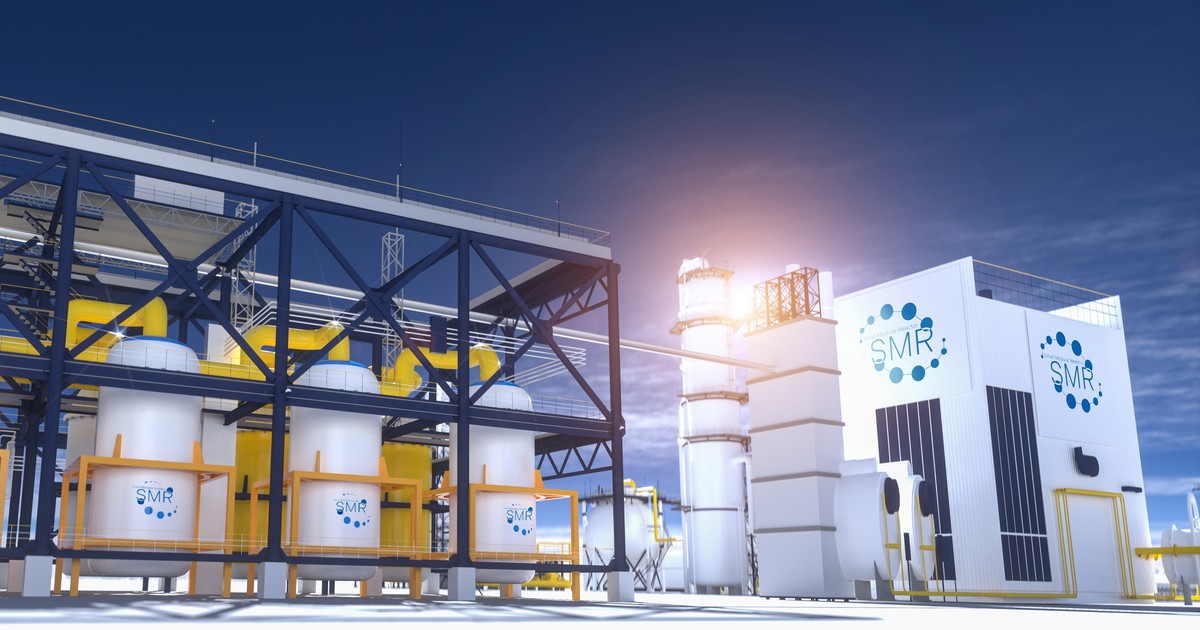
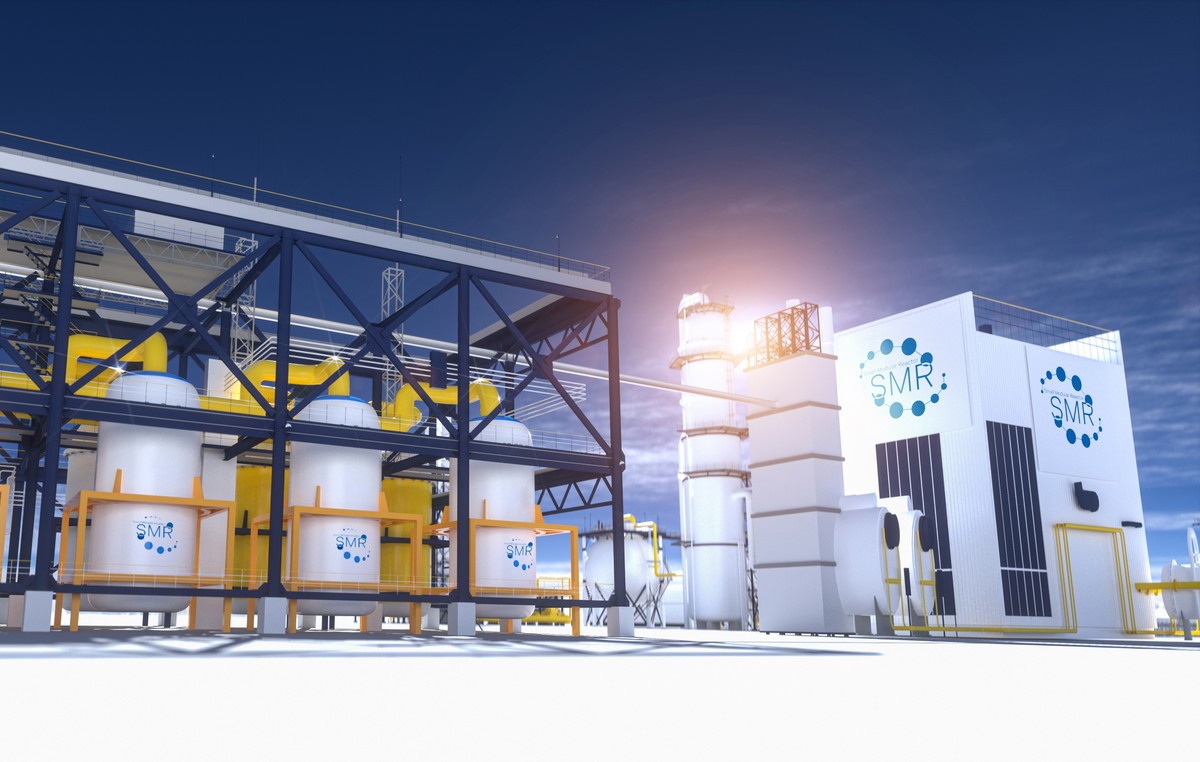
Meanwhile, as experts argue, small reactors provide “unique possibility” of decarbonization of industry and can directly supply production processes by placing next to the plants. The Think-Thanku analysis emphasizes the “ground” SMR performance, and therefore the issue that, as we mentioned, is a weakness of renewable energy; The average 300 MW reactor does not occupy more than 100 ha.
“In the state (…) in which the use of land remains limited by urbanization, agriculture and other factors, SMR are much more efficient in terms of use of land than other pure energy technologies “ – we read. Although this fact often escapes in purely “monetary” analyzes, according to Clean Air Task Force has a significant social weight. In addition to the industry, the next area in which small reactors can be used is heating, which includes the PPEJ project. Locally, they can also be combined with renewable energy.
SMRs can complement large-scale nuclear power plants where the latter require a large, locally inaccessible infrastructure or where there is less energy demand. These are, for example, more isolated areas with less developed networks with limited access to water and soil. The program of Polish nuclear energy should therefore be recorded, among others Power indicators of small reactors in the perspective of 2040.description of public aid, types of applications (from electricity production, through heat production or industry supply to hydrogen production), as well as integration of supply chains.
SMRs earlier than a large atom? Not necessarily
Another postulated issue is financing models under PPA contracts or differential contracts. Clean Air Task Force, however, does not forget about the fundamental challenge, which is to plan the construction of a second large -scale nuclear power plant – here the tasks also relate to ensuring funds, integration with the network or finally the selection of the contractor.
For safety reasons and the risk of obtaining raw material for military purposes, Clean Air Task Force definitely advises the re -processing of nuclear fuel, whose product is a platoon. On a regional scale, the proposed solution is the cooperation of Central and Eastern European countries, which can develop strategic partnerships, create joint partnerships and jointly stimulate further technological achievements. Cross -border research initiatives also have a field.
Malwina Qvist, director of the nuclear energy program at Clean Air Task Force, discusses the details of the SMR support concept for our editorial office. The expert explains that small modular reactors will most likely appear in the Polish power system more or less when the “traditional” power plants; The supply chains are not yet sufficiently developed, and the technology is still crawling, which also raises challenges from the regulatory side. However, their potential lies in locality and close connection between energy production and its consumption.
-SMRs could be located at industrial plants, providing pure energy and heat in 24/7 mode for both the economy and local communities. Such power plants would probably be connected to the network anyway, unless we are talking about microreactors. This is a good solution for areas where the network is not able to accept new powers of the order of gigawatts. Such units could be multifunctional – provide heat and energy for industry, as well as for municipal recipients – replacing heating fuels, difficult to eliminate – he comments.
Atom in the power market?
Strengthening industry competitiveness, building supply chains for nuclear energy and creating attractive jobs – these are the advantages that, according to experts, small reactors can bring to our economy.
QVIST also refers to the problem of financing. -If SMRs are considered a strategic priority, the government will be able to attract private capital, instead of relying on high direct financing from the state budget. A reasonable approach would be to implement the risk division mechanisms in which the state takes over part of the risk associated with the possible exceeding of the budget – he explains. He cites the mechanisms of securing revenues for nuclear power plants from Great Britain and the USA.
As for the possible role of a flexible energy source that would stabilize the system in moments of renewable energy deficiency, The potential of SMR is smaller. The Clean Air Task Force representative explains that the lower power use factor (with only occasional work) would reduce the return on investment, and financial outlays in nuclear energy are high.
-Although SMRs are promoted as more flexible, they cannot replace the ability of a quick reaction of gas power plants (or battery magazines) that can change their power in a second-says QVist. Their destiny is therefore primarily to work in the basis of the system, and therefore an uninterrupted, continuous generation of energy. However, this does not exclude their participation in stability mechanisms.
– Nuclear power plants, both large and small, are very good candidates to participate in the power market, ensuring reliable power where the “slower” response time is acceptable (calculated in minutes or hours), as is the case on the Polish power market – the expert indicates.