The mystery of the end of Mircea cel Bătrân. How one of the most famous Romanian voivodes died


The voivode with the most mysterious death in the history of Romanians is Mircea cel Bătrân. Although one of the most famous Romanian medieval leaders, the cause of Mircea's death is unknown and the information on his death is almost non -existent.
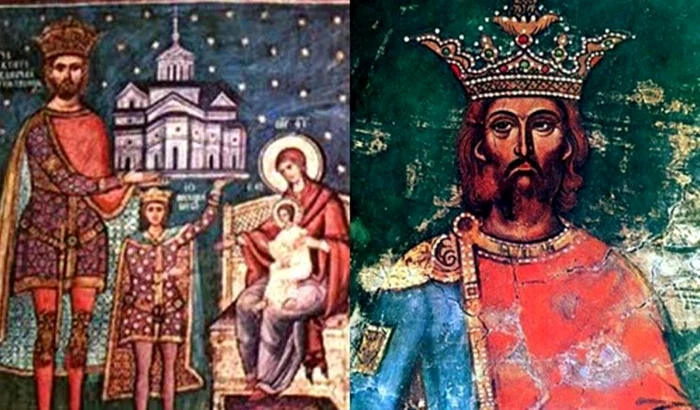
Voivode Mircea cel Bătrulo Photo archive
Mircea cel Bătrân was one of the most important medieval leaders in the history of Romanians. He reigned for 32 years in the Romanian Country, from 1386 to 1418, ensuring a special prosperity for that time. He came from the illustrious family of the Bessarabian and behaved like a bizantine autocrat. A warrior and a reformer at the same time, famous for the resistance opposite the Turks for almost three decades.
At the same time, Mircea was a skillful diplomat capable of ensuring peace and tranquility by juggling with the great powers of the time. Although he is one of the most famous Romanian voivodes, Mircea cel Bătrân came out in the most discreet way on the scene of history. His death is one of the unbelievers, so far, of the medieval history of the Romanians. Why did Mircea die? For now, no one can answer.
“Mircea Voda died in the reign”
The only thing that is known about Mircea cel Bătrân's death is the date on which he died and the place where he was buried. So much. Specifically, the voivode extinguished on January 31, 1418, at Curtea de Argeș. He was 63 years old. Older enough for the times he lived but not enough to assume that he actually died of old age. Was he sick? Injured? Assassinated? The chronicles are of a suspicious muzzle. Although Mircea normally had years to live (Stefan cel Mare was more long, for example), there is no talk about the cause of death. Successful information is given, both in the Romanian chronicles and those of the neighbors.“Mircea Voda died in the reign and buried him in his handle at Cozia”wrote Axinte Uricariul. In the Serbian chronicle, the authors say almost the same thing. “The year 6926 (1418) The great voevod of Ungro-Vlahiei, Io Mircea, January 31” was taken..
Other indications do not exist. As the reputed Romanian historian PP Panaitescu notes, about Mircea Basarab we know almost nothing. What passions he had, whether he was in good relations with the boyars or not, what internal enemies he had and what was the relationship with his son Mihail, the one he had associated with the reign. We know only the facts of Mircea cel Bătrân, the Hungarian voivode, as they appear in chronicles, crusader warrior, Byzantine fashion and skilled diplomat.
“About Mircea itself we know too little; we know his deeds, that is, the results of his personality, but the man inside we know him too little. How far we are from the dynamic, almost lyrical dedication of Mihai Viteazul in his letters; from Mircea we do not even have proclamations and political letters, only in Mir. Apart from the official treaties and christmas, written by the typical one: a letter summarized by Sigismund, asking for his help against the Turks and the letter of disintegration addressed to King Vladislav of Poland.wrote PP Panaitescu in “Mircea cel Bătrân”.
Hazardous games that would have brought him the end
In the absence of precise data, only speculation can be issued. It is certain that the beginning of the end for Mircea cel Bătrân is linked to a very brave diplomatic adventure of the Romanian ruler. Mircea was not only a warrior and a very brave host commander but also a leader who did not shy away from getting involved in well -crafted warp. After the disaster in Ankara of 1402, Sultan Baiazid is defeated and captured by Timur Lenk's Mongols.
The Ottoman Empire was restricted to Anatolia but also to its Balkan possessions. However, it was divided into two. Anatolia (today's Turkey) was led by Mehmed Celebi, Baizid's youngest son, while Rumelia (Balkans) was in the dominion of Suleiman Celebi, Baiazid's eldest son. Both were Timur Lenk's vassals.
During this time, the great Christian kingdoms have not been able to mobilize to give the stroke of the Ottoman Empire. Mircea, on the other hand, did not hesitate to get involved in the internal politics of the High Gate. In 1409, Mircea supports Musa Celebi, another son of Baiazid to impose on the imperial throne. It even gives her the daughter of wife, to make sure she will have no problems with the Turks in the future. “He had written an epistle of guarantee and the famous Musa by which he notified him that, when he arrived in that part, he would provide his country and give his daughter's wife. “wrote Hoca Sadeddin Efendi.
At the same time, the Valah voivode puts his hand on Dobrogea again, his old conquest and proudly proclaim. “Io Mircea Mare Voievod and Lord from the mercy of God and with the gift of God, mastering and ruling all over the country of Ungrovlahia and of the parties over the mountains, even to the Tatar parts and the Amlas and Fagaras Herzeg and ruler of the Banat Severin and both of the great ones, to the whole of the great ones.
Musa arrives in Wallachia and, including with Romanian help, in 1411 he manages to defeat his brother Soliman. Mircea's son -in -law becomes a sultan of Romania. Things have changed radically, however, when Mehmed Celebi, the master of Antolia occupied the scholarship (the old Ottoman capital) and proclaimed the sultan of the whole empire.
Mehmed beats Musa in the battle of Sofia in 1413. Mircea's son -in -law is caught and killed by poisoning. The Valah voivode does not give up and supports another son of Baiazid, Mustafa. It doesn't even come out this time. Mehmed was too strong and supported by all the Ottoman feudal. As anyone expected, Mehmed has prepared to take revenge on Mircea for his involvement in Ottoman politics. In 1417, Muhammad personally led a large -broad punctive expedition against Wallachia. One Turkish army column conquered Severin, another occupied Dobrogea.
Mircea cel Bătrân, a 63 -year -old voivode, was left alone in the face of danger. In the sense that the Suzerane powers, Poland and Hungary did not send him any help. The situation was as serious as possible. In those moments Mircea accepted the payment of the tribute, worth 4000 yellow, annually. Moreover, he sent one of the sons, Radu Praznaglava, hostage at the gate, as he asked for custom. After only three months, Mircea would die at Curtea de Argeș. His wife, Mrs. Maria Tolmay, a refugee on her fields in Balaton (Hungary) because of the Ottoman invasion, would not find her husband in life, when he returns to the Romanian Country.
Wounded in battle or assassinated?
PP Panaitescu wonders if Mircea cel Bătrân gave a last fight before worshiping the Turks. A struggle in which he was injured. And those wounds would have brought him the end later. “Perhaps this death so recently came after the war with the Turks, a few months, not to have been unrelated to that last struggle for Christianity, to have been injured the old hero in the war, thus giving his life for his faith, or he will be died of bitterness.”wrote P. P Panaitescu in “Mircea cel Bătrân”.
Psychic consumption is also taken into account after accepting the payment of the tribute. After 30 years in which he had tried through war or diplomacy to maintain his principality independently he had to worship the Turks. Were the old voivode struck by a cardiovascular problem aggravated by this disappointment? Who can say?
Was the voivode assassinated to the orders of the Ottomans? Even with the complicity of the boyars? He was an uncomfortable prince, both for the Ottomans and for the great feudal, certainly. He was an autocratic monarch, a centralizer who had certainly kept the tendencies of the great boyars, who wanted absolute masters in their fields.
As the title shows, but also the clothing, Mircea was leading as an authoritarian, Byzantine master. Under these conditions it was impossible not to have enemies. A proof in this regard is the association of his son Michael. Be sure that there will be no dynastic struggles. Can you be eager to have a voivode-marioned on the throne, made the boyars escape the old ruler, pleased the Turks? But, again, there is no evidence, nothing concrete.