The White House comes with the latest details about the Trump-Putin summit, but describes it in an unexpected way: “a listening exercise”

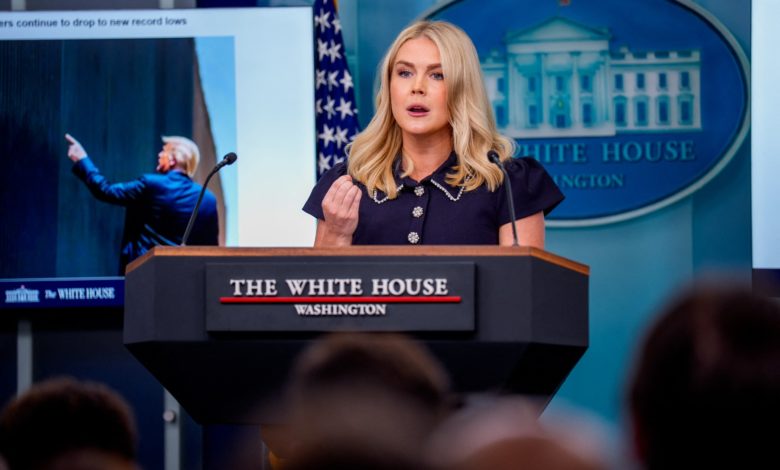
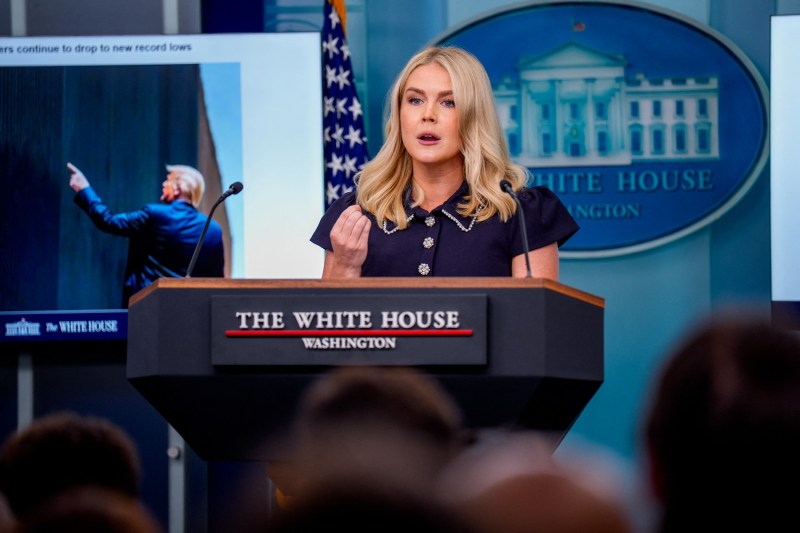
The spokeswoman for the White House, Karoline Leavitt, in a press conference, in Washington, DC, on August 12, 2025. On the background, a monitor displays an image of the US President, Donald Trump, at the southwest border of the country. Photo: Andrew Harnik / Getty Images / Profimedia
The Friday summit in Alaska between US President Donald Trump and Russian leader Vladimir Putin “is a listening exercise for the president,” the White House said on Tuesday, tempering expectations for a quick cease between Russia and Ukraine, writes Reuters.
“Only one of the parties involved in this war will be present, so the president will go there to obtain, once again, a firmer and better understanding of how we can hope this war,” said the spokesman of the White House, Karoline Leavitt.
“It is a listening exercise for the president,” said Karoline Leavitt.
Trump will meet between four eyes with Putin in the discussions, which will take place in Anchorage, Alaska, the White House said. In the future, Trump takes into account and to make an official visit to Russia.
“Maybe there are plans for a trip to Russia in the future,” Leavitt said.
Prior to the discussions from the high-level meeting on Friday, key problems remain. Trump said on Monday that the two sides will have to give up the territories to end the bloody conflict that lasts for three and a half years.
Ukrainian President Volodimir Zelenski has so far insisted that the fundamental law of his country (the Constitution) prohibits such an agreement and that no arrangements can be made without the participation of Ukraine in discussions.
The White House refused to comment on the discussions between Trump and Zelenski that will take place before the Republican leader's meeting with Putin.
Trump said Monday that Zelenski could be invited to a future, trilateral, Putin.
“The president has a deep respect for all parties involved in this conflict and trying to end the conflict,” Karoline Leavitt said on Tuesday.