2025-08-11 15:41, act. 2025-08-11 15:56
publication
2025-08-11 15:41
update
2025-08-11 15:56
The vain and unstable Donald Trump can be easily manipulated by Putin, and the meeting of both leaders in Alaska can bring such a result as an agreement with Munich in 1938 – warns on Monday the main commentator of foreign affairs “Financial Times” Gideon Rachman.
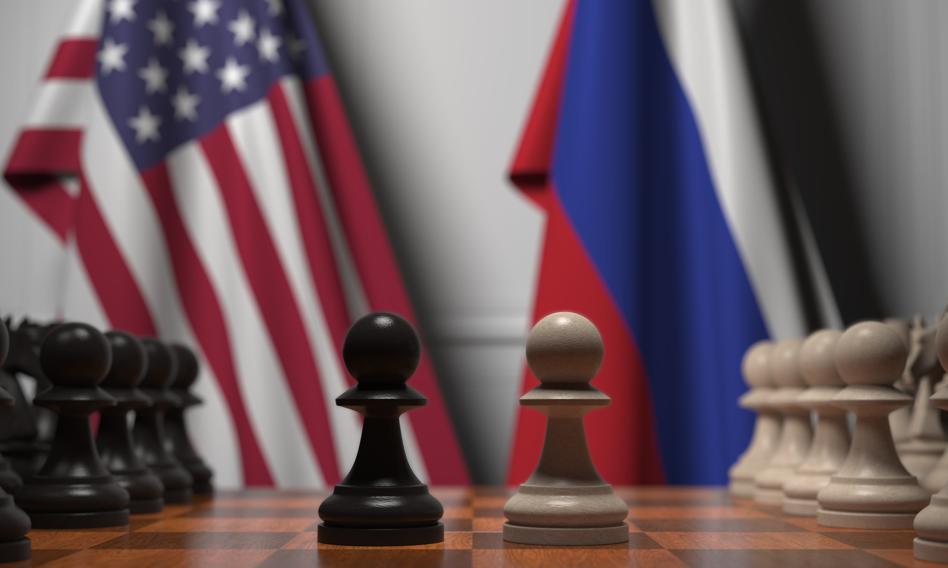
An agreement with Munich is often given as an example of inability to oppose dictators. The Trump -Putin peak in Alaska is already reminiscent of the situation from Munich in one respect – the Czech government was not represented during negotiations, during which Hitler, Mussolini and Prime Minister of France and Great Britain, Edouard Daladier and Neville Chamberlain gave the Germans Czech Sudetes – assesses the journalist of the British journal.
The President of Ukraine Wołodymyr Zelanski has not yet been invited to the top, and Trump's careless statements about “replacing the territories” have included alarm signals in Kiev and the capitals of Europe. There is a fear that “vain and unstable Trump will easily be manipulated by Putin – a steel and focused on the details of the dictator,” Rachman believes.
The worst possible scenario that can emerge from conversations in Alaska is the agreement of Trump and Putin about “replacing the territories”; And “Putin's goal is probably to present Ukraine such arrangements as” Fait Accompli “(Fakt made) (…). If Ukraine rejects such a deal, the Russians hope that the US will cut out help for Kiev,” warns the author.
However, among the “feverish diplomacy and intense emotions” there is a risk that Ukrainians and Europeans can lose sight of the strategic vision of what should be achieved and what is achievable. The most convincing analyzes of the situation in Ukraine show that it slowly loses this war and has more and more problems with the recruitment of soldiers who are starting to lack on the front line – writes the commentator.

Kiev's position, which says that he will not give away any territory is based on the principles, but in the current situation “is unrealistic” – he adds.
“It is crucial to distinguish between de facto and de iure territorial concessions.” In the strategic, broad thinking about the future of Ukraine, the example of Finland is useful, which is reminded of its President Alexander Stubb, “An important player in current diplomatic conversations” on this subject – says the author.
Finland fought two wars from the USSR in the 1940s, lost about 10 percent. her territory, and after the war, she had to remain a neutral state, so as not to antagonize Soviet Russia; But the most important thing is that in a legal sense she managed to maintain independence and democracy, which allowed her to develop as a free country that became wealthy and was successful – she reminds Rachman, assessing that the history of this country can serve as some framework for negotiations regarding the future of Ukraine.
“However, there is an obvious risk associated with the peak in Alaska – that Putin has been thinking very thoroughly for a long time about all these issues. Trump, as usual, will be more interested in announcing his triumph than to work on the practical aspects of the deal by tedious work,” warns the author, who in earlier articles pointed out that there is a serious risk that Trump will stop military assistance again for military help Ukraine.
On Saturday, the journalist “Washington Post”, a historian and expert of the prestigious American Council of Foreign Relations (CFR), Max Boot wrote in the Washington daily that Trump's desperate desire to receive the Nobel Prize for peace in Ukraine makes the president manipulate Putin and threatens him to repeat it from Munich in 1938.
Boot reminded that when “Chamberlain gave Hitler the Czech Sudetes (…) without consulting the Czechs,” he did not receive anything in return, except for the vague promises of the room, and Winston Churchill commented on this: “We had a choice between a disgrace and war, we chose disgrace and we will have war.”
“Sueddeutsche Zeitung”: The fate of free Europe will decide in Alaska
European countries hoped that Trump would sooner or later understand that his “orgy of customs duties” would harm the Americans and Putin plays his nose. For some time, it seemed that Trump would stop a bit, but then Europeans “fell to their knees and accepted (his) dictate (his) dictate” – writes journalist Daniel Broessler in a commentary published on Monday on the German portal “Suedeutsche Zeitung”. In his opinion, the threat resulting from the meeting of Trump and Putin, scheduled for August 15 in Alaska, is “much greater” than the defeat of the EU in the customs war from the USA.
“Unjustly duties will harm the German economy, which, however, will deal with this problem. European companies in the long run will adapt to the new situation and look for new markets” – predicts the author. However, damages that may arise as a result of Trump's agreement with Putin will be irreversible – he warns.
Not everything is already clear, but you can see that the US president wants to “make a Russian dictator to a truce through great territorial concessions at the expense of Ukraine,” notes Broessler. As he points out, you should be afraid that in return Trump “will not get anything or get little.” “If this happened, Ukraine and not only her would be lost,” we read in “Sz”.
“Fate decides – and this is not an exaggeration – democratic, free Europe,” emphasizes the journalist. Russia's aggression on Ukraine in 2022 was an attack on the European peace order. The point was whether the borders still have any meaning and whether Europe would oppose Russia's imperial appetite.
The agreement, to which Trump can force Ukraine, gives an answer that “cannot be withdrawn” – argues “SZ”. The exact course of the new border (between Russia and Ukraine – PAP) is of secondary importance for Putin, because it would apply only until the Kremlin decides that the situation was mature to the next part of the Earth. The sense of security would be irretrievably lost – he writes.
The hopes of the President of Ukraine Volodymyr Zelanski and his country are associated with Europe, which is not defenseless at all – emphasizes Broessler. He explains that Trump has no plan in time after a truce – for this he needs European countries, their money and readiness to loosen the sanctions. Europeans can strengthen Zelanski's position. They must maintain armed help for Ukraine; Without the help of Americans, the Ukrainian army cannot change the fate of the war, but with the help of Europe it can resist the peace dictate.
Europeans gathered around the President of France Emmanuel Macron and German Chancellor Friedrich Merz cannot give way this time – emphasizes “SZ”. They cannot accept any agreement that leaves Ukraine without protection and tracks Putin to the next territorial gains. “In the war in Ukraine, the future of Europe decides. Until it is resolved, it is not lost,” reads the commentary.
Jacek Lepiarz (PAP)
fit/ mal/
arch.