Lesson not learned by the US. What Moscow follows with Friday negotiations with Donald Trump

Even after 11 years of war, the US – like many other countries – learned too little from the failures of intense diplomatic negotiations and the restriction of its power policy. The second Trump administration not only deny, for internal reasons, the disappointing experiences of Obama and Biden administrations. Also, forget about the influential results of the first Trump administration in 2017-2021 in terms of the war in Donbas, writes the German university professor Andreas Umblan in a text published by Hotnews.
- Andreas Umbland studies the contemporary history of Russia and Ukraine, as well as the regime transitions. He has published works on the far post-Soviet right, municipal decentralization, European fascism, post-communist higher education, East-European geopolitics, Ukrainian and Russian nationalism, Donbas and Crimea conflicts, as well as neighboring and extension policies of the European Union. He is a senior expert at the Ukrainian Institute for the future in Kiev, as well as a researcher at the Swedish Institute for International Business in Stockholm. He lives in Kiev and teaches as a policy associate at the National University of Kiev-Mohyla Academy, according to his profile on Wikipedia.
The current American president has taken over in January 2025 with the promise to end the Russian-Ukrainian war in 24 hours. Initially, the new American administration has spent months sending friendly signals, delegates and negotiators to Moscow. In July last year, Donald Trump surprisingly adopted a tougher line towards Vladimir Putin. He approved the sale of American weapons to Ukraine and repeatedly threatened secondary sanctions against Russia's trading partners. The initial 50 -day term granted to Russia to give back was reduced to 10 days in early August.
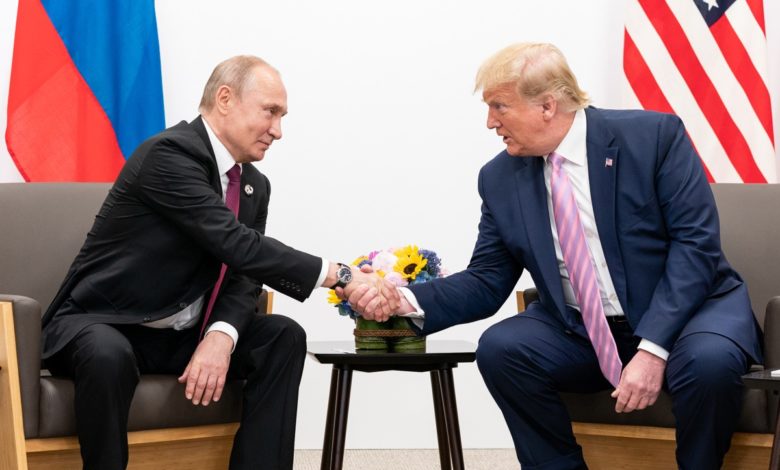
However, a few days later, the US administration announced that the expected trade confrontation between the two superpowers and their partners will not take place. Instead, there will be a meeting between Trump and Putin in Alaska. In the preliminary negotiations between American and Russian negotiators, it seems that there are now signs of an agreement on the long -awaited armistice.
Washington's latest change in Moscow is only a new manifestation of the already obvious incoherence of US policy towards Russia under the new administration. In a bizarre turning of events, the economic and military threats of the US president against Russia were followed shortly by Trump's equally vocal attempts to calm Putin. Now, it seems that the two superpowers will decide the fate of Ukraine in a historic summit between the US and Russia.
A theater of negotiations
However, it is doubtful that the new round of negotiations will give it sustainable and politically significant results. As with other problems, Russia has deliberately put on the scene, starting in 2014, a negotiation theater on Ukraine, meant to impress both its own population and the international community. In hundreds of discussions, dozens of high-level meetings and numerous documents signed, Russia has repeatedly declared its desire for peace in Ukraine over the years. However, intense bilateral and multilateral negotiations before and after February 2022 did not significantly contribute to the change of the war.
On the contrary, the repeated concessions of the West and the forced concessions of Ukraine towards Russia, hesitant and, so far limited to Kiev, as well as the UE and US sanction policy have encouraged Moscow to launch new adventures. The occupation of Crimea in February 2014 was followed by its official annexation in Russia a month later. Shortly thereafter, in April, the war in Donbas began. In July 2014, Russia shot down a Malaysian passenger aircraft with numerous EU citizens on board, above the battle area. In mid -August 2014, the invasion of the East Ukraine began with the first regular troops and, after several waves of smaller escalation, the large -scale invasion of continental Ukraine finally began in February 2022. Since then, Russia's war and occupation policy in Ukraine became more and more glyp.
Not after 11 years
Even after 11 years of war, the US – like many other countries – learned too little from the failures of intense diplomatic negotiations and the restriction of its power policy. The second Trump administration not only deny, for internal reasons, the disappointing experiences of Obama and Biden administrations. Also, forget about the influential results of the first Trump administration in 2017-2021 in terms of the war in Donbas.
In future negotiations, Putin could require not only territorial concessions, but also other restrictions on the sovereignty of Ukraine, precisely because he knows that no Ukrainian president can satisfy such maximalist requests. A key question will be to what extent Trump shares Putin's interpretation about the sources, nature and significance of Russia's aggression war.
strategist
The goal of Moscow in future negotiations will be less a sustainable solution to the conflict, but an improvement in Russia's international position. Putin will try, among other things, to undermine the world order by the demand of concessions that violates international law, it will try to divide the Western Alliance, to weaken the partnership of the West with Ukraine and, as far as possible, to sow internal discord in Ukraine.
Moscow will try to attract American and Western politicians with false concessions and promises of de-escalation, as well as to force Kiev in a decision-making crisis. As he has repeatedly done in February 2014, the Kremlin will try to blame Ukraine for a new and definitive failure of the negotiations.
Within this strategy, a temporary cease of fire cannot be excluded, if Moscow considers it in the diplomatic, internal, economic and geostrategic interest of Russia. The Kremlin could use the illusion of Russia's availability for compromise and the break in bombarding Ukrainian settlements to undermine the unity and determination that have been consolidated in Europe in 2025 in terms of help for Ukraine and to deepen the gap that already exists between the United States and other NATO partners. A limited armistice would also provide an opportunity to regroup Russian attack troops, to strengthen the occupation regime in the annexed Ukrainian territories and to question the sanction policy of the West. In the period 2014-2021, there have already been several relatively calm periods in the Russian War in the Donetk basin (Donbas). However, these relatively peaceful periods finally led to the cessation, nor to freeze the armed conflict, but prepared the land for escalation in a large-scale war of expansion.
Another option that could be in Russia's interest would be a long-range armistice, both parties abstaining from rocket and drones beyond the front line. In the last three and a half years, Russia has attacked many of the key objectives of Ukraine's infrastructure, with varying degrees. However, Ukraine has adapted over time to these attacks and created, for example, a relatively durable energy infrastructure.
In recent months, major Russian attacks have taken place with drones and rockets on Ukrainian civil targets, including in Kiev. Russia's massive attacks have often managed to overcome the air defense of Ukraine, creating dramatic images of explosions in the Ukrainian capital, among other places. However, the military significance of increased attacks on residential buildings, hospitals, cultural institutions and shops in Ukraine remains reduced.
In contrast, Ukraine has repeatedly successful in recent months with long distance drones on military, industrial and Russian infrastructure. Even in deep hinterland, military bases, fuel deposits, airports, refineries and other defense facilities have been repeatedly hit. Sometimes dramatic detonations and fires in Russian industrial factories not only have an increasing material importance for the Russian economy and army, but also have a psychological effect on the Russian population and world public opinion. In the war with long distance drones, Ukraine can use state -of -the -art technology to compensate for the numerical inferiority of its troops, with a very large effect. In this context, it is not possible to exclude the possibility that Putin now wants to suspend or even the conclusion of this part of the war.
The central element of negotiations
The military partnership and the West's alliance policy towards Ukraine remain the central element of future negotiations. As long as there are no credible security guarantees for Ukraine, an armistice would serve both parties to regroup military forces and economic resources, as well as to prepare their administrations and populations for the next ride of escalation. After the war it would actually be only one before the war.
Beyond the practical issue of future security of Ukraine, the wider question of the future role of the US in world politics and in Eastern Europe in particular is asked. Washington and Moscow cannot, as it seem to be planned, negotiate the sovereignty and integrity of a European state, in the absence of Ukrainian representatives and other European representatives. In addition, following the security guarantees granted to Ukraine in the infamous Memorandum in Budapest in 1994, in connection with the accession of Ukraine at the Treaty of Nuclear Weapons (TNP), the United States cannot allow any discussion on issues related to borders and sovereignty of Ukraine. If, despite this agreement concluded three decades ago, two official states equipped with nuclear weapons and permanent members of the Security Council would reach an agreement that would leave Ukraine-Co-Founder of the UN, a signator of the TNP, a member of the Council of Europe and participating in the OSCE-as a state failed from the political and territorial point of view, the humanity would be close to the global.
*Text originally appeared on contributors.