“We make fairs and camp events that help nothing,” says the director of one of the most important museums in the country / from which institutions he thinks you have to “cut into living meat”

Ciprian Stefan, the director of the Astra Museum in Sibiu, speaks, in an interview with Hotnews, about how austerity measures affect the culture and says that “we should not talk about positions or budgets, because we work below limits.” He claims, at the same time, that those in the cultural field must be more creative and focus on quality, not quantity.
The museum director draws attention to the potential of rural cultural tourism to become an important engine for the Romanian economy. This would be possible, he believes, if the Ministry of Culture would accelerate the existing financing lines for projects.
It gives the example of the museum it runs, which has accessed as a result of external or local non -reimbursable financing and funds offered by the Administration of the National Cultural Fund (AFCN), so as not to depend on the ministry. “I look at myself in the yard, an institution of culture without a lucrative purpose, and I have around 40% of the budget by self -financing,” says Ciprian Stefan.
Ciprian Stefan says that the model implemented to Astra can be replicated in other cultural institutions in the rural area, which are accustomed to organizing only “folk fairs”
Ciprian Stefan is a promoter of rural tourism and through the Astra Museum in Sibiu he wants to show that only by strengthening a guild of specialists in restoration and museums – the heritage can be highlighted.
In addition to his activity at the Astra Museum, Ciprian Stefan has held some key positions throughout his career: he was a counselor of Raluca Turcan during the time he held the position of Minister of Culture and is also director of AFCN.

“We must be creative”
– How do you think the cultural sector can reinvent itself, when it lives on the limit of subsistence? How to generate impact?
– We, those in the cultural sector, should be creative. We have to reinvent ourselves simply, but we also need support. It must be changed, somehow, this management ordinance, to have more qualitative indicators, and quantitative to be well justified.
At the moment, too many evaluations are made on the part of quantitative indicators: how many exhibitions I did, not what impact the exhibition in the community had.
Culture is the best ambassador of Romania, I think at the moment. We do not have to get used to money received from the state budget, so let us stand with the outstretched hand at the Holy Authority.
“I had a Pleșu, I had a brick”
– You have had and still have some key functions, given your position. It was not easy to submit some proposals, to bring the desired changes?
– It will be very easy for me when I have a decision function. We, the people in the culture, have to assume the political part and at the same time, to obtain some key functions in the decision area, because otherwise we cannot.
A few years ago I had a Pleșu, I had a brick, I talk about the very good periods, I do not analyze the last periods, yes? Yes, I had a joy, I had a Răzvan Theodorescu, I had some people who at that time were very influential and decided well at that time for the cultural sector in Romania.
Think about that we, in Romania culture, in museums and heritage, are still working after laws made in 1994-2000. We have a Heritage Code, which is currently somewhere in the ministry, it is discussed to be modified. In the form in which he was conceived in the past years it was not a bad form, it was a good form … well, it can be improved. So that's why, I think we have to take a little more and at some point to take this step.
Communication with the Minister of Culture
– How do you feel communication with the Ministry of Culture during this period?
– I was also called by the minister to be in a working group. For now, there is a communication, but we have to take care of what is happening in the future in the Ministry of Culture, because, from my point of view, at the moment, in the culture we should not talk about reorganizations, we should not talk about some positions or budgets, because we work below the limits anyway.
I look at myself in the yard, an institution of culture without a lucrative purpose, and I have around 40% of the budget through self -financing. I'm starting to wonder where the reform started from, from those who strive and perform? Or where no performance happens, but only consumption? There must be cut into live flesh without any discussion
– Do you think that restorers or museographers will want to get involved in cultural tourism or restore museums in villages, if the funds are so limited, and are the bonuses and money they were paid? That is, what encouragement do they have to submit energy in such projects?
– If we have financing tools, if the Government understands that these tools are necessary for a medium and long term projection, when we talk about culture development, through financing tools people can be remunerated. You give them something else at the salary and it becomes an extra motivation for them, because professional motivations are tired.
If we have financing tools, on the other hand, yes, they can be paid and paid additionally. But we do not have any legal framework to make a financial motivation for the employees of the cultural sector, especially in the sphere of museums and libraries in Romania, especially now.
“Câmpic fairs and events that do not help with anything”
– How do you think the places, the spaces that form the rural cultural infrastructure can reinvent themselves and begin to generate their own revenues?
– The most important resource we have in the cultural sector is the human resource. How do we place the legal framework for this human resource to be involved, to be properly remunerated and, at the same time, to have the guarantee that the material heritage of Romania is well preserved, restored and then enhanced?
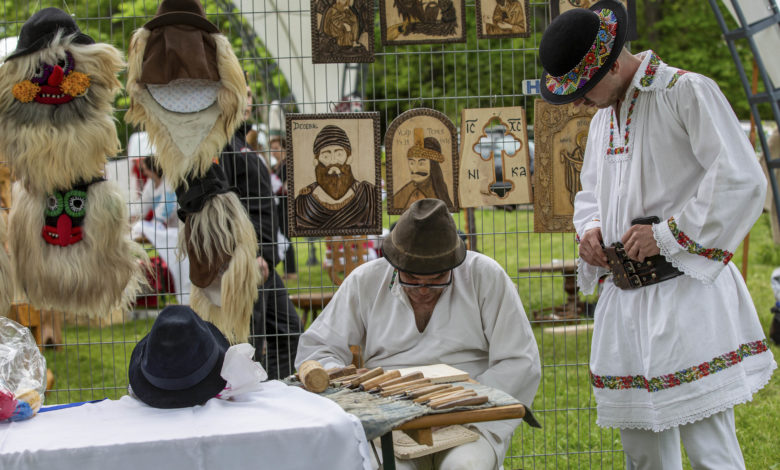
We are talking about the rural Romania. Culture can generate more tourist experience and educational experience than any other sector. We are accustomed to doing, and I say it with all responsibility: fairs and camp events that help nothing; Where the craftsman, for example, no longer sells as he was selling once. Why? Because he is not well curated, because he must understand that everything means an evolution and that everyone adapts their goods to what we live in the 21st century.
– What do you think are the reasons why the public consumes less and less culture? Taking into account the increases of the last period, the culture often reaches the last place in the list of priorities. How do you interpret this phenomenon?
– Here is the great challenge: how can we, the museums, prove that we know how to offer the well -being, because, in the end, we need a well -being.
If you come three hours in the Astra Museum and leave, you have to leave happy, to go ok, satisfied that you have managed to consume that event.
“We sometimes do events that we need the public”
– What risks do you think arise if the authentic cultural act is increasingly confused with mass entertainment?
– Here is the problem of their underfunding, because many times, we speak again about the Astra Museum, we do events that we need the public, to come and pay the entrance ticket so we can cover the operating expenses and if we go in this direction, it will not be good in the future, because we risk reaching all the events that we have a long time.
We should have a strategy here. The strategy is somehow in the drawer of the Ministry of Culture at the moment for culture and I know it as much as possible. It doesn't look bad, to be honest.
As I was the counselor of the Minister of Turcan, as the Minister of Culture was, I somehow saw it, I read it and put some lines in the strategy. Without a strategy for culture, you lose a lot in front of the international non -reimbursable financing tools.
How much the museographers and restorers win: “Let's not be surprised why some will leave to be cashiers at Kaufland”
– Did you mention the human resource, what does it mean to a restaurateur or museographer to lose the spoons of harmful conditions?
– A 1A grade 1 -grade or restorer museographer, a painter or restaurateur have about the same salary, so to speak. At a national museum with maximum seniority it reaches somewhere between 3,800 and 4,200 lei, money in hand, after 20 and some years of work we will not be surprised why some will leave to be cashiers at Kaufland or I know where. They work on Saturdays, Sundays and even if you give them days off, that free day does not keep them hungry. A collective labor agreement was signed, which is not bad that it was signed, but for nothing it was signed that we have no legal framework to pay the weekend days.
– The Astra Museum has 176 occupied positions: 60% specialists, 40% administrative staff. What is the current level of exposure to harmful conditions in your museum?
– No, here, with the increase of harmful conditions, it is a trap. For example, I would prefer this increase of harmful conditions to be included in the future wage law, because it does not help us and then make clear determinations on each field of activity in a museum, because a restaurateur cannot take the same injury with a referent or a museographer. There is no longer this increase. So the increase of harmful conditions, but it would be good to be included in the future wage law and then to make determinations for each sector.
– Do you think these financing tools help the cultural sector to self -sustain in austerity conditions?
– Well, I don't know how to answer this question exactly. Now we are aware that we are going through a difficult time. Yes, but we, first of all, in the cultural sector we must communicate otherwise what we do for society. Those financing tools must continue and be encouraged. We must learn in the public sector how to access non -reimbursable financing, but to generate effects in the community.
I am not interested in restoring a building if I am not able to enhance it or if that project does not “know” other projects after I have completed it. Because a restored building, a restored museum if not highlighted and does not come with interactive programs becomes a huge budget press for authority. It must also generate this economic value, not only social, cultural and educational.