
The age at which genetically inherited prostate cancer may occur. Dr. Vitalie Gherman, Urologist MedLife: “We must be more vigilant with patients who have a genetic component”

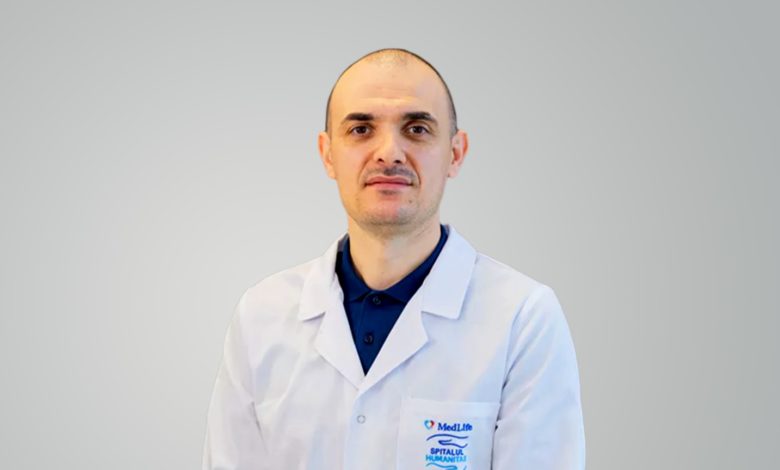
In a family in which the father or another 1-grade male relative received the diagnosis of prostate cancer, the risk that the oncological disease will have a genetic component is increased among male descendants. Less known is the fact that the mutation of the BRCA2 gene – involved in the occurrence of more aggressive forms of breast cancer – can increase the risk of prostate cancer in the children of carrier women. Dr. Vitalie Ghermanprimary urologist in the framework Medlife Humanitas Hospital From Cluj-Napoca, he says that some men should start monitoring the urological health earlier than others and explains, using examples in the office, as the genetic tests help their patients to identify any problems earlier, so that the chances of healing are maximum.
Genetic testing can make the difference between an urological disease discovered too late and a diagnosis made early, when the treatment is effective, potentially curable. Although not all urological disorders are inherited, heredity plays an increasingly important role in identifying the risk of prostate cancer, fertility disorders and certain kidney disease.
Urologist Vitalie Gherman draws attention to the fact that it is essential that men with a family history of prostate cancer or other genetic conditions be carefully and early monitored and do not avoid investigations: “We must be more vigilant with patients who have a genetic component. The disease, with increased chances of healing, because a prostate cancer discovered in the early stage, is a healing cancer! ”.
When genetic tests for fertility are needed
Male infertility can have genetic causes, but these are, most of the times, rare conditions such as Klinefelter syndrome, chromosomal translocations or micro-gaps.
In the case of men where the spermogram shows the lack of sperm (Azoospermia), the first investigation must determine whether it is an obstruction or a production deficiency. “If we exclude an obstructive azoospermia, then we begin to investigate the potential genetic causes,” says Dr. Gherman.
Prostate Cancer: The role of BRCA2 mutation and family history
Prostate cancer is one of the most common oncological conditions in men (on the third place in incidence after bronchopulmonary and colorectal cancer). In some cases, genetic inheritance increases the risk of illness. “If a man has two or more first-degree relatives diagnosed with prostate cancer, or a mother with BRCA2 mutation, then his risk is higher. In these cases, screening should be started earlier than recommended guides: at 40-45 years,” warns the doctor.
The BRCA2 mutation, known for involvement in breast cancer in women, can also be transmitted to sons, and in men is associated with more aggressive forms of prostate cancer and early onset. “The prostate cancer associated with BRCA 1 or BRCA2 mutations has a worse prognosis and is more frequently associated with lymph node or visceral metastases, possibly due to optimal diagnostic window, that is, when the disease is in an incipient, intracapsular stage,” says Dr. Gherman.
Other genes involved in prostate cancer are Hoxb13 and Chek2, but it is important to know that not all prostate cancers are genetically inherited, but those caused by mutations in the listed genes should be taken very seriously. “We refer to prostate cancer with a hereditary component when we have two or more grade 1 with prostate cancer,” explains the doctor.
In a concrete case, he pursued the evolution of a family in which the father and two brothers were diagnosed with prostate cancer. The third brother, under the age of 45, is carefully monitored. “I watch it carefully with more frequent checks. At present I have no clinical or biochemical suspicion of the existence of neoplasia, but given the genetic baggage, in the near future I will schedule it for an MRI exam, even if the PSA has not yet exceeded the normal values.
Why not enough PSA test is not enough
PSA (specific prostate antigen) is the screening test recommended for all men over 50. Those with family history should start monitoring earlier. However, PSA is not a perfect test: “PSA is a specific organ, but it is not cancer. It can also grow in inflammation or benign hyperplasia. Therefore it must be interpreted in context, along with the rectal cough, which remains a very important method. An increased PSA does not automatically mean cancer!”, Stress the urologist.
There are also cancers that do not increase PSA, such as neuroendocrine or prostate sarcomas. “They do not give values modified by the PSA. Therefore, the rectal cough is essential – although it is a phobia of men, it can save lives.”
Genetic testing helps customize treatment
Currently, genetic tests do not directly lead to a personalized treatment in urology, but influence therapeutic decisions, screening, monitoring and diagnostic balance. “In patients with known genetic mutations, surgery can be more aggressive. We do a more extensive linfadenectomy, precisely to reduce the risk of disseminating the disease and for more efficient control of potential distance dissemination,” explains Dr. Gherman.
Prophylaxis, as in the case of breast cancer, is not yet possible in prostate cancer. “We cannot do prostatectomy without biopsy, even if the patient has the BRCA2 mutation and takes all the risks. It is a medical paradigm that will be changed in the future.”
Rare genetic urological disorders
In addition to prostate cancer, there are other urological conditions caused by genetic factors with a genetic inheritance. Of these, Dr. Vitalie Gherman mentions testicular cancer, which does not have a clear genetic component, but is frequently associated with cryptorchidism, a congenital condition in which testicol does not descend into the scrotum. “An unoborned testicle has a risk 20 times higher than becoming malignant,” says the urologist.
Also, renal polycystic disease with autosomal recessive determination is a hereditary condition that can lead to both renal failure and dialysis and increased risk of renal cancer. And rare genetic syndromes such as von hippel-Lindau or Birt-Hogg-Dubé, are rare, but significant causes of multiple renal tumors with genetic background.
Although genetic testing can bring information about the risk of conditions – some of them serious, this modern method of monitoring the health should not be viewed with panic, Dr. Vitalie Gherman believes. “Knowing the genetic background should not generate panic, but awareness. It means to test, to monitor more carefully and to act on time.”
***
Read also other informative articles, on medical topics, in the section we well.
This article is supported by MedLife, the largest network of private medical services in Romania, and aims to be a source of information and inspiration for a healthy and balanced life.
Health is the main source of happiness of Romanians. At MedLife, the happiness of people enjoys us and motivates us to offer medical solutions to the highest standards.
Regardless of the specialty, at MedLife you will find good doctors at any time, whose expertise is complemented by the most advanced medical technologies and a modern infrastructure, ensuring personalized care for each patient.
Find out more details about all the services on https://www.medlife.ro/
Article supported by MedLife


