
Militarization of the Silicon Valley. Like Big Tech and billionaires enter the defense industry

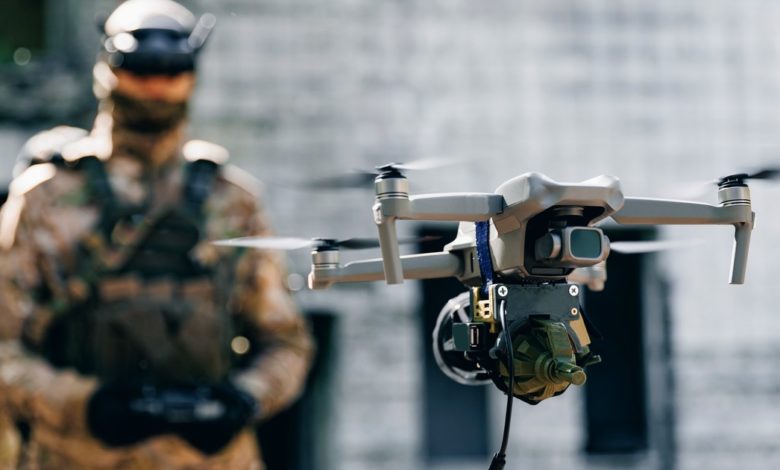
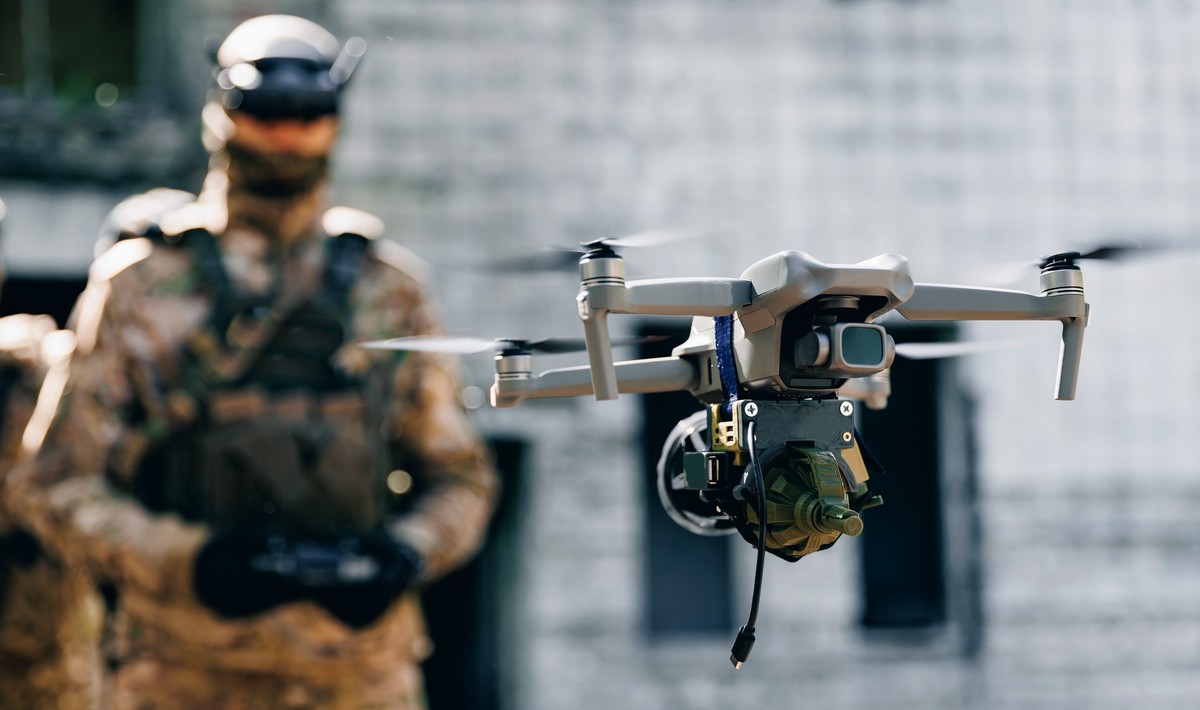
In June at the Joint Base Myer -Henderson Hall (a common base of the United States armed forces) in Arlington four directors and former managers of Meta, OpenAI and Palantir took the oath of support and defense of the United States. The army appointed for them a unit of technological innovation Detachment 201, and participants – in uniforms and military shoes – received the degrees of reserve lieutenant colonels. Are to advise on new technologies for potential combat applicationsalso undergoing basic training and rotational service.
The Chief of Army Staff Daniel Driscoll spoke directly in an interview with the New York Times: “The army desperately needs the competence that the technology sector has developed.”
Check also: SMSs from space. Starlink satellites want to end the dead zones
From “not for war” to “we are proud to engage in security”
As early as 2018, Google employees protested against the Maven project, i.e. the Pentagon contract to analyze the image from drones using AI. This prompted the company to withdraw from the contract and announce the rules of not using AI for the needs of weapons.
Similar declarations were made by other companies, but today it is the past. Openai in January 2024 removed from politicians, prohibiting the use of their technology for “weapon development” and “war”, and then announced cooperation with Anduril over anti -done systems.
The finish has changed the rules to enable military applications and develops with Anduril VR goggles to train soldiers. Google in February abandoned its own taboos regarding AI in armament systems, arguing that in the “global race democracies should set standards.”
It's not just a language correction. As Andrew Bosworth, Cto Meta and a newly baked reserve lieutenant, put it, “The situation has reversed” – in the industry the sense of patriotism and acceptance of cooperation with the government intensified.
Read also: Ai versus electricity. Energy bills become a hostage to the Big Techu war with energy
New policy, new money
The wars in Ukraine and Gaza made drones, recognition of automated and decision -based systems based on real, not hypothetical, a factor of advantage on the battlefield.
In parallel Technological competition with China is growing. This applies a political impulse – in April President Donald Trump signed a regulation accelerating the modernization of the technology acquisition system by the army, and the draft budget act for 2026 provides for a record 1 trill defense expenses, including autonomous drones. Such a stream of money is difficult to ignore in the Silicon Valley.
In 2023, the popular Venture Capital Andreessen Horowitz fund announced at least $ 500 million. on “American Dynamism”, including defensive technologies. Y Combinator in August 2024 financed his first strictly arms start-up. According to McKinsey data, VC financing for defense -related companies increased by 33 percent last year. up to $ 31 billion
A dense ecosystem of companies designing defense systems based on AI is created. Anduril Palmer Luckey signed in March Contract of the Marine Corps for $ 642 million for anti -done technologies and in October a contract worth $ 250 million For the development of air defense, and in June he obtained $ 2.5 billion. new capital with a valuation of $ 30.5 billion Skydio accelerates the production of autonomous drones and in June it won the State Department's contract at $ 74 million. Regent, a manufacturer of electric seagliders (electric wing vehicle, which starts on hydrophols and then flies just above the water surface), closed over $ 100 million. financing from private investors and a contract with Marines to $ 15 million, building a factory in Rhode Island.
See also: From a great attack on the Microsoft service to the collapse of a transport company through one poor password. Cyberrataki paralyzes business
Palantir as a pattern of a defense company
Palantir has been an industry outsider for years, forcing closer cooperation between IT and the army – even through a lawsuit against the army in 2016, which forced to consider commercial solutions. Today, his position has become an indicator of the ambition of the rest of the sector. Thanks to contracts throughout the government and armed forces, the company's capitalization has grown above $ 375 billion, exceeding the total value of traditional arms giants such as Lockheed Martin, Northrop Grumman or General Dynamics. In a letter to shareholders Alex Karp, the head of Palantiru, wrote that Critics mocked “the United States' arming”, but “part of the valley has already gone to our side.”
The paradox lies in the fact that what is defined today as the militarization of the Silicon Valley is in a sense a return to the sources. It was the Department of Defense and federal agencies that were the first patrons of the local technology in the 1950s, and Darpa co -created the foundations of the Internet. Google also received grants at an early stage, including from DARPA.
The later consumer era and the declared “apolitical good” of technology obscured this pedigree, and cooperation with the Pentagon became toxic in the eyes of employees. Today, practice and narrative are approaching again. “Defense of democracy” becomes an acceptable goal for AI's ventures.
However, not everyone in the technological chain of values agree with this phrase. Some engineers in Google and Meta point out that after building autonomous drones and weapon systems, the effect on their use is minimal. The question arises whether advanced systems will increase the number of victims or on the contrary – they will limit escalation. Technology historian Margaret O'Mara warns that the hyperconality of technological companies from the Silicon Valley pushes ethical reflection on the side track. For now, however, practice prevails. Shopping cycles are shortened, the army reports an urgent need for implementation, and start-ups speak directly about the “hype” series, which already translates into factories, production capacity and long order lists. There is a lot of work and thus – money to earn.
Check also: And starts with the board. How can companies implement artificial intelligence before everyone does it? [WYWIAD]
There are budgets for AI on the battlefield
The open attitude of the White House and Congress meets the new identity of the VC industry. “American Dynamism” programs legitimize investing in defense as a civilization mission, not just a class of assets. If record budgets and geopolitics persist, militarization of AI infrastructure – from sensors, through communication, to command software and simulations – will enter into a permanent phase of industrialization.
For Big Techów it is a chance and risk in one. A chance is a large, long -term revenues, a competitive advantage in AI and data models and an impact on the standards of military artificial intelligence. Risk is reputation, cyclicality of public expenditure, international compliance and loss of control over applications. For defense starts, it is a unique window: Reduced purchasing bureaucracy, growing contract pace and investors ready to finance heavy hardware together with the software.
In practice, the Silicon Valley does not so much switch to a military, which integrates the military in its basic model of action. AI, drones, simulations and data analytics become elements of a standard portfoliobut with the new main customer. Along with this, questions known from the Cold War are returned to the industry: where is the limit of the responsibility of engineers and how to design systems that strengthen security, not just firepower. For now, the market and politics are answering. Their common language sounds louder today than the old slogans with technology neutral.
Author: Grzegorz Kubera, Business Insider Polska journalist


