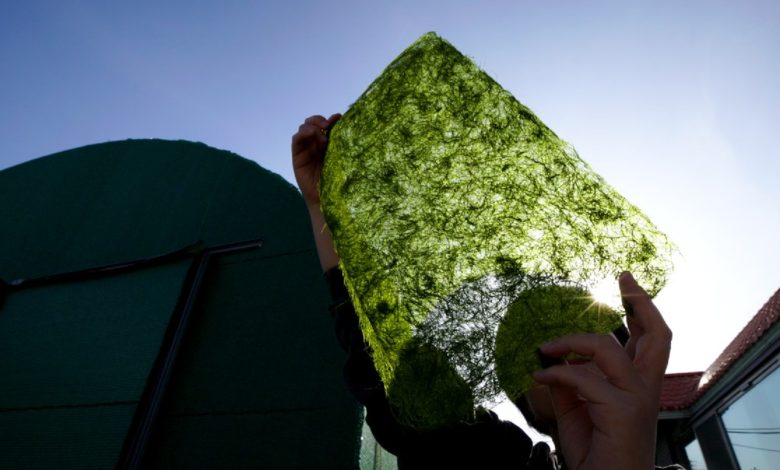
Narrator: Manually pulling out these moss -covered green threads is the only way to collect Gamtae. After washing, forming and drying hours, they will be transformed into one of the rarest seaweed in South Korea. When the Ju-Hyeon Song founded its company Badasoop, Gamtae was mainly collected and consumed raw by the inhabitants of the Seosan region. However, the transformation of this small industry into a prosperous business was a challenge.
Ju-Hyeon Song, founder, Badasoop: In those days, people didn't even know what Gamtae was, so they didn't consider buying at all.
Narrator: Ju-Hyeon worked on providing these earthy and sweet seaweed to people from outside the region. Not just anyone, but the largest players of the culinary world. She did all this in the face of uncomfortable collections and rising prices.
Ju-Hyeon: When I started, raw gamtae cost 100,000 won (approx. PLN 290) per kilo, and now it costs 300,000 won (approx. PLN 870).
Narrator: How did Ju-hyeon change Gamtae from a local delicacy into a global sensation? And why is it so expensive?
What is Gamtae? Seaweed with vegetable features
Ju-hyyeon: 10 years ago people asked me what Gamtae was. It saddled me. Currently, young people know that this is something expensive and served in exquisite restaurants.
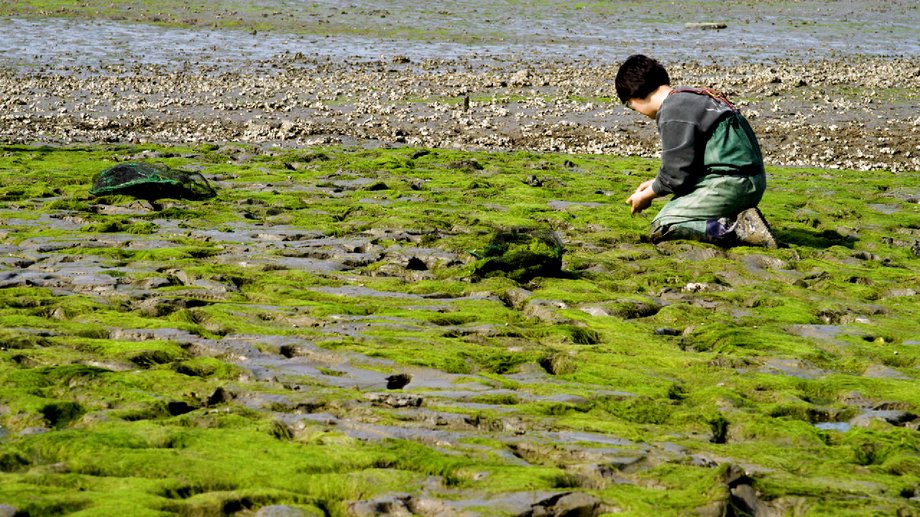
Narrator: However, before Gamtae goes to restaurant cuisine, his journey begins on the cold west coast of the South Korean Garori bay. Unlike other types of edible seaweed, such as Nori, which can be grown, Gamtae can only grow in nature on mud plainsi.e. coastal wetlands that form when ocean tides intensify deposits and mud.
Ju-hyyeon: Despite the fact that it is seaweed, Gamtae has a unique feature of rooting on mud plains. Other seaweed floats on the water. So, although it is seaweed, it has vegetable -like features.
Narrator: For this reason, Gamtae can only be collected by hand. Any other way can destroy the plant root, affecting supply next year.
Ju-Hyeon: It is important to leave the roots intact and collect only the stems, cutting them in the middle. Thanks to this, Gamtae can grow back later.
Gamtae collection is not an easy task
Narrator: Gamtae can break if it is exposed to high temperatures for too long, so the harvest takes place from December to March, when the sea is the coldest. During these four months, Ju-hyeon and her team must gather as much gamtae as possible to satisfy the demand of buyers for the rest of the year. They spend up to six hours a day at pulling the gamtae from the mud plains.
Ju-Hyeon: It's cold, we fall in the mud, we crouch during work and my back still hurts. Not only my hands are cold, but also my feet, and when the winding wind blows, jokes end.
Gamtae changes the life of fishermen and the taste of exquisite dishes. And it started with the stubbornness of one person
|
Business Insider
The difference between Gamtae and Nori. Where does the price difference show?
Narrator: The intensive process of harvesting is the first difference between Gamtae and more common nori seaweed. Nori is dark green and a bit rough, while light green thin ranges Gamtae have a more delicate texture. This labor -intensive process is only one of the reasons why Gamtae costs much more than other seaweed, and relying on the rhythms of nature means that the supply can be unpredictable.
Ju-hyyeon: Gamtae is growing wild, so I can't do anything when it is gone.
Narrator: Recently growing sea temperatures have disturbed the growth.
Ju-hyyeon: This year was quite difficult. At the moment Gamtae can be found here and there, but there is not enough.
Narrator: To make up for the difference, Ju-hyeon buys gamtae from local fishermen who collect them.
Ju-hyyeon: Currently, about 50 households are involved in collecting Gamtae. When Gamtae can be collected more, we collect large supplies.
Narrator: Gamtae also has a richer and sharper taste than Nori.
Ju-hyyeon: Gamtae is partly captivating because it has a sweet taste, as well as a unique, spicy aroma. It differs from other seaweed in that it has both sweet and spicy taste.
Narrator: The taste, however, has its price. A package of eight Gamtae sheets costs $ 16. You can buy 50 Nori sheets for the same price. Regardless of whether Gamtae is collected by employees or locals, it must be washed in the factory. This is the most important part of the processing process, because all mud, pollution or creation left on seaweed can affect the final taste.
Ju-hyyeon: Here are small crustaceans. We fish gamtae in the wild, so you can sometimes find something like that. We supply exquisite restaurants, hotels and shops, so it's a big problem if customers are submitting complaints.
Narrator: Years ago, employees did it completely manually, but this washing machine can clean 100 kg in less than 10 minutes. This is one of the changes that Ju-Hyeon introduced in the Gamtae processing techniques, which she learned from her father.
Ju-hyyeon: When I decided to move to Seosan and told my father: “Dad, I will produce and sell Gamtae”, initially laughed at this idea.
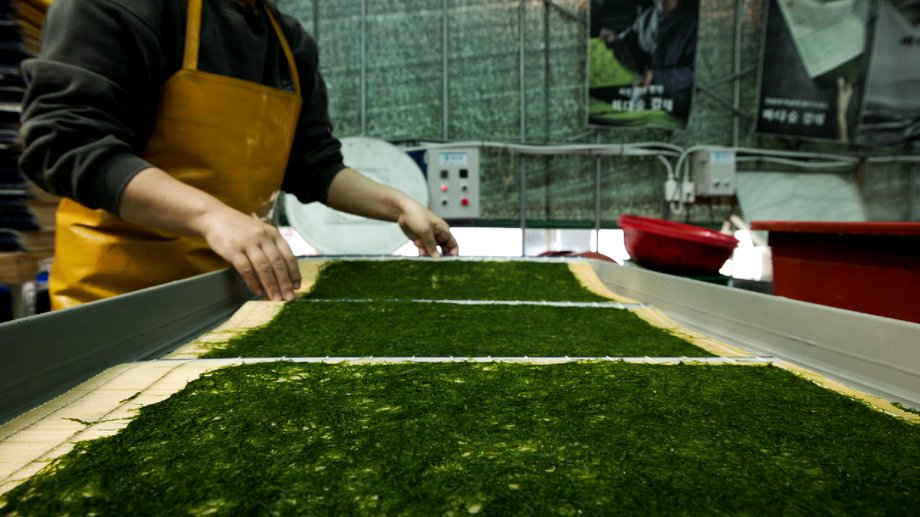
Gamtae is a demanding ingredient that went to a restaurant with Michelin stars
|
Business Insider
Tradition passed down from generation to generation
Narrator: Like many locals, Father Ju-Hyeon, Cheol-Su Song grew up, eating Gamtae. One day he came up with a new idea for its processing.
Cheol-Su Song, father of Ju-hyeon: After baking and flattening Gamtae to a square shape, I tried it and thought that I could earn on it. From that moment I started the activity related to Gamtae.
Narrator: Ju-hyeon and its 15-person team still use these techniques for GAMTAE processing in Badasoop.
Ju-hyyeon: I am still learning and improving this process with the help of my father.
Narrator: Employees use a special technique to form gamtae into sheets thin as paper. They immerse seaweed in fresh water and form them on a bamboo mat. It looks simple, but mastering this technique can take three years.
Ju-hyyeon: I tried to do it many times, but it's not easy. Obtaining the perfect thickness is a very difficult task. The most important thing is that there are never free spaces. There can also be lumps.
Narrator: Ju-hyeon uses this press to remove excess water from Gamtae.
Ju-hyyeon: The water must flow well, because drying too long can affect the color and quality of the product.
Narrator: The sheets dry on these dryers. Badasoop sells GamTae sheets in a raw or baked version for 10 seconds at 230 degrees C.
Ju-hyyeon: Season the baked gamtae with a mixture of sesame oil, corn oil and salt.
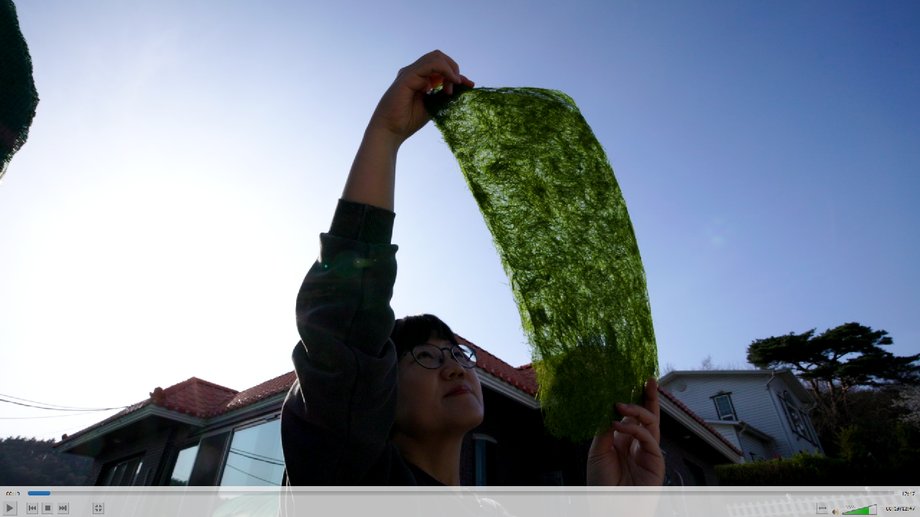
Gamtae are wild seaweed from Korea, which has won the global gastronomic market
|
Business Insider
“I was naive.” The beginnings of Badasoop were not the easiest one
Narrator: Badasoop produces 3500 GamTae sheets in one day and exports about 500,000 annually. It was not easy to develop a market for Gamtae outside Seosan.
Ju-hyyeon: I was naive and thought that if I did a good gamtae, people would buy them. In 2014, however, we literally sold nothing.
Narrator: Ju-Hyeon knew that the only way to create a market for seaweed is to teach people about them.
Ju-hyyeon: I focused on informing what Gamtae is, how to consume them and what values it has as a delicacy.
Narrator: Ju-hyeon promoted GamTae on the luxury products market, sending samples to chefs of restaurants awarded with Michelin stars. She also wrote articles about its unique taste and consistency. At the end, the years of efforts brought the result. Ju-Hyeon says that she began to receive queries from chefs from around the world.
Ju-hyyeon: The chefs I have met want to use the unique ingredients that others do not use. When I presented them Gamtae, their eyes literally shone with excitement because they love to discover something new.
Narrator: One of the chefs is Chris Cipollone. He owns the Franci restaurant in Brooklyn in New York. This is one of the several Michelin -winning restaurants that buy Gamtae via Badasoop.
Chris Cipollone, owner and chef, Francie: Has a strong aroma. I always tell people that it resembles an ocean white truffle.
Narrator: Chris has been using Gamtae in his dishes for 10 years. This is a key component of one of the spectacular restaurant dishes – Conchiglie.
Chris: We are in the kitchen. In a moment we will start making our pasta, or Conchiglie, using seaweed. The whole consists of four simple ingredients: semolina, gamtae, water and salt. It's very simple.
Narrator: Chris mixes seaweed with pasta cake. I wanted to season the dough to the extent that you could feel Gamtae in the pasta itself. The pasta has a lot of umami taste.
Narrator: Pasta is then cooked in butter-wound sauce and mussels are added.
Chris: It's just right. He has a lot of umami. His texture tastes great in the mouth.
Narrator: Chris could choose cheaper types of seaweed, but he claims that the unique Gamtae taste is worth the price.
Chris: This delicious taste is worth it.
Narrator: Chris is not the only person willing to pay for him. Badasoop provides Gamtae to a high -class restaurant in Taiwan, Hong Kong, Singapore, Dubai, as well as in Belgium, France and Germany. However, this new demand caused a raw gamtae prices. Ju-Hyeon says that more producers have appeared since 2020.
Ju-hyyeon: New manufacturers entered the market, so Gamtae became less accessible and its price fluctuated. When I started, raw Gamtae cost 100,000 won (approx. PLN 290) per kilo, and now it costs 300,000 won (approx. PLN 870).
Narrator: However, there is also the other side of the coin. Ju-Hyeon says that this new market helps local communities in Seosan.
Ju-hyyeon: When the demand for Gamtae increased, we were able to buy more, providing a significant source of income for local fishermen during difficult winter months. I feel that the time I have devoted to my father over the years did not go in vain.
Cheol-Su: I feel proud because my daughter is working hard on what I couldn't do. I hope that the brand she was working on so hard will reach Korea, all over the world.
Crowd. Piotr Nazek