How Romania came to a country indebted to foreigners. Loans spent on harmful businesses, megalomaniac projects and lack of vision of vision

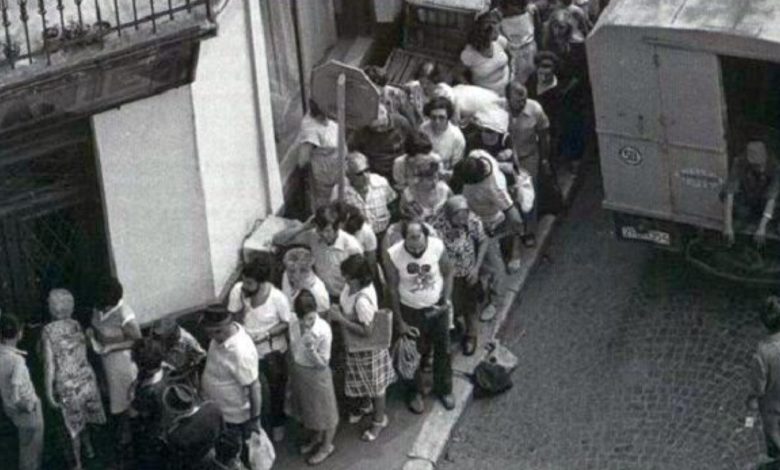
Romania has been a country that has lived on duty since the beginning of its existence. The state has contracted in the last 150 years large external credits, reaching a peak in 2013. Most of the money from loans went to harmful investments, but also to solve some internal problems.
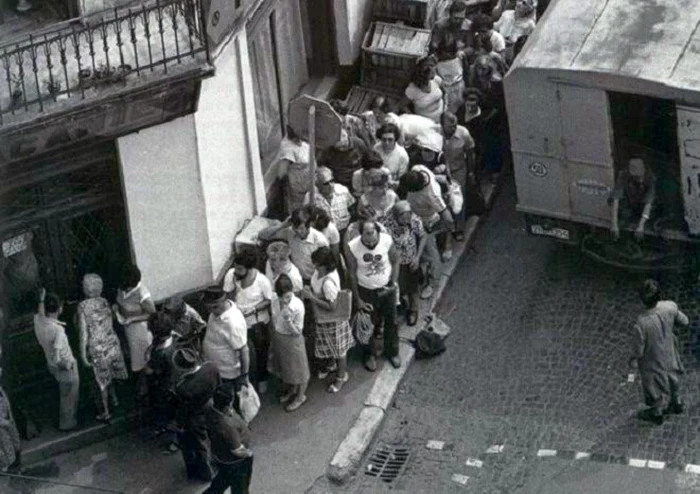
Knight world during the communist period photo archive
Since the formation of the modern state, in the middle of the 19th century, Romania has been a country that has often lived “on the notebook”. That is, it has contracted large loans both internally and especially externally. Due to external credits, at banks through England, France or Germany, at one point Romania has enabled payment.
Historical peaks of external debts were reached during the communist period but also after 2000. Most loans were taken because the authorities have almost never managed to recover the country and find a way to increase national income through efficient exports. A significant part of the loans have been used effectively for survival or for supporting megalomanic and harmful investments and projects. There were periods when the Romanians were owed to be sold in banks in the developed countries of Western Europe. And the hard for the external debts to the shower always the population, with huge sacrifices especially during the communist period. In short, the Romanians paid the inability of the authorities to manage the economy of a country with rich natural resources but also an important human resource.
First external loan. Romanians owned to foreigners from the front
The first external loan of Romania came shortly after the union of the Principalities during Alexandru Ioan Cuza. Probably it was the most justified loan in the history of Romanians. And that's when the new state needed capital to modernize. At that time there was no national bank of Romania and no national currency. No less than 60 different coins were circulated on the territory of the United Principalities, from different countries. In the first year of reign, Cuza tried to borrow from the French to establish a national bank, beat currency and make money for the agrarian reform. However, the ruler was not yet recognized by the Ottoman Empire and the new state did not present confidence. So the French refused credit.
Only in 1864, the United Principalities presented confidence to foreign creditors. So on August 10, 1864, the first external loan in the modern history of Romania was contracted. It had a value of 916,000 pounds and was taken from “Stern Brothers”, a bank in London, but also from the Ottoman imperial bank. The interest was 7% and the Romanians had to return the money over 22 years. Until 1868, according to economist Victor Axenciuc, the external debt had already reached $ 16 million. Romania became more and more credible for foreign creditors, especially since it had a national currency.
The first lion was beaten in April 1867 and represented a coin with 5 grams of silver and 0.3 grams of gold. So the Romanians continued to borrow, glad he has someone to give. Until 1902, the external debt reached $ 250 million. And the palette of creditors has expanded. The Romanian state borrows from banks in England, France, Germany and Italy. As the specialists say, the first loans were also the most justified and judiciously spent. They were used for the modernization and development of the country, and the results were seen. In Romania, the first modern roads, railway, bridges, and many other facilities of the modern world appeared. “It should be mentioned from the beginning that if, during the period 1871-1914, most state loans were oriented towards investments in the transport and communications infrastructure (railways, ports, telegraph, cobbled roads, bridges, sewerage in the urban environment) that contributed to the economic and social development of Romania”said George Georgescu in “History Paradigms: The Public Debt of Romania in the Last 100 Years”.
Wars, combinations, reforms with dichis and a debt that grows seeing with eyes
During the First World War but also of the interwar period the external debt of Romania grew up seeing with the eyes. If the indebtedness was natural in the context of arming for the participation in the war but also for the payment of post-Belic expenses, abnormal was the controlled waste of public money. Or better said some of the external credits were going on preferential contracts, Japca from public money plus other counters made from the Ministry of War to the most humble politician. The “combinations” occasioned by the equipment of the army for entering the First World War were. Between 1916-1917 the budget allocated to the Ministry of War was 115 million lei. At the same time in the summer of 1914, the credits for the Romanian army were unlimited. In fact, until 1917, over 850 million lei were taken on credit. Most evaporated into dubious business.
“With the beginning of 1915, so many possibilities of enriching overnight enrichment and imports of favor, through the army's supplies and through public works, so that only the angel or the stupid did not overcome.”wrote Constantin Argetoianu. After the war, the Romanian state borrowed again, until it almost reached the financial crisis.
“During the First World War (when the national currency lost its coverage in gold, due to galloping inflation), as well as in the years after the Great Union, practically throughout the interwar period, our country resorted to a series of percentages to finance the expenses related to the participation in the two wars, Armed conflicts, financial support of some reforms (agrarian, monetary) that did not bring the positive results expected for the modernization of the economy, the annual debt service affecting the investment resources that could have been allocated for development, or, worse, reaching quotas that determined the country's entry into financial crisis. “said George Georgescu in the same work.
To all the loans were added the human and material losses during the First World War amounting to 31 billion gold. The debts continued to grow and because the Romanian state took over from the debts of the former Austro-Hungarian Empire for the retrocession territories (Bucovina) but also of Hungary (for Transylvania). At the same time, the agrarian reform promised by King Ferdinand and has proved a very expensive matter. The expenses with the expropriations of the estates amounted to 14 billion lei. We are not talking about the redemption of the Hungarian Groof and Austrian nobles through Transylvania. This brought new external credits. At the beginning of 1929, the public debt reached over 160 billion lei, of which the external one to more than 85%.
Romanians owned. The year in which we have entered the inability to pay
With the establishment of the economic crisis worldwide, that is, after 1929, Romania was strongly affected. The financial situation has become extremely critical. In wheat and oil the Romanian exports decreased by 58%. The massive dismissal followed. Between 1930 and 1933, over 500 factories went bankrupt, and over 300,000 Romanians had become unemployed. Industrial production decreased by 28.4 billion lei. They followed loans over loans. And Romania finally reached the inability to pay. The public debt had reached 185 billion lei, of which the external debt amounts to 93%.
“The financial situation of the country, which became critical, was aggravated by the effects of the great world crisis erupted at the end of 1929, severely felt by Romania (foreign capital exits evaluated at 12-17 billion lei, the bankruptcy The rotten portfolio from the NBR, the conversion of rural and urban debts, the financing of the budget deficits and the payment of the due rates of the public debt. 1932, that the payments of the debt to France, England, Italy and the US, evaluated at the equivalent of 39.5 billion lei, were suspended, based on the Hoover Mourishment, initially for one year, later in an unlimited term.Georgescu said in “History Paradigms: The Public Debt of Romania in the Last 100 Years”.
Ceausescu borrowed, the Romanians paid
Experts say that the establishment of communism in Romania has been done under extreme financial auspices. Specifically, in 1947, Romania was an almost economic country. Drought, hunger, war, huge war repairs due to the USSR. “At the end of 1947, the country's economic and financial situation was extremely difficult, tributary to the important damage suffered during the war (evaluated at over $ 500 million 1938), the heavy war repairs to the Soviet Union (evaluated at over $ 500 million currency 1938), as wellis shown in “History Paradigms: The Public Debt of Romania in the Last 100 Years”. To all these, in the first years of Romanian communism, the robbery made by the Russians through the Sovroms was added.
Only after 1956, after the liquidation of the Sovromes and the exit under the Soviet domination of the economy, communist Romania began to breathe. Had debts to 14 foreign states. Until 1960, the level of external debt decreased considerably being paid an important part of the debts. After 1965, Nicolae Ceausescu came to power. With its own economic (obviously erroneous) vision. In order to implement its megalomanic projects and especially to support a communist economy, Ceausescu has hired Romania in new external credits. This time at Bird and the IMF, largely for the raw materials in the West, but also to cover the losses of bankrupt plants.
“About 19% of the total external credits were used to recover the losses of the enterprises. The economy supports chain locks. With annual losses of about one hundred billion lei“, Stated Lavinia Betea in” Ceausescu and his era “.
In 1980 the external debt had reached $ 11 billion. The Romanians paid it by tightening the belt in a difficult way to imagine.
Democracy full of debt
With the sacrifice of the people, Romania had reached, in 1990, in a unique situation at the level of the countries in southern and Eastern Europe. More precisely, it was a country without debt. This should have been constituted in a real asset for the transition to the market economy. However, the specialists say that the lack of a clear vision of the Romanian authorities has inevitably led to the loss of this advantage and the return to the “book” life.
Especially after the economic crisis of 2008-2009. “Against the lack of a clear vision of the government and monetary authorities, the structural transformations associated with the process of transition and accession to the European Union have been accompanied by a series of adverse social and economic costs, including the accelerated increase of the public indebtedness, both external and internal, in particular, in the post -critical period.”said George Georgescu in the mentioned work.
Eurostat statistics showed that the share of public debt in GDP increased from 1% in 1990 to 22.4% in 2000. The peak was reached in 2014, by 40%. Between 2000-2015 the public debt increased 14 times.
.