
A new Trump Administration offensive against Europe. What Rubio has ordered the American diplomats

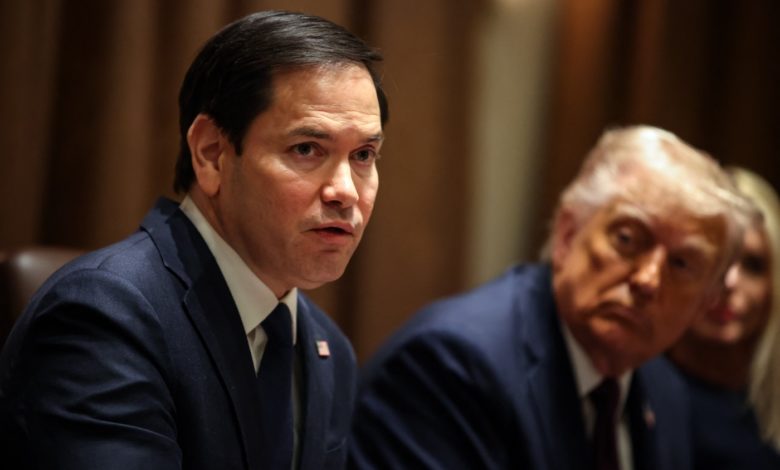
President Donald Trump's administration has trained American diplomats in Europe to launch a lobbying campaign against the law of digital services (DSA) of the European Union, which, according to Washington, restrains freedom of expression and imposes costs to American technology companies, shows an internal diplomatic telegram seen by the News Agency.
In a telegram of the state department dated August 4, signed by the US Secretary of State Marco Rubio, it is stated that the EU imposes “unjustified” restrictions on the freedom of expression in his efforts to combat hate, misinforming and false information, and DSA strengthens these restrictions.
The DSA of the EU is a historical law meant to make the online environment safer and more equitable, forcing technological giants to make more efforts to combat illegal content, including hatred instigator and materials that have sexual abuses on children.
However, Trump has done censorship – especially what he considers to be suppressing conservative online voices – a major theme of his administration. High American officials, including Vice President JD Vance, focused on European officials and regulations, accusing them of “censorship” of Americans, an accusation rejected by the European Union.
 Washington denounces the “censorship” of social networks by the EU: “It is something incompatible with our freedom of expression”
The diplomatic telegram, whose title describes it as an “request for action”, charges US diplomats in Europe to work regularly with EU governments and digital services to transmit US concerns and financial costs to American companies.
“Posts should focus on efforts to obtain the support of the host government and other parties interested in repealing and/or modifying DSA or related EU or national laws that restrict online expression,” the “Objectives” section shows.
What the EU says about freedom of expression
The telegram offers specific suggestions to American diplomats on how the EU law could be modified, as well as arguments to help support this point of view.
The State Department did not comment on this information.
A spokesman for the European Commission has refused to comment on the telegram, but said that freedom of expression is a fundamental right throughout the Union. “We firmly reject any accusations of censorship. The censorship accusations regarding the DSA are completely unfounded,” said the spokesman.
In March, the EU's antitrust and technological heads told American legislators that the new technological rule aims to maintain open digital markets and do not target American companies.
The Commission has also rejected speculation that the EU regulatory regulation could be included in the EU and USA commercial negotiations. “Our legislation will not be modified. DMA (the law on digital markets) and DSA are not on the table of commercial negotiations with the US,” said Commission spokesman Thomas Requenier, in a daily press conference.
The order addressed to American diplomats marks an acceleration of the efforts of the administration to promote what it calls “the tradition of freedom of expression of America”, a policy that added tensions to already tense relations between the US and European allies.
This policy entered the center of attention in February, when Vance shocked European leaders accusing them-at the Munich Conference, usually known for the manifestations of transatlantic unity-that it censors the speech of groups such as the right AFD party in Germany and that take steps back in terms of democracy. Including Romania was mentioned as a negative example in the famous Munich speech of the US Vice President.
Diplomats need to investigate censorship charges affecting American companies
During his travel to Europe, Vance met with AFD leaders – a party classified by Germany's internal intelligence service as an extremist suspect group – who became the largest opposition party in the country after the February elections in Germany.
Trump and his Republican allies have repeatedly accused the administration of former Democrat President Joe Biden of encouraging the suppression of freedom of expression on online platforms, accusations that have focused on efforts to stop false statements about vaccines and elections.
The Supreme Court of the US ruled last year that Biden's administration's discussions with social media companies did not violate the protection of freedom of expression provided in the first amendment of the American Constitution.
In addition, the Directive of the State Department orders American diplomats to investigate any accusations of censorship, which he described as “any effort of governments to suppress protected forms of expression or to constrain private companies to do the same”, adding that priority should be given to any incidents affecting the citizens and companies. Their investigation should include any arrests, judicial processes, confiscations of properties and suspensions online, the document shows.
“The employees in the position should meet with government officials, companies, civil society and affected persons to report censorship cases, including, but not limited to those related to the DSA,” the diplomatic telegram shows.
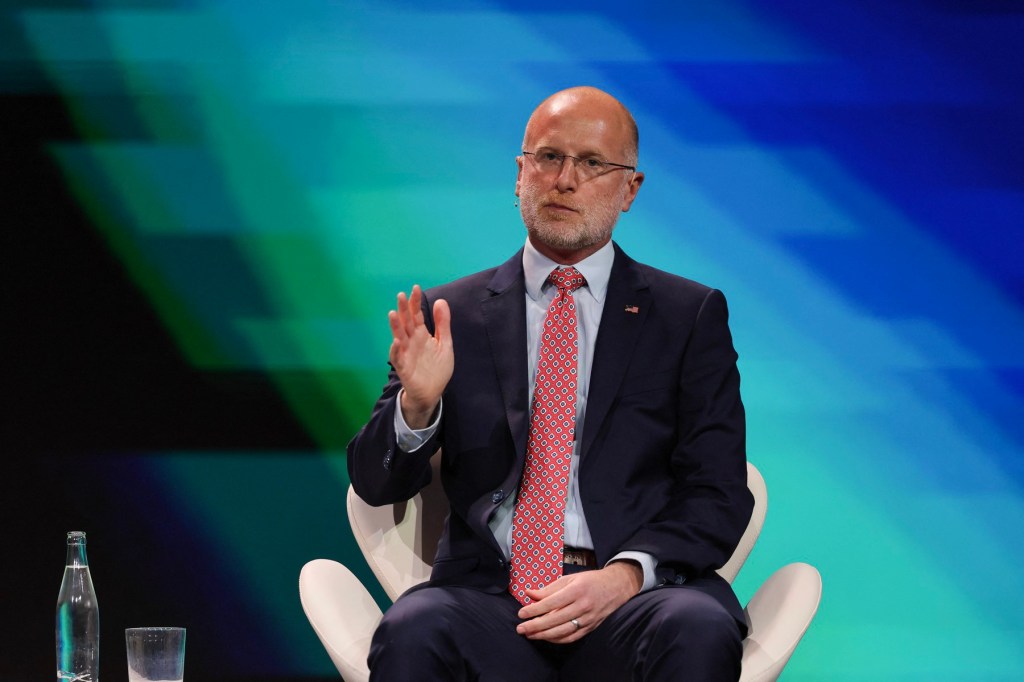
In March, the President of the Federal Communications Commission (FCC) has specifically criticized the DSA, saying that it is not compatible with the tradition of freedom of expression.
In May, Rubio threatened to ban visas for people who “censure” the speech of Americans, including on social networks, and suggested that politics could target foreign officials regulating American technological companies.
“Excessive control”
American technological companies such as Facebook and Instagram, owned by Meta, also expressed their opinion, saying that DSA is equivalent to the censorship of their platforms.
Elon Musk, the executive director of Tesla, who also owns the Social Media X, was one of the main US president's advisers before the two argues, while the chiefs of Amazon, Metaz and Alphabet, the owner of Google, occupied prominent places in Trump's investment in January.
The Rubio Directive in particular concerns the DSA description of the content considered “illegal”, stating that it is too wide, and asked the US diplomats to plead for the restriction of the definition of “illegal content”, so as not to limit freedom of expression, including in political and religious discourse.
Another suggestion was the withdrawal or modification of the Code of conduct on misinformation, a framework provided by the DSA, of which the State Department stated that it imposes “excessively wide controls” on the content, in a way that undermines freedom of expression.
Other debate points include eliminating or reducing fines for non -observance of content restrictions and renouncing “Trusted Flaggers), designated by national authorities to report the illegal content online to platforms.


