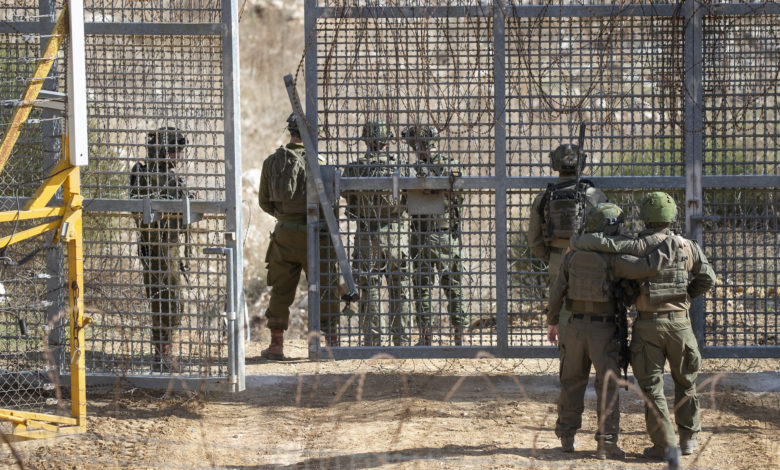
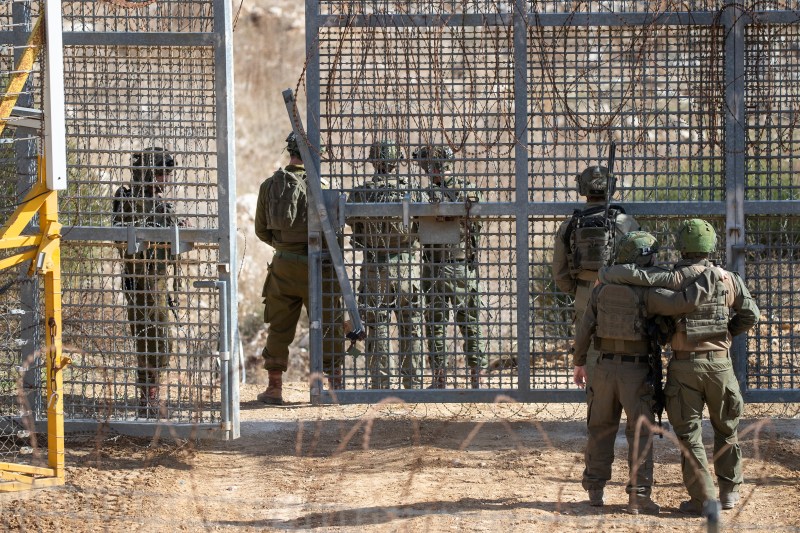
Israeli military photographed on Golan Plateau on December 10, 2024. Credit: Jim Hollander / Upi / Profimedia
Israel used the conflict in Gaza to test military technologies based on artificial intelligence, writes The New York Times. The systems, developed by the 8200 unit and by reservists of the big Tech companies, have brought tactical advantages, but also serious errors, resulting in civil victims, notes the American publication.
At the end of 2023, Israeli intelligence services had an urgent mission: to find and eliminate Ibrahim Biari, the top commander of Hamas involved in the devastating attacks of October 7. As they could not track them in the underground network of tunnels in Gaza, the Israelis resorted to a new tool: an improved military technology.
Originally developed a decade ago, but not previously used in the fight, the technology was quickly adapted by the 8200 unit engineers – the Israeli equivalent of the NSA (no American agency specialized in intercepting communications and electronic supervision), writes The New York Times.
The integration allowed the interception of Biari's calls and its approximate location. Based on this data, on October 31, 2023 Israel launched an air attack that killed Biars, but also over 125 civilians, according to Airwars, a British conflict monitoring, notes the source.
Accelerated innovation in crisis conditions
According to Israeli and American officials interviewed under the protection of anonymity by The New York Times, the war accelerated the testing and use of military technologies. In the last 18 months, Israel has combined artificial intelligence with facial recognition to identify injured or partially covered faces, used AI for selecting air attack targets and developed an Arabic linguistic model for quick analysis and posts from social networks.
These innovations were made through the collaboration between active soldiers in 8200 unit and reservists employed at companies such as Google, Microsoft and Meta, gathered in an innovation Hub called “The Studio”.
Errors, ethical dilemmas and collateral victims
But the rapid use of these technologies has also led to errors: wrong identifications, abusive arrests and deaths. Officials recognize that sometimes, facial recognition failed, causing unjustified detention, and the chatbot in Arabic has encountered difficulties in interpreting expressions and everyday jargon.
Hadas Lorber, director of the Institute for Research applied in Israel's artificial intelligence, warns that you “require clear control mechanisms” and that the final decisions “must remain in the hands of people,” writes the source.
A spokesman for the Israeli army said he cannot comment on the technologies used due to their “confidential nature”, but emphasized the commitment of Israel for “legal and responsible” use.
The war of the future, in the test phase
The European and American officials quoted by The New York Times say that Israel is the first country to widely use artificial intelligence in real fights, offering a preview of the future of the war. From drones capable of pursuing moving targets with lethal precision, to algorithms of selection of human targets, technologies tested in Gaza could redefine the rules of armed confrontations in the coming years.
But, as the case of Biari shows, the tactical advantages obtained with the help of a package with huge risks for civilians – and raises fundamental ethical questions to which the answers delay, concludes the quoted source.